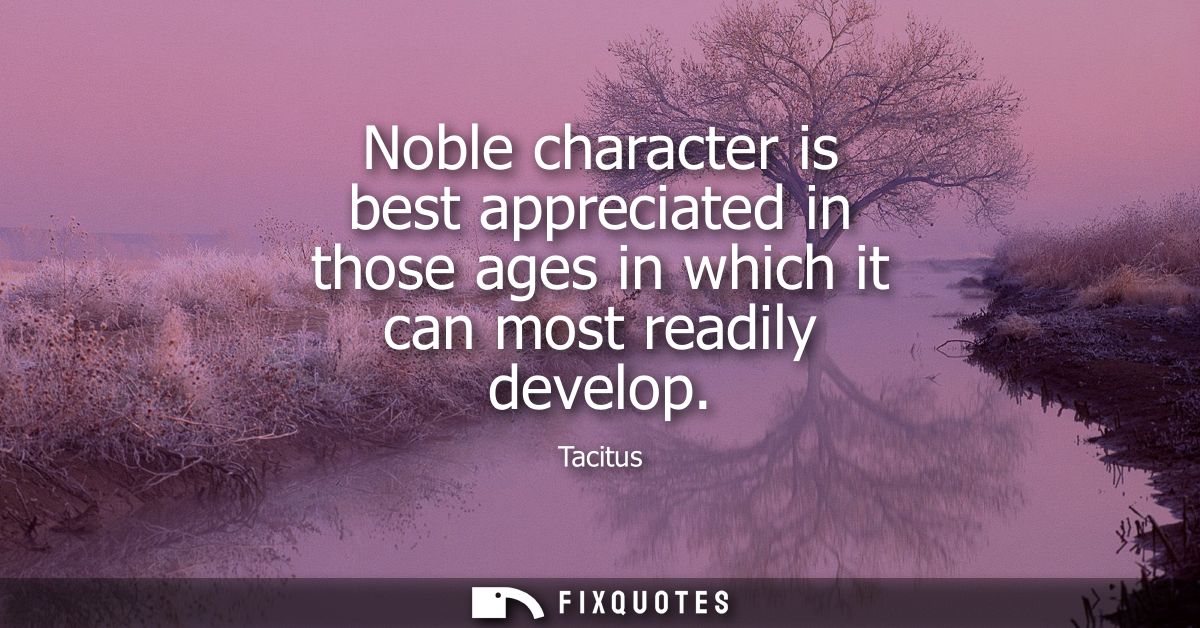
"Noble character is best appreciated in those ages in which it can most readily develop"
About this Quote
Tacitus is doing something sneakier than praising virtue: he is indicting the eras that make virtue difficult. “Noble character” isn’t presented as a timeless personal achievement so much as a contingent product of political climate. In Rome, where careers rose and fell on imperial mood swings, courage and integrity weren’t just moral traits; they were high-risk behaviors. The line implies a brutal paradox: we romanticize nobility most when institutions allow it to flourish, but that also means nobility is least “heroic” there because it’s safer. When conditions turn predatory, character doesn’t vanish; it goes underground, becomes coded, strategic, compromised - and harder for later generations to recognize.
The intent is double-edged. On the surface, it’s an observation about historical perception: posterity sees more “great men” in periods that give them room to act. Underneath, Tacitus is warning that tyranny doesn’t only punish dissent; it distorts the archive of human excellence. If an age forces decent people into silence, the record will overrepresent opportunists and flatterers, making it look as if nobility itself was rare.
Context matters: Tacitus wrote after Domitian’s terror and into the comparatively steadier Nerva-Antonine moment. His histories and biographies (especially the Agricola) are haunted by what fear does to public life. The line is also a quiet rebuke to moralizing readers: don’t smugly judge the “cowardice” of the past without pricing the cost of integrity in a police state. Noble character needs not just brave souls, but breathable air.
The intent is double-edged. On the surface, it’s an observation about historical perception: posterity sees more “great men” in periods that give them room to act. Underneath, Tacitus is warning that tyranny doesn’t only punish dissent; it distorts the archive of human excellence. If an age forces decent people into silence, the record will overrepresent opportunists and flatterers, making it look as if nobility itself was rare.
Context matters: Tacitus wrote after Domitian’s terror and into the comparatively steadier Nerva-Antonine moment. His histories and biographies (especially the Agricola) are haunted by what fear does to public life. The line is also a quiet rebuke to moralizing readers: don’t smugly judge the “cowardice” of the past without pricing the cost of integrity in a police state. Noble character needs not just brave souls, but breathable air.
Quote Details
| Topic | Honesty & Integrity |
|---|---|
| Source | Help us find the source |
More Quotes by Tacitus
Add to List