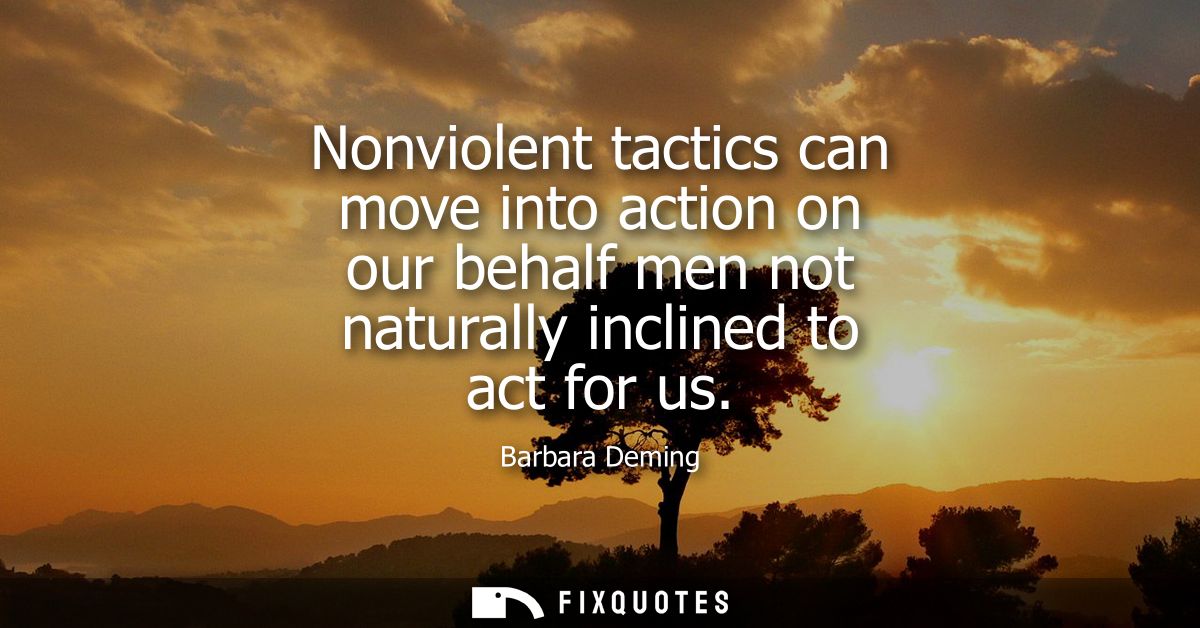
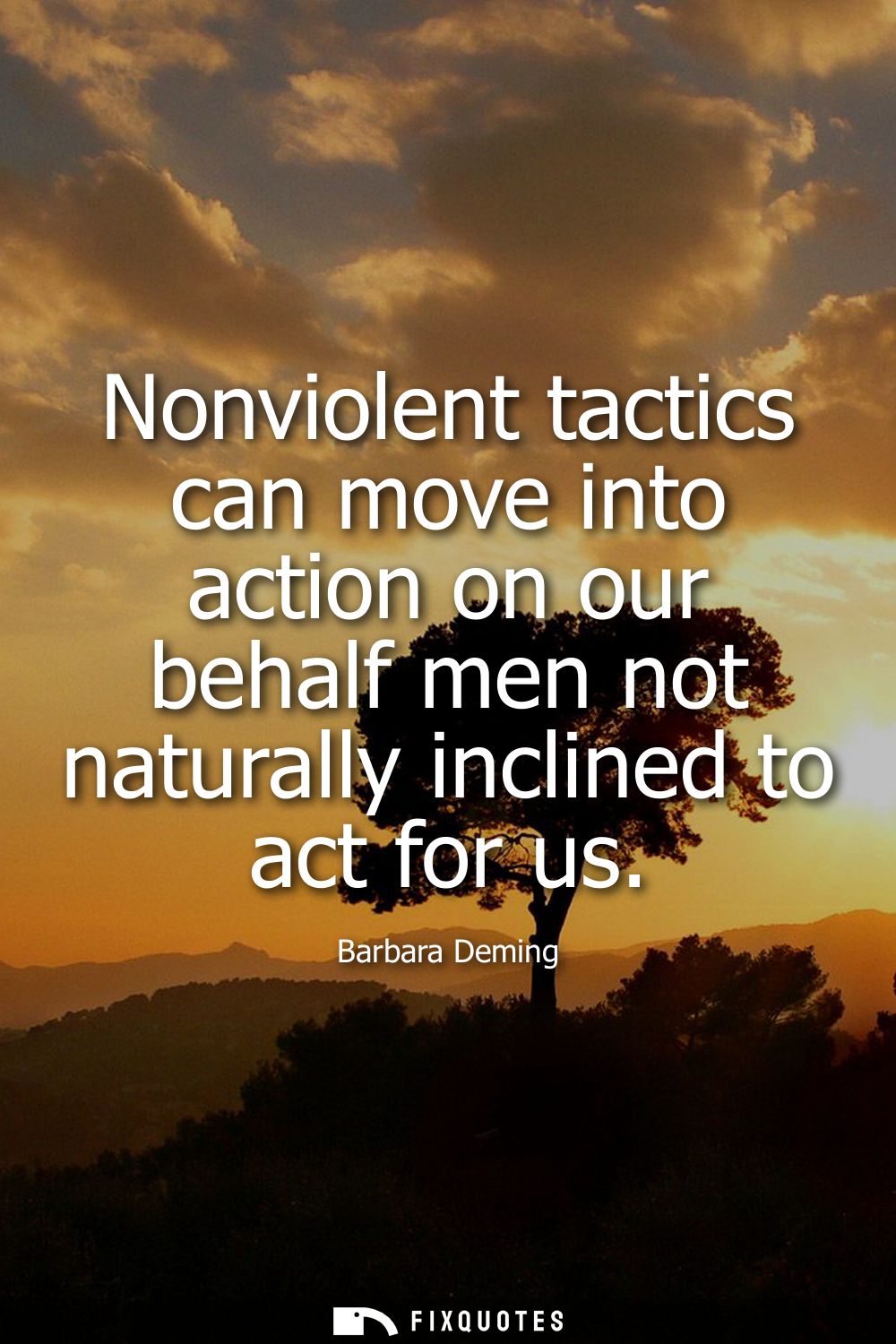
"Nonviolent tactics can move into action on our behalf, men not naturally inclined to act for us"
About this Quote
The intent is strategic, almost behavioral. Nonviolence becomes a forcing mechanism that makes neutrality harder to maintain. When activists refuse to meet violence with violence, they deny observers the usual alibi: “Both sides are just as bad.” The subtext is sharp: many people won’t join a cause because they doubt its righteousness; they’ll join when the moral optics become unavoidable, when inaction starts to feel like complicity. Nonviolent action manufactures that moment by dramatizing asymmetry - bodies taking blows, refusing the script of retaliation, insisting on public witness.
Context matters. Deming wrote out of mid-century movements where visibility was a battlefield: civil rights campaigns, antiwar organizing, feminist struggle. Nonviolence here isn’t passive patience; it’s public pressure calibrated to recruit the reluctant. The quote also carries a gendered edge. “Men” reads literally and structurally: men as gatekeepers of institutional power, and “us” as those routinely denied it. Nonviolence, Deming suggests, can conscript conscience without begging for it.
Quote Details
| Topic | Peace |
|---|---|
| Source | Help us find the source |
| Cite |
Citation Formats
APA Style (7th ed.)
Deming, Barbara. (2026, February 19). Nonviolent tactics can move into action on our behalf, men not naturally inclined to act for us. FixQuotes. https://fixquotes.com/quotes/nonviolent-tactics-can-move-into-action-on-our-44296/
Chicago Style
Deming, Barbara. "Nonviolent tactics can move into action on our behalf, men not naturally inclined to act for us." FixQuotes. February 19, 2026. https://fixquotes.com/quotes/nonviolent-tactics-can-move-into-action-on-our-44296/.
MLA Style (9th ed.)
"Nonviolent tactics can move into action on our behalf, men not naturally inclined to act for us." FixQuotes, 19 Feb. 2026, https://fixquotes.com/quotes/nonviolent-tactics-can-move-into-action-on-our-44296/. Accessed 7 Mar. 2026.