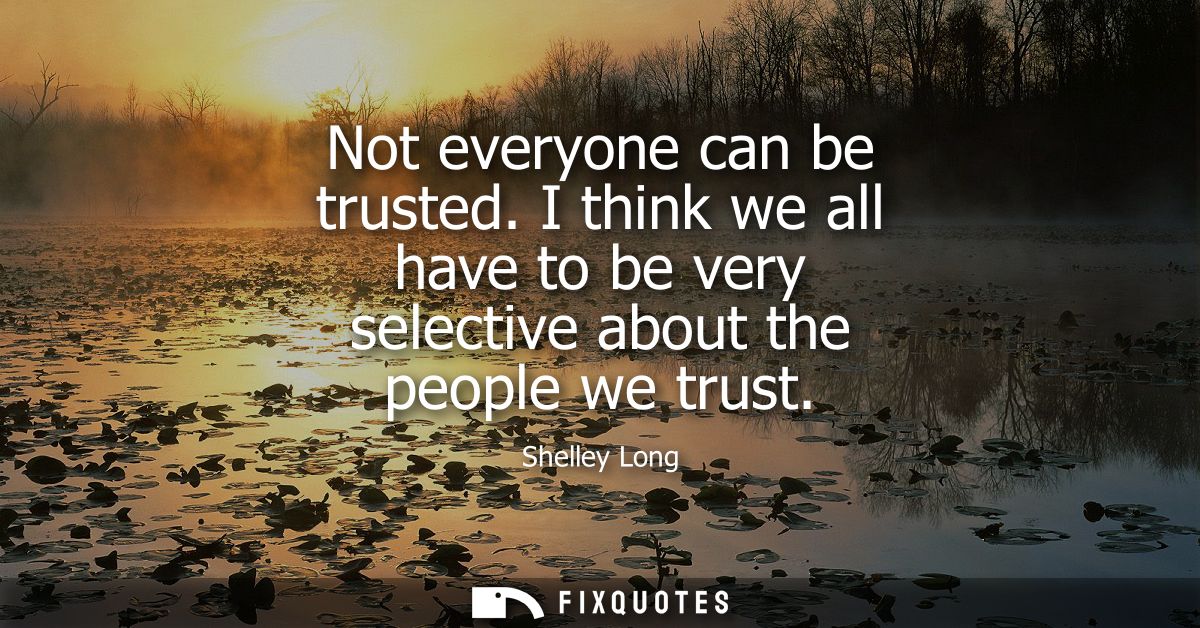
"Not everyone can be trusted. I think we all have to be very selective about the people we trust"
About this Quote
The intent is protective, but not closed-off. Long isn’t arguing for suspicion as a lifestyle; she’s arguing for standards. “Not everyone can be trusted” refuses the social pressure to treat openness as moral superiority. The follow-up - “we all have to be very selective” - shifts from personal hurt to collective strategy, implying this isn’t a private wound but a shared modern condition. That “we all” matters: it’s a softening move that invites agreement instead of pity.
The subtext is about boundaries, especially for people who are publicly legible and privately vulnerable. Selectivity becomes a form of self-respect, a way to keep your inner life from becoming someone else’s anecdote, headline, or bargaining chip. In a culture that treats oversharing as authenticity and proximity to fame as entitlement, Long’s line lands as a quiet refusal: you can be generous without being available, and you can be kind without being naive.
Quote Details
| Topic | Fake Friends |
|---|---|
| Source | Help us find the source |
| Cite |
Citation Formats
APA Style (7th ed.)
Long, Shelley. (2026, January 17). Not everyone can be trusted. I think we all have to be very selective about the people we trust. FixQuotes. https://fixquotes.com/quotes/not-everyone-can-be-trusted-i-think-we-all-have-63177/
Chicago Style
Long, Shelley. "Not everyone can be trusted. I think we all have to be very selective about the people we trust." FixQuotes. January 17, 2026. https://fixquotes.com/quotes/not-everyone-can-be-trusted-i-think-we-all-have-63177/.
MLA Style (9th ed.)
"Not everyone can be trusted. I think we all have to be very selective about the people we trust." FixQuotes, 17 Jan. 2026, https://fixquotes.com/quotes/not-everyone-can-be-trusted-i-think-we-all-have-63177/. Accessed 2 Apr. 2026.