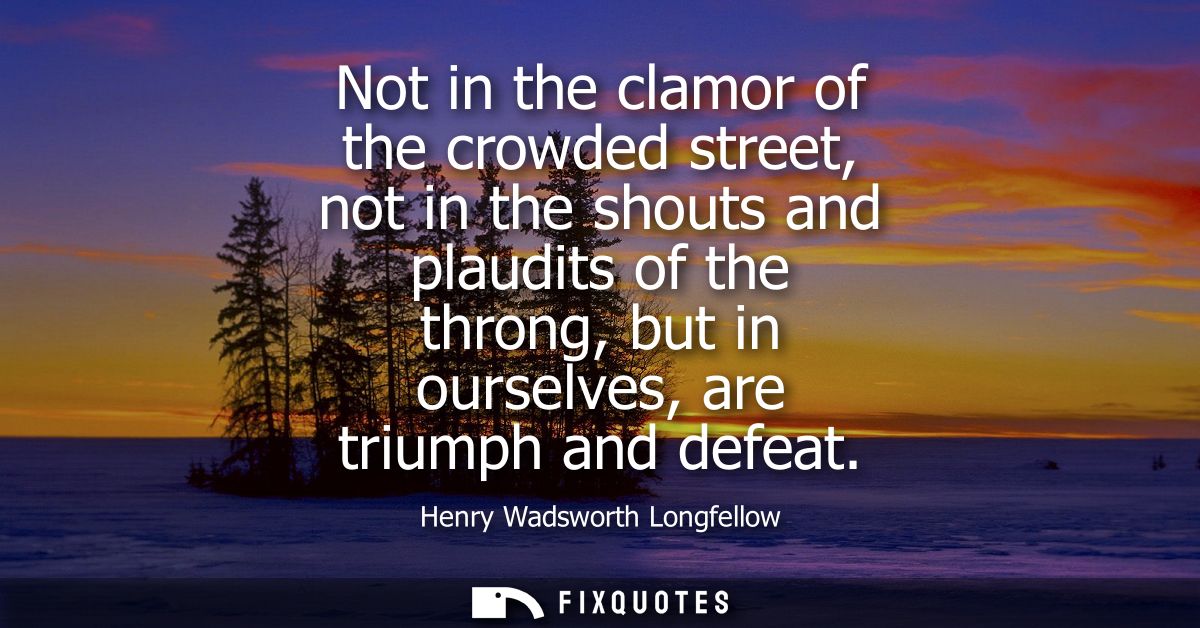
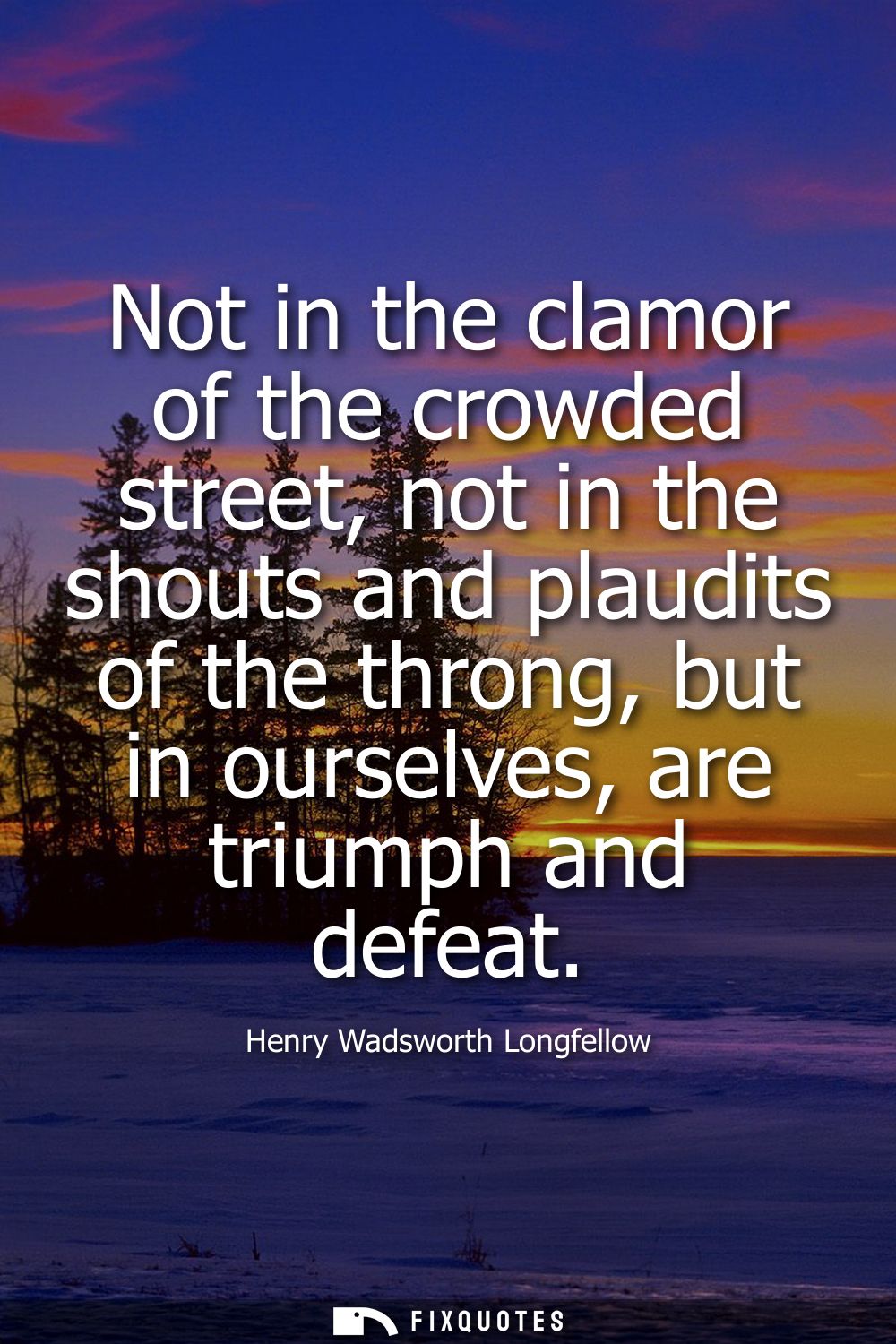
"Not in the clamor of the crowded street, not in the shouts and plaudits of the throng, but in ourselves are triumph and defeat"
About this Quote
The intent isn’t to deny that crowds matter; it’s to demote them. “Clamor,” “shouts,” “plaudits” aren’t neutral sounds. They’re the whole economy of public validation, the quick hit of being seen and approved. By choosing those words, Longfellow frames the crowd as reactive and indiscriminate, a weather system that changes without warning. Triumph and defeat, he implies, become dangerously flimsy if they depend on that weather.
The subtext is a quiet insistence on interior sovereignty: your life can’t be outsourced. “In ourselves” is doing double duty - psychological (self-command) and moral (conscience). It’s also a subtle rebuke to a culture that equates winning with being watched winning. Longfellow’s trick is to make that rebuke sound soothing, almost consolatory, while smuggling in a tougher claim: the crowd’s verdict is not merely unreliable; it’s irrelevant to the only score that counts.
Quote Details
| Topic | Wisdom |
|---|---|
| Source | Verified source: The Poetical Works of Henry Wadsworth Longfellow (Henry Wadsworth Longfellow, 1878)ID: 5pwRAAAAYAAJ
Evidence: Henry Wadsworth Longfellow. Dying , to leave a memory like the breath Of summers full of sunshine and ... Not in the clamor of the crowded street , Not in the shouts and plaudits of the throng , But in ourselves , are triumph and defeat ... Other candidates (1) Keramos and Other Poems (Henry Wadsworth Longfellow, 1878)100.0% Not in the clamor of the crowded street, Not in the shouts and plaudits of the throng, But in ourselves, are triumph ... |
| Cite |
Citation Formats
APA Style (7th ed.)
Longfellow, Henry Wadsworth. (2026, February 16). Not in the clamor of the crowded street, not in the shouts and plaudits of the throng, but in ourselves are triumph and defeat. FixQuotes. https://fixquotes.com/quotes/not-in-the-clamor-of-the-crowded-street-not-in-19968/
Chicago Style
Longfellow, Henry Wadsworth. "Not in the clamor of the crowded street, not in the shouts and plaudits of the throng, but in ourselves are triumph and defeat." FixQuotes. February 16, 2026. https://fixquotes.com/quotes/not-in-the-clamor-of-the-crowded-street-not-in-19968/.
MLA Style (9th ed.)
"Not in the clamor of the crowded street, not in the shouts and plaudits of the throng, but in ourselves are triumph and defeat." FixQuotes, 16 Feb. 2026, https://fixquotes.com/quotes/not-in-the-clamor-of-the-crowded-street-not-in-19968/. Accessed 7 Apr. 2026.