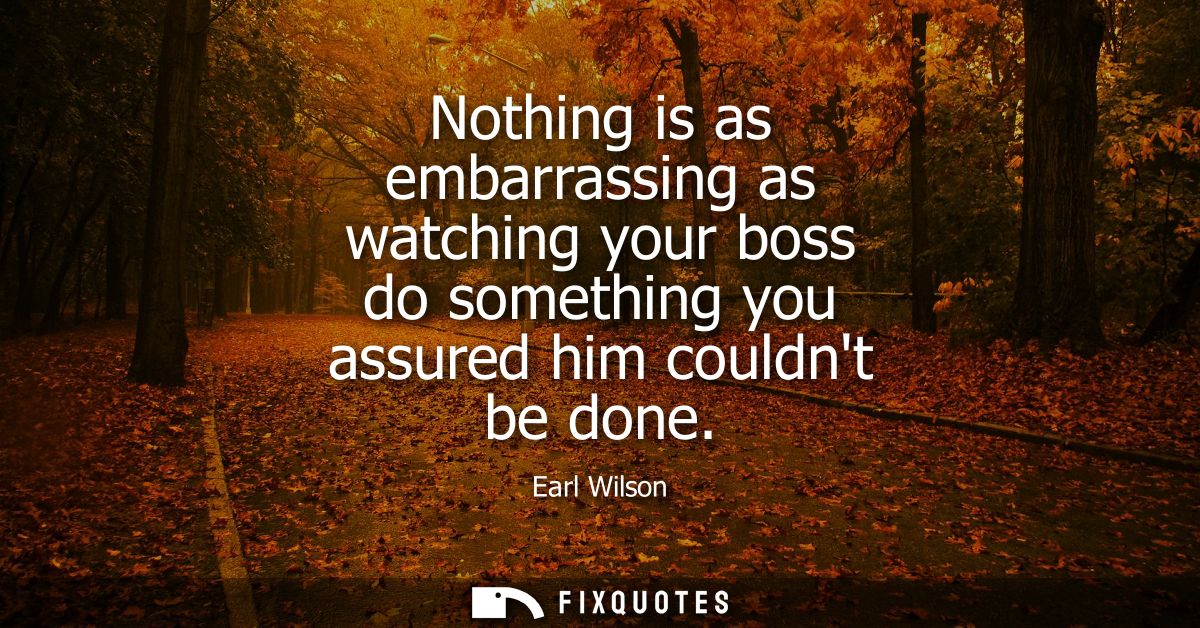
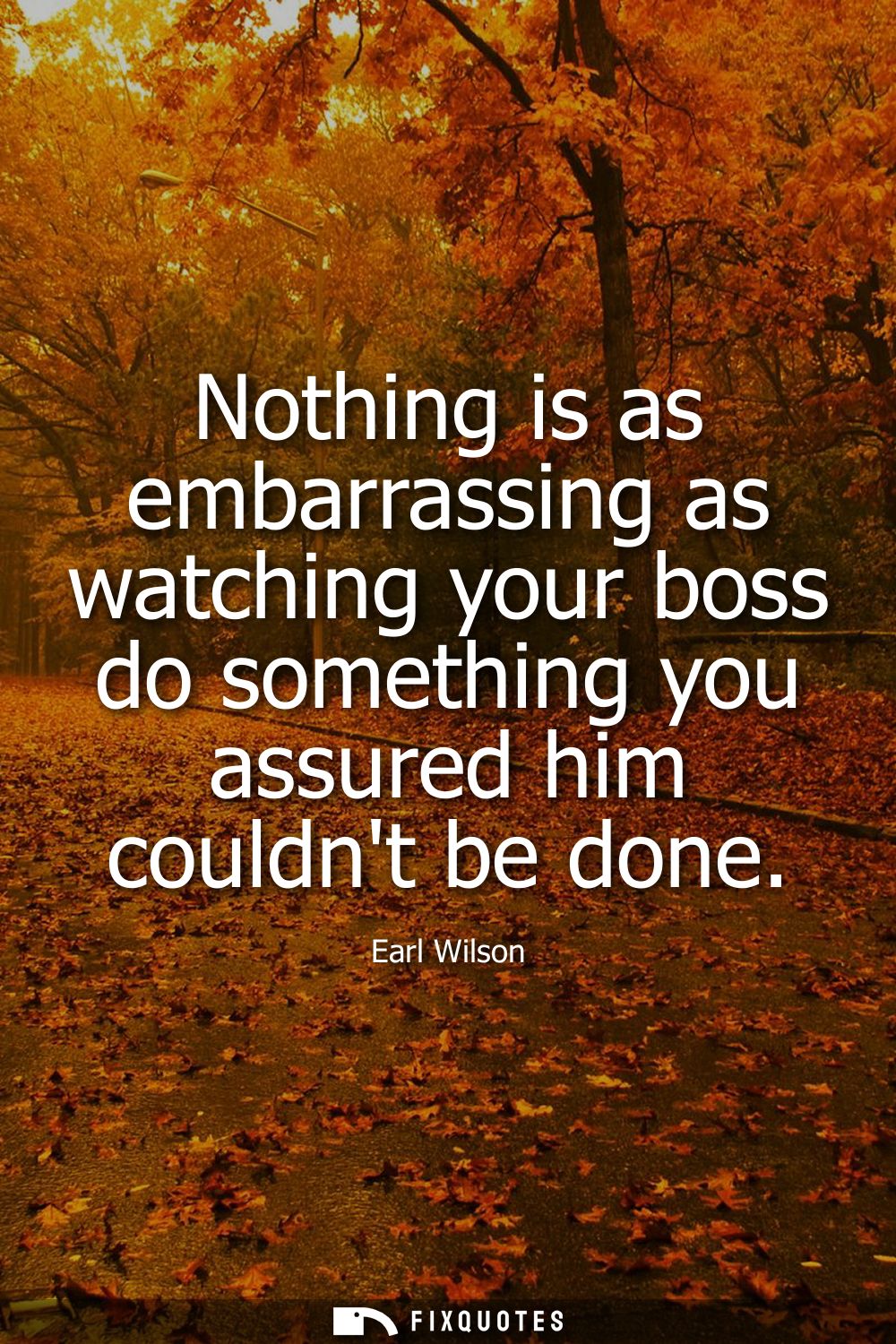
"Nothing is as embarrassing as watching your boss do something, you assured him couldn't be done"
About this Quote
Wilson, an athlete, understands the particular sting of being outperformed by someone you assumed was operating in a different lane. Sports culture runs on pecking orders: veterans over rookies, coaches over players, starters over bench. When the "boss" does the impossible, it doesn't merely refute your claim; it exposes the story you were selling about your own value. If the leader can do it, why do they need you? Your expertise becomes a speed bump, not an asset.
The quote also smuggles in a warning about the lazy comfort of "can't". In organizations, "can't be done" often means "I don't want to risk being wrong", "it would cost political capital", or "I don't know how". Watching a boss pull it off forces those unspoken caveats into daylight. That's why the moment is so mortifying: it turns professional judgment into a public alibi.
It's comedy with teeth because it recognizes a workplace truth: competence isn't only skill, it's credibility. And credibility is easiest to lose in front of the person who least needs your permission.
Quote Details
| Topic | Management |
|---|---|
| Source | Help us find the source |
| Cite |
Citation Formats
APA Style (7th ed.)
Wilson, Earl. (2026, February 18). Nothing is as embarrassing as watching your boss do something, you assured him couldn't be done. FixQuotes. https://fixquotes.com/quotes/nothing-is-as-embarrassing-as-watching-your-boss-59785/
Chicago Style
Wilson, Earl. "Nothing is as embarrassing as watching your boss do something, you assured him couldn't be done." FixQuotes. February 18, 2026. https://fixquotes.com/quotes/nothing-is-as-embarrassing-as-watching-your-boss-59785/.
MLA Style (9th ed.)
"Nothing is as embarrassing as watching your boss do something, you assured him couldn't be done." FixQuotes, 18 Feb. 2026, https://fixquotes.com/quotes/nothing-is-as-embarrassing-as-watching-your-boss-59785/. Accessed 28 Mar. 2026.