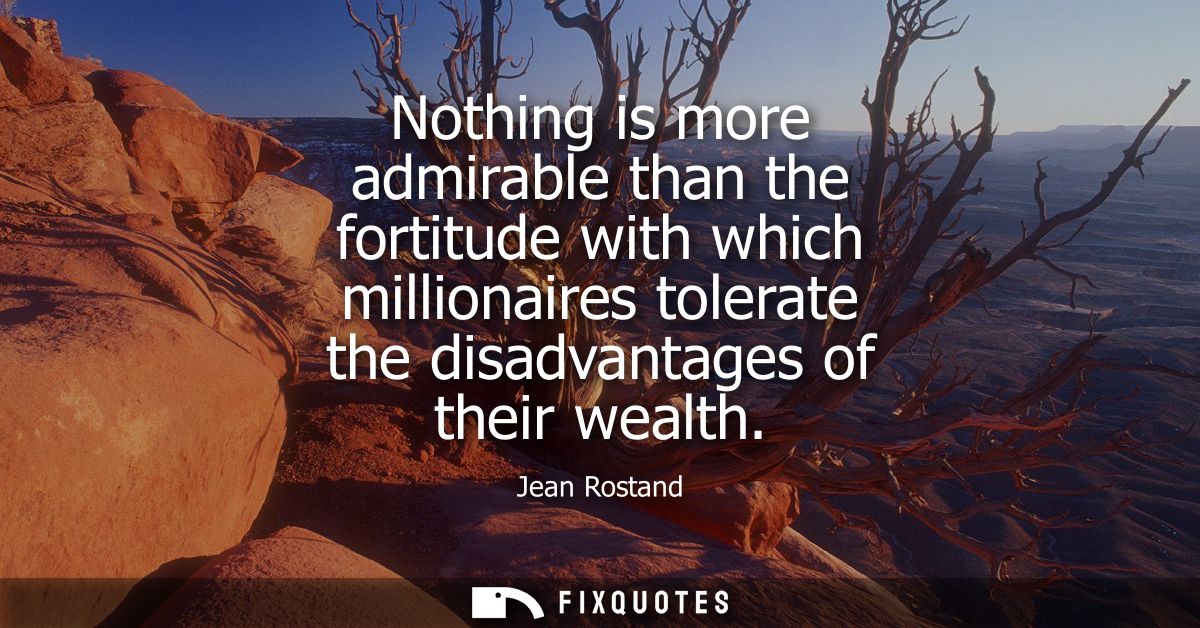
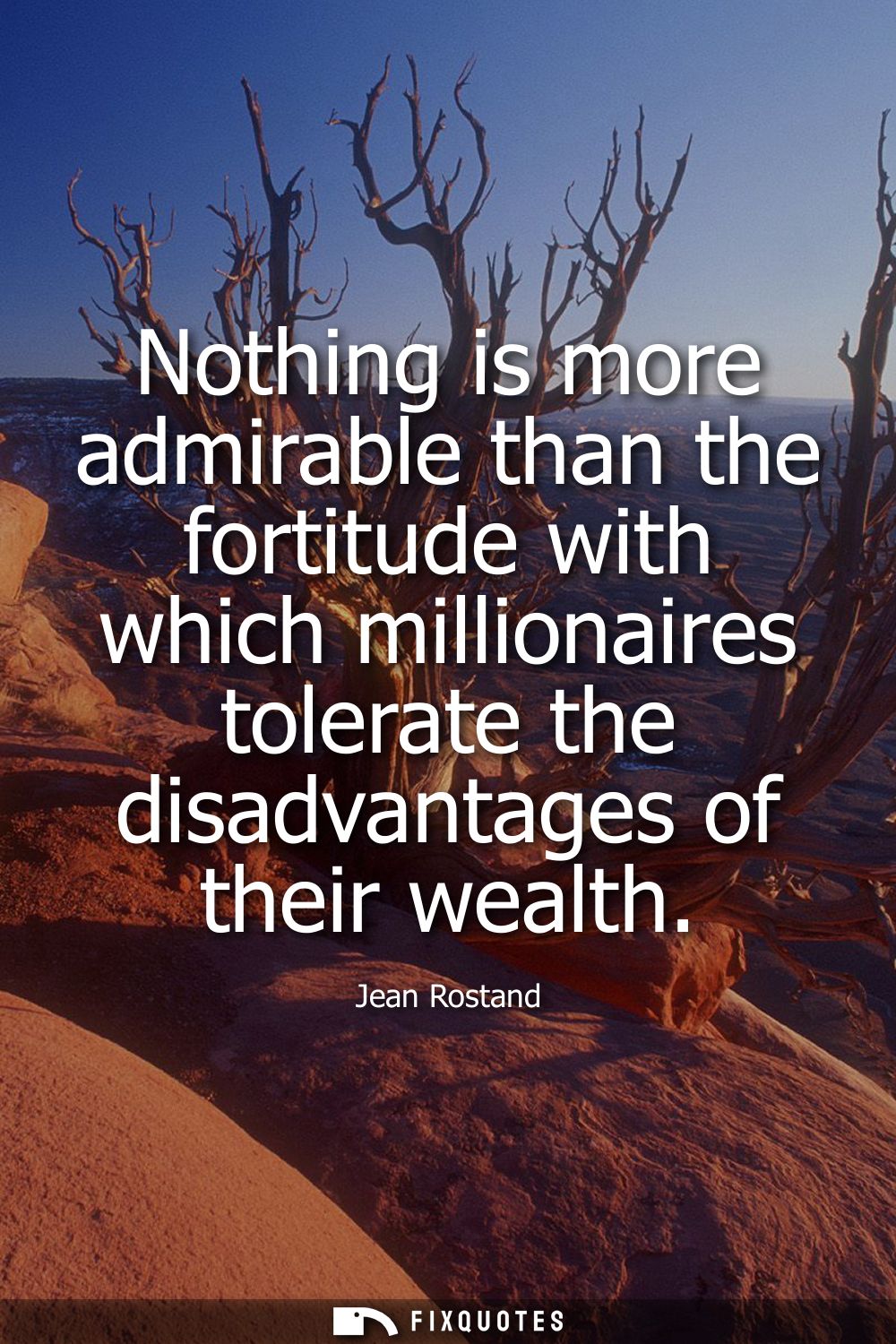
"Nothing is more admirable than the fortitude with which millionaires tolerate the disadvantages of their wealth"
About this Quote
A scientist’s deadpan can cut sharper than a satirist’s blade, and Rostand’s line works because it masquerades as praise while delivering an indictment. “Nothing is more admirable” cues the reader for a solemn tribute; “fortitude” and “tolerate” belong to the language of hardship, the vocabulary we reserve for people who endure real constraint. Then comes the punch: the “disadvantages of their wealth.” The sentence flips the moral economy. What’s being admired isn’t generosity or invention, but the rich person’s talent for presenting privilege as burden.
The subtext is less about money than about self-pity as a status symbol. Rostand skewers a familiar performance: the millionaire complaining about taxes, privacy, expectations, or the supposed loneliness at the top, as if these are afflictions rather than the predictable side effects of winning a rigged game. By framing that complaint as heroic endurance, he exposes how easily social sympathy can be rerouted upward, turned into another asset. The wealthy don’t just accumulate capital; they can accumulate credibility by narrating inconvenience as oppression.
Context matters: Rostand lived through the upheavals of two world wars, the Great Depression, and the reshaping of European class politics. In that century, “fortitude” had a real referent: civilians under bombardment, workers under scarcity, people whose lives were narrowed by forces they didn’t choose. Against that backdrop, the millionaire’s “disadvantages” read as farce. Rostand’s intent is to make that farce visible, and to implicate the audience in it: if we find the line funny, it’s because we recognize the script we’ve been asked to applaud.
The subtext is less about money than about self-pity as a status symbol. Rostand skewers a familiar performance: the millionaire complaining about taxes, privacy, expectations, or the supposed loneliness at the top, as if these are afflictions rather than the predictable side effects of winning a rigged game. By framing that complaint as heroic endurance, he exposes how easily social sympathy can be rerouted upward, turned into another asset. The wealthy don’t just accumulate capital; they can accumulate credibility by narrating inconvenience as oppression.
Context matters: Rostand lived through the upheavals of two world wars, the Great Depression, and the reshaping of European class politics. In that century, “fortitude” had a real referent: civilians under bombardment, workers under scarcity, people whose lives were narrowed by forces they didn’t choose. Against that backdrop, the millionaire’s “disadvantages” read as farce. Rostand’s intent is to make that farce visible, and to implicate the audience in it: if we find the line funny, it’s because we recognize the script we’ve been asked to applaud.
Quote Details
| Topic | Wealth |
|---|---|
| Source | Help us find the source |
More Quotes by Jean
Add to List