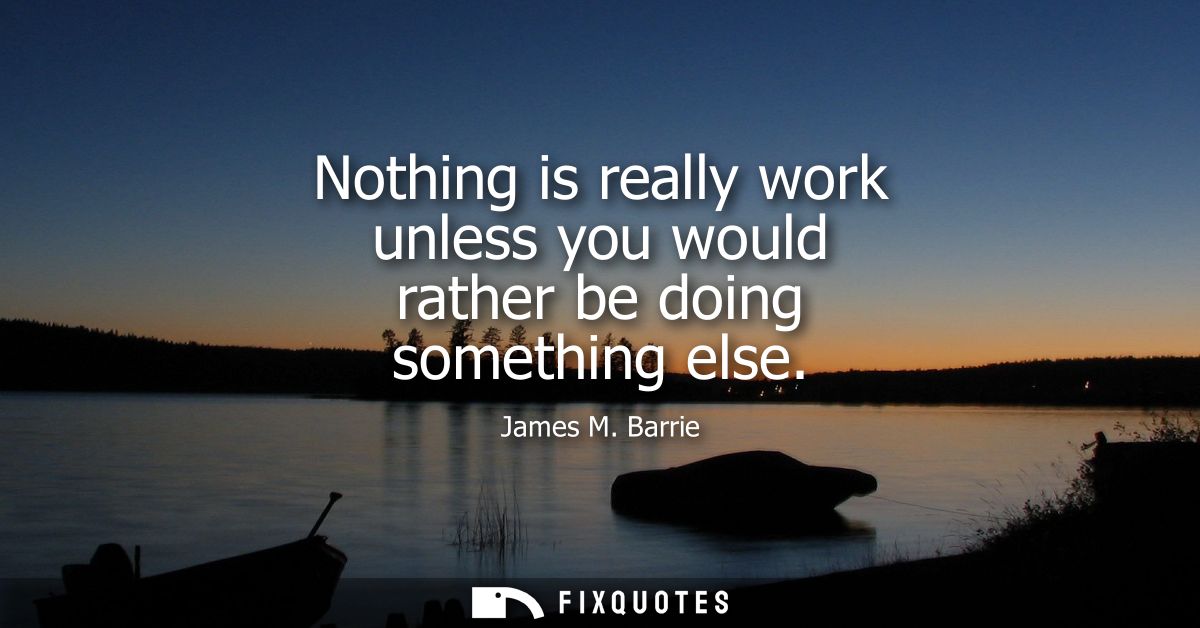
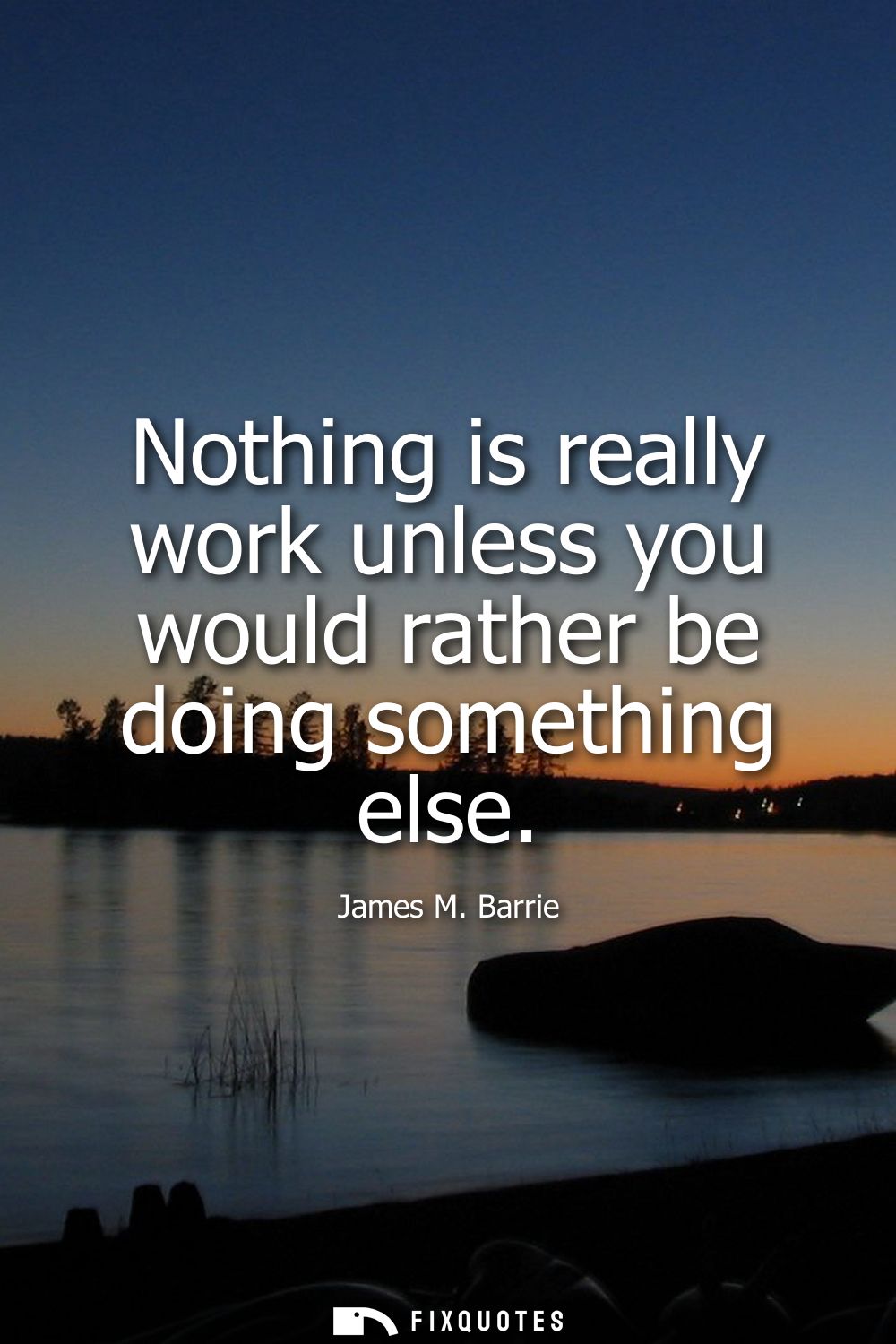
"Nothing is really work unless you would rather be doing something else"
About this Quote
The subtext is classically Barrie: the adult world insists on solemnity, then demands we perform that solemnity through visible sacrifice. A playwright, of all people, knows the cultural trap well. Artistic labor is routinely romanticized as “passion” until it needs to be paid for; then it’s either dismissed as play or punished as indulgence. Barrie’s formulation exposes how “work” is less an activity than a social badge, awarded when you can demonstrate you’d rather be elsewhere.
There’s also an ambivalence tucked inside the neatness. If work requires preference against it, then contentment becomes illegible in the economy of respectability. The line quietly asks whether we’ve built a culture that can only honor effort when it hurts. Coming from the author of Peter Pan, it reads like an adult confession: the tragedy isn’t that we must grow up, but that we learn to equate misery with worth.
Quote Details
| Topic | Work |
|---|---|
| Source | Help us find the source |
| Cite | Cite this Quote |
Citation Formats
APA Style (7th ed.)
Barrie, James M. (2026, January 18). Nothing is really work unless you would rather be doing something else. FixQuotes. https://fixquotes.com/quotes/nothing-is-really-work-unless-you-would-rather-be-6785/
Chicago Style
Barrie, James M. "Nothing is really work unless you would rather be doing something else." FixQuotes. January 18, 2026. https://fixquotes.com/quotes/nothing-is-really-work-unless-you-would-rather-be-6785/.
MLA Style (9th ed.)
"Nothing is really work unless you would rather be doing something else." FixQuotes, 18 Jan. 2026, https://fixquotes.com/quotes/nothing-is-really-work-unless-you-would-rather-be-6785/. Accessed 4 Feb. 2026.