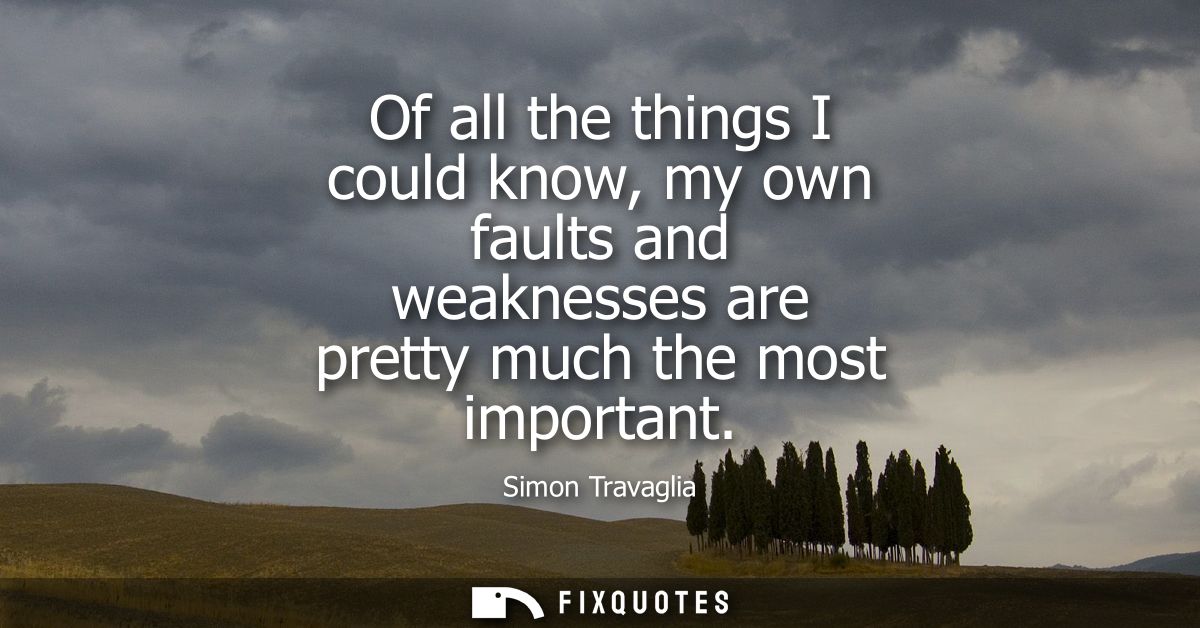
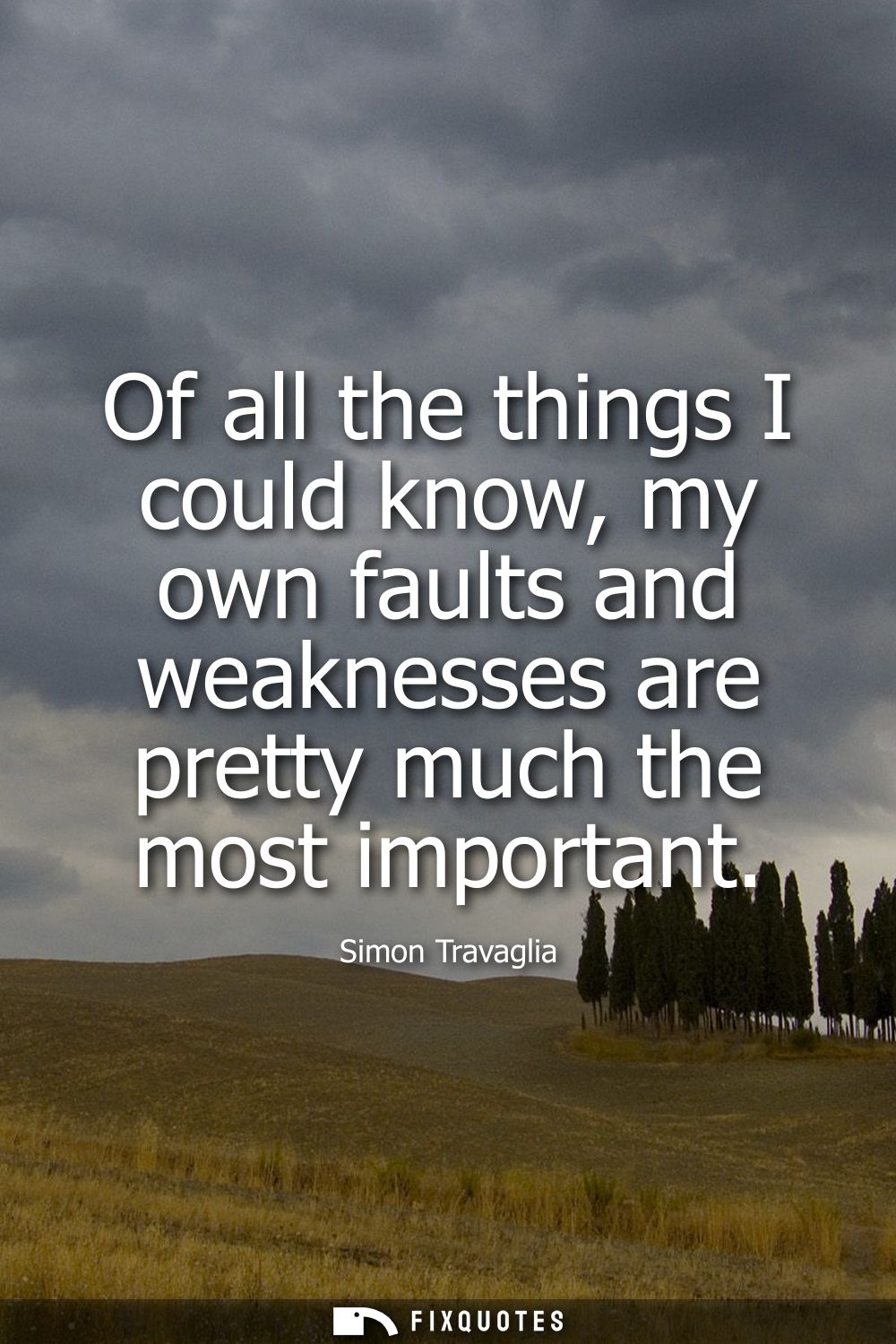
"Of all the things I could know, my own faults and weaknesses are pretty much the most important"
About this Quote
The intent feels corrective. Knowing your faults isn’t self-flagellation; it’s operational intelligence. Weaknesses are the hidden variables in every plan you make, every promise you keep, every relationship you think you’re managing. The subtext is almost managerial: you can’t improve what you won’t inventory, and you can’t trust yourself if you’ve never mapped the ways you rationalize, procrastinate, overreact, or retreat. It’s an argument for accountability that starts before anyone else gets involved.
There’s also a sly critique of moral performance. People love “growth” as a narrative and hate “fault” as a fact. Travaglia pushes back on the curated self-image by insisting the unflattering parts are not distractions from who you are; they’re the parts most likely to steer your life when you’re tired, scared, or trying to look good.
Contextually, it sits neatly in a modern culture that rewards confidence more than candor. The quote doesn’t romanticize introspection; it treats it as risk management for the soul.
Quote Details
| Topic | Self-Improvement |
|---|---|
| Source | Help us find the source |
| Cite |
Citation Formats
APA Style (7th ed.)
Travaglia, Simon. (2026, January 15). Of all the things I could know, my own faults and weaknesses are pretty much the most important. FixQuotes. https://fixquotes.com/quotes/of-all-the-things-i-could-know-my-own-faults-and-154144/
Chicago Style
Travaglia, Simon. "Of all the things I could know, my own faults and weaknesses are pretty much the most important." FixQuotes. January 15, 2026. https://fixquotes.com/quotes/of-all-the-things-i-could-know-my-own-faults-and-154144/.
MLA Style (9th ed.)
"Of all the things I could know, my own faults and weaknesses are pretty much the most important." FixQuotes, 15 Jan. 2026, https://fixquotes.com/quotes/of-all-the-things-i-could-know-my-own-faults-and-154144/. Accessed 2 Apr. 2026.