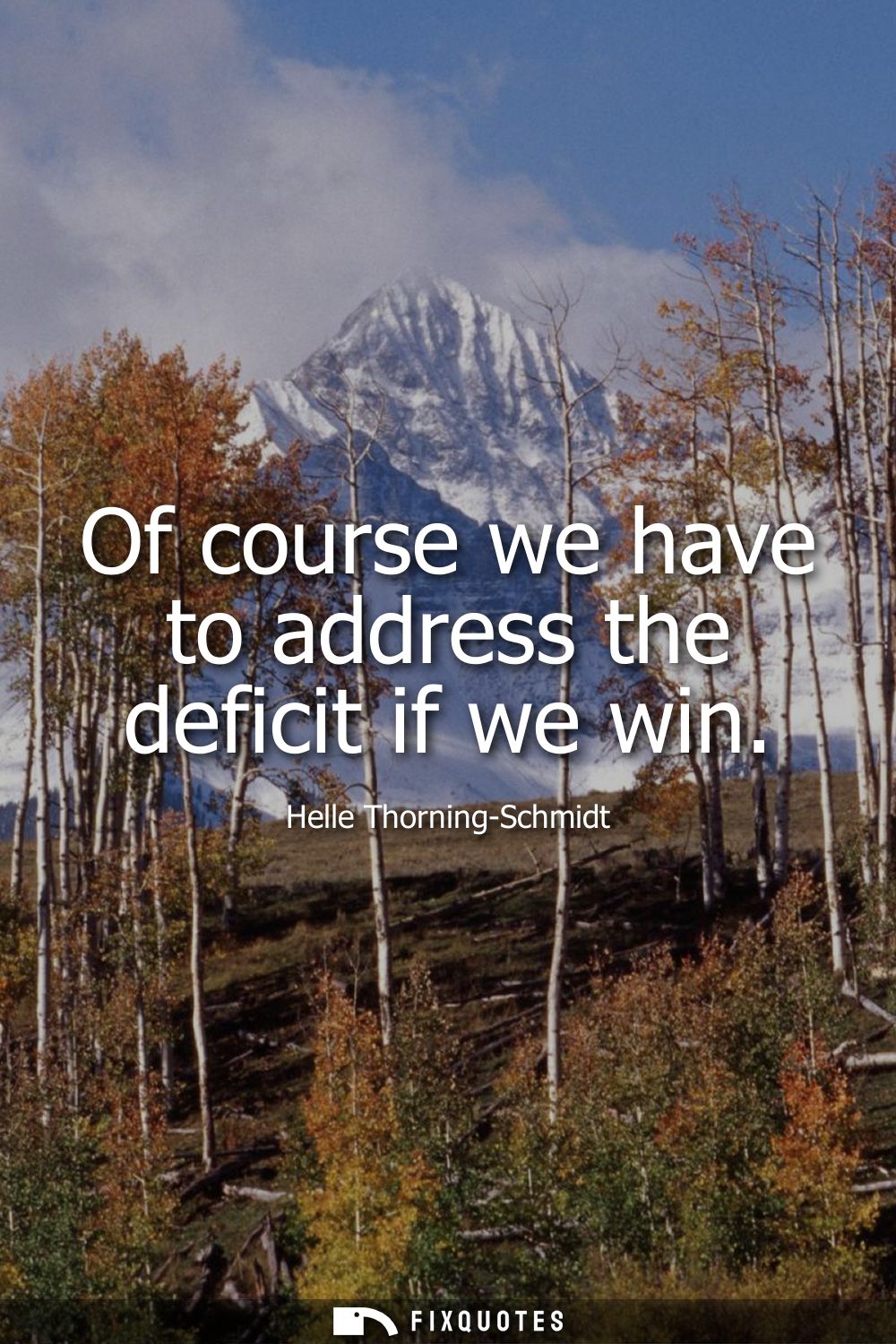
"Of course we have to address the deficit if we win"
About this Quote
A deficit is the kind of problem politicians love to promise theyll tackle, right up until they actually have to. Thorning-Schmidts line is built on that tension: the breezy "Of course" projects inevitability and competence, while the conditional "if we win" quietly admits the real constraint is not economics but power. Its a sentence that reassures fiscal hawks without scaring off voters who hear "deficit" and translate it into cuts, higher taxes, or both.
The intent is pragmatic and strategic. As a center-left leader trying to look credible on public finances, she signals she wont treat budget discipline as a right-wing fetish. But she also refuses to name the medicine. "Address" is a deliberately soft verb: it implies responsibility without committing to austerity, stimulus, reforms, or timeline. The phrase functions like political shrink-wrap, keeping the policy vague while advertising the brand values: seriousness, adulthood, readiness to govern.
The subtext is coalition math and market optics. In European politics, especially in the post-crisis era, deficits arent just domestic talking points; theyre read by bond markets, EU institutions, and rival parties looking for weakness. By tethering action to electoral victory, she is also telling voters: give me the mandate and Ill do the hard thing. Its a subtle reframing of discomfort as leadership, while leaving enough ambiguity to negotiate once the campaign is over and reality - parliamentary bargaining, public backlash, economic surprises - arrives.
The intent is pragmatic and strategic. As a center-left leader trying to look credible on public finances, she signals she wont treat budget discipline as a right-wing fetish. But she also refuses to name the medicine. "Address" is a deliberately soft verb: it implies responsibility without committing to austerity, stimulus, reforms, or timeline. The phrase functions like political shrink-wrap, keeping the policy vague while advertising the brand values: seriousness, adulthood, readiness to govern.
The subtext is coalition math and market optics. In European politics, especially in the post-crisis era, deficits arent just domestic talking points; theyre read by bond markets, EU institutions, and rival parties looking for weakness. By tethering action to electoral victory, she is also telling voters: give me the mandate and Ill do the hard thing. Its a subtle reframing of discomfort as leadership, while leaving enough ambiguity to negotiate once the campaign is over and reality - parliamentary bargaining, public backlash, economic surprises - arrives.
Quote Details
| Topic | Money |
|---|---|
| Source | Help us find the source |
More Quotes by Helle
Add to List