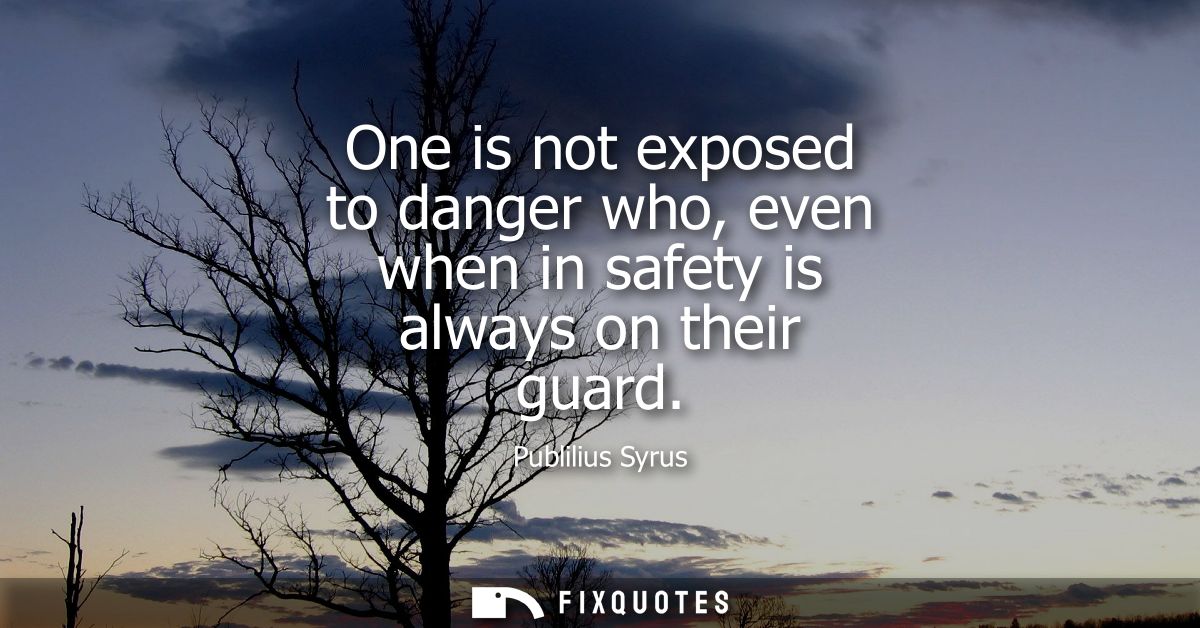
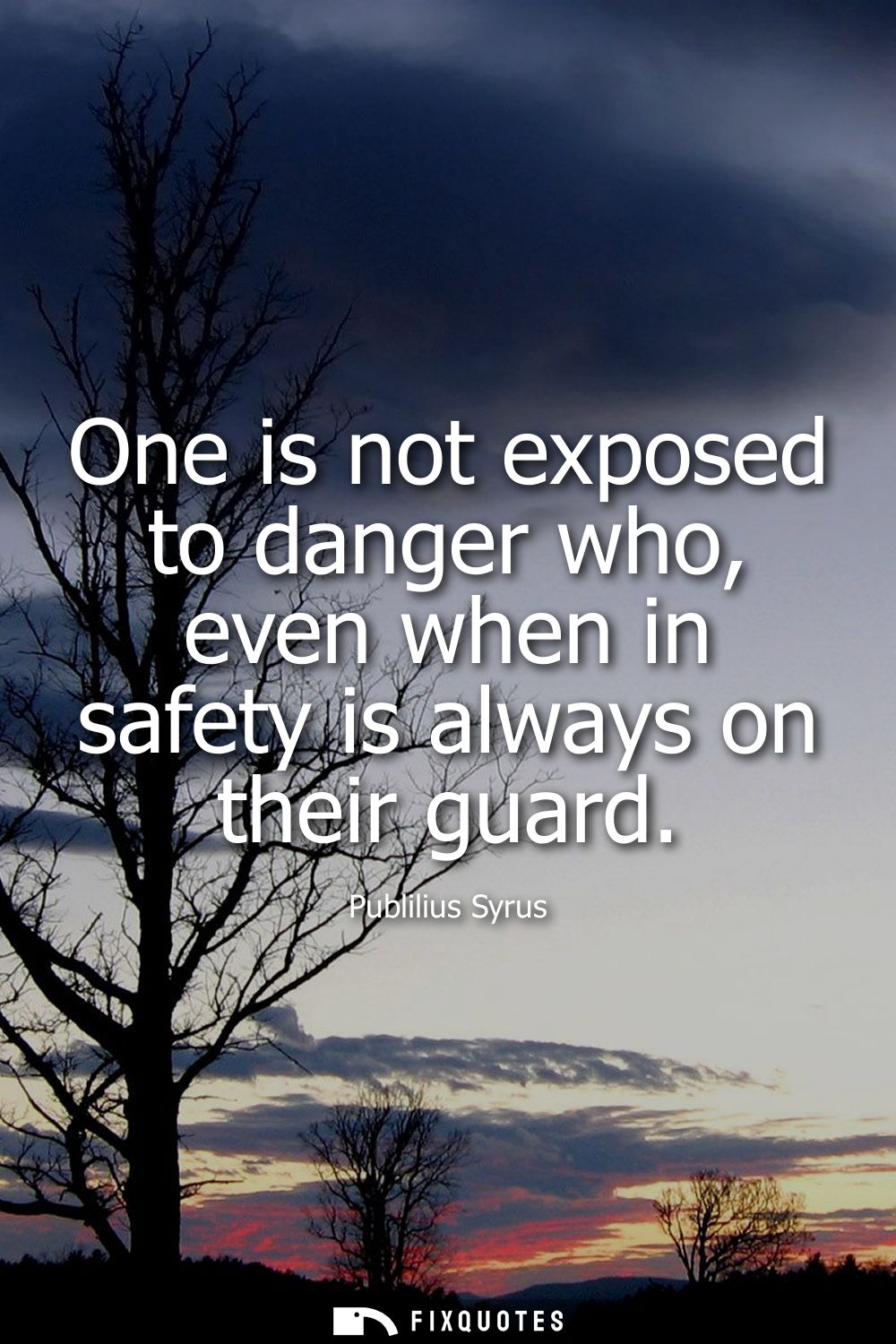
"One is not exposed to danger who, even when in safety is always on their guard"
About this Quote
The subtext is Roman and unsentimental. In a world of patronage, political purges, street violence, and sudden reversals of fortune, danger wasn’t a rare event, it was a feature of the system. Syrus’s phrasing implies that exposure is often self-inflicted: complacency, not fate, is what leaves you “exposed.” The guard is internal. You don’t outsource it to walls, friends, laws, or luck.
What makes the aphorism work is its sly compression. “Even when in safety” is the twist of the knife; it identifies the exact moment vigilance feels unnecessary and therefore fails. It also carries a moral edge: discipline is character revealed during comfort, not crisis. In modern terms, it’s less doomsday prep than institutional memory, digital hygiene, emotional boundaries, financial buffers - the boring routines that prevent dramatic disasters. Syrus isn’t romanticizing risk; he’s puncturing the fantasy that calm equals control.
Quote Details
| Topic | Wisdom |
|---|---|
| Source | Help us find the source |
| Cite |
Citation Formats
APA Style (7th ed.)
Syrus, Publilius. (2026, January 17). One is not exposed to danger who, even when in safety is always on their guard. FixQuotes. https://fixquotes.com/quotes/one-is-not-exposed-to-danger-who-even-when-in-33968/
Chicago Style
Syrus, Publilius. "One is not exposed to danger who, even when in safety is always on their guard." FixQuotes. January 17, 2026. https://fixquotes.com/quotes/one-is-not-exposed-to-danger-who-even-when-in-33968/.
MLA Style (9th ed.)
"One is not exposed to danger who, even when in safety is always on their guard." FixQuotes, 17 Jan. 2026, https://fixquotes.com/quotes/one-is-not-exposed-to-danger-who-even-when-in-33968/. Accessed 12 Feb. 2026.