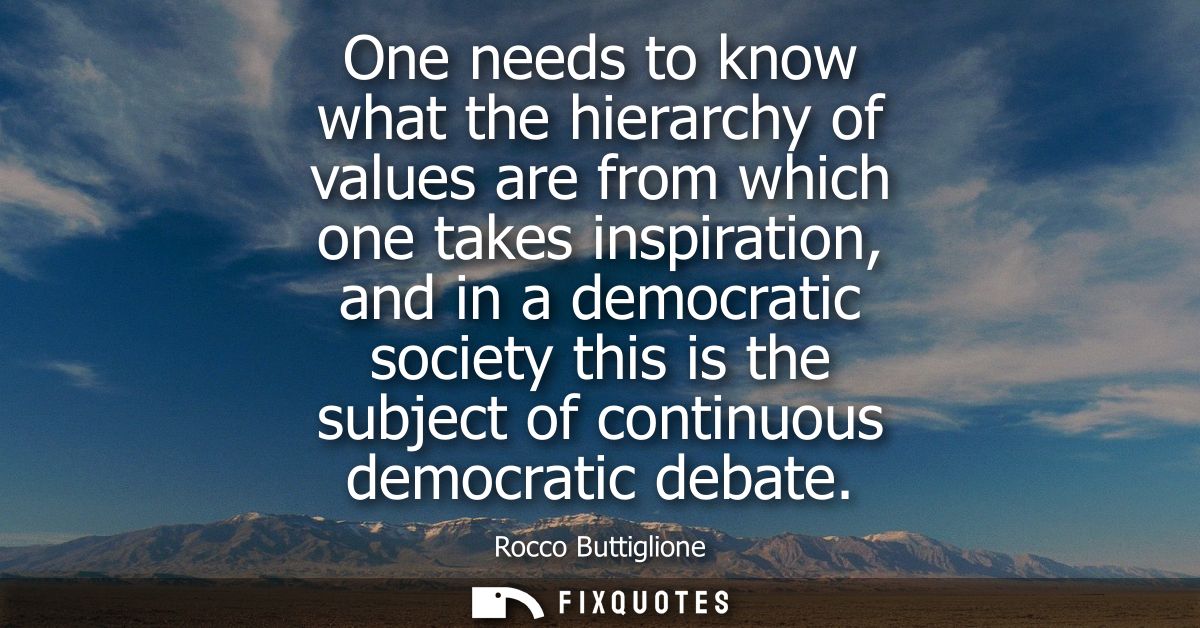
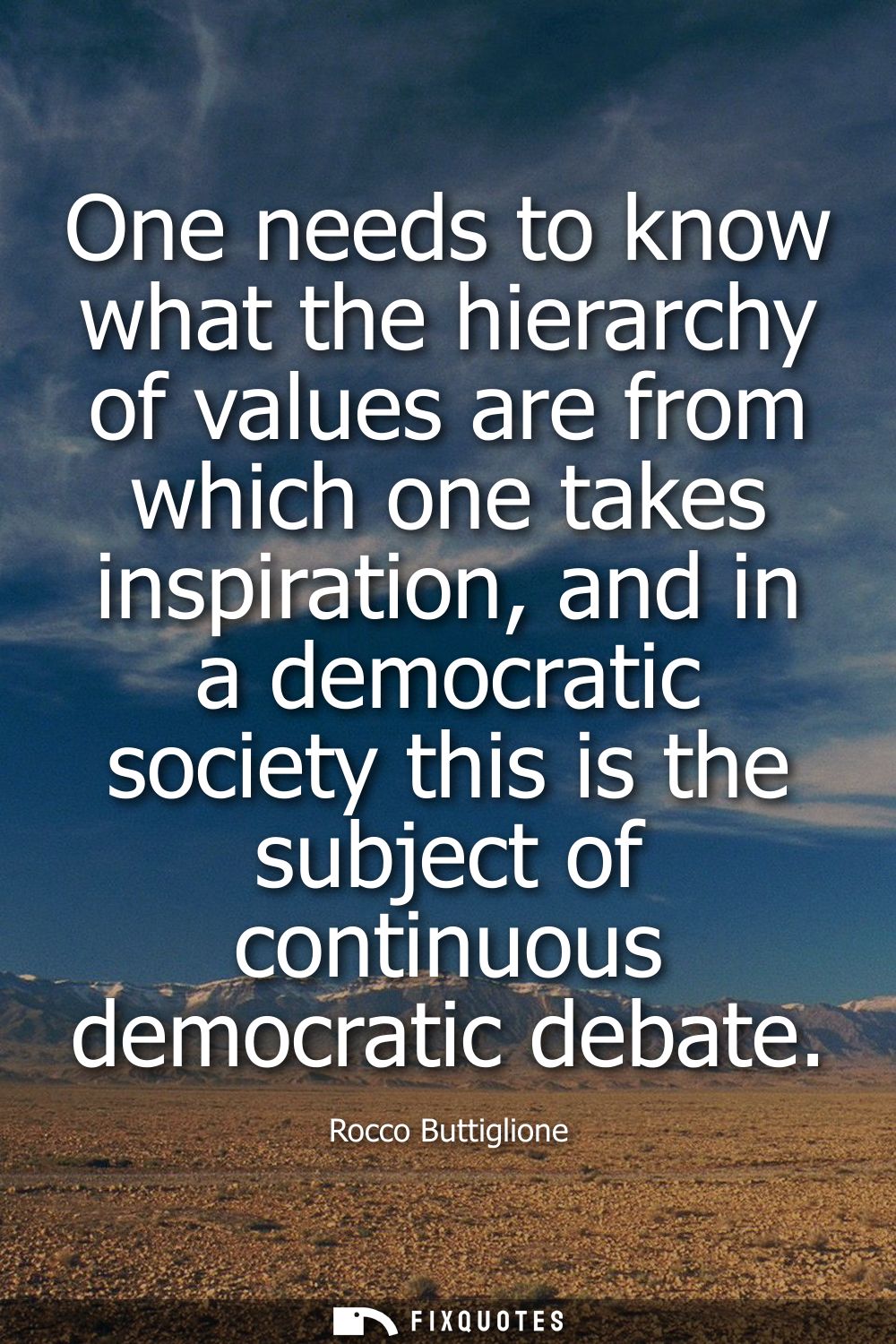
"One needs to know what the hierarchy of values are from which one takes inspiration, and in a democratic society this is the subject of continuous democratic debate"
About this Quote
The second clause is the rhetorical safety latch. In a democratic society, he says, this hierarchy is "the subject of continuous democratic debate". That word continuous matters. It nods to pluralism and avoids the charge of imposing doctrine, while still arguing that democracy cannot be value-neutral. The subtext is a rebuttal to the liberal fantasy that you can keep morality private and run the public sphere on rights-talk alone. Buttiglione is suggesting that rights themselves sit on a moral foundation, and that foundation needs daylight.
Context sharpens the edge. As an Italian Christian Democrat intellectual who collided with EU politics over questions of sexuality, family, and religion, Buttiglione speaks from the fault line between secular governance and religiously informed ethics. The line reads like an attempt to reconcile two audiences: believers who fear moral drift, and democrats who fear moral coercion. The intent is to legitimize moral argument in public without conceding theocratic authority: values are real, but they must be fought over in the open, endlessly, by citizens who can articulate what they worship.
Quote Details
| Topic | Ethics & Morality |
|---|---|
| Source | Help us find the source |
| Cite |
Citation Formats
APA Style (7th ed.)
Buttiglione, Rocco. (2026, January 15). One needs to know what the hierarchy of values are from which one takes inspiration, and in a democratic society this is the subject of continuous democratic debate. FixQuotes. https://fixquotes.com/quotes/one-needs-to-know-what-the-hierarchy-of-values-157119/
Chicago Style
Buttiglione, Rocco. "One needs to know what the hierarchy of values are from which one takes inspiration, and in a democratic society this is the subject of continuous democratic debate." FixQuotes. January 15, 2026. https://fixquotes.com/quotes/one-needs-to-know-what-the-hierarchy-of-values-157119/.
MLA Style (9th ed.)
"One needs to know what the hierarchy of values are from which one takes inspiration, and in a democratic society this is the subject of continuous democratic debate." FixQuotes, 15 Jan. 2026, https://fixquotes.com/quotes/one-needs-to-know-what-the-hierarchy-of-values-157119/. Accessed 7 Apr. 2026.