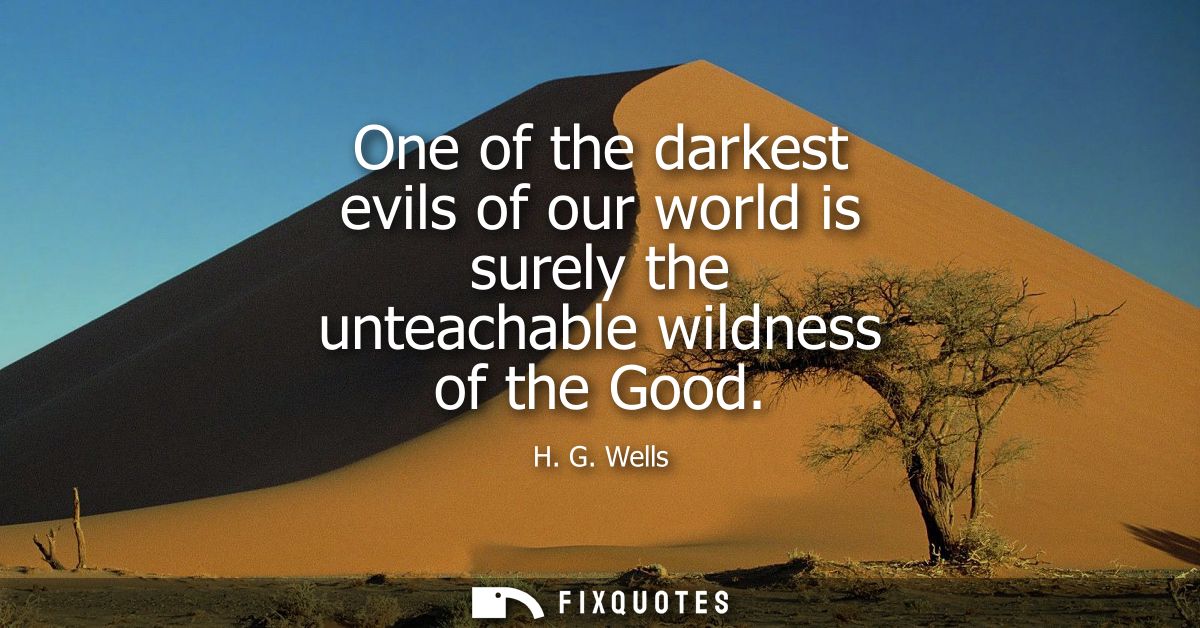
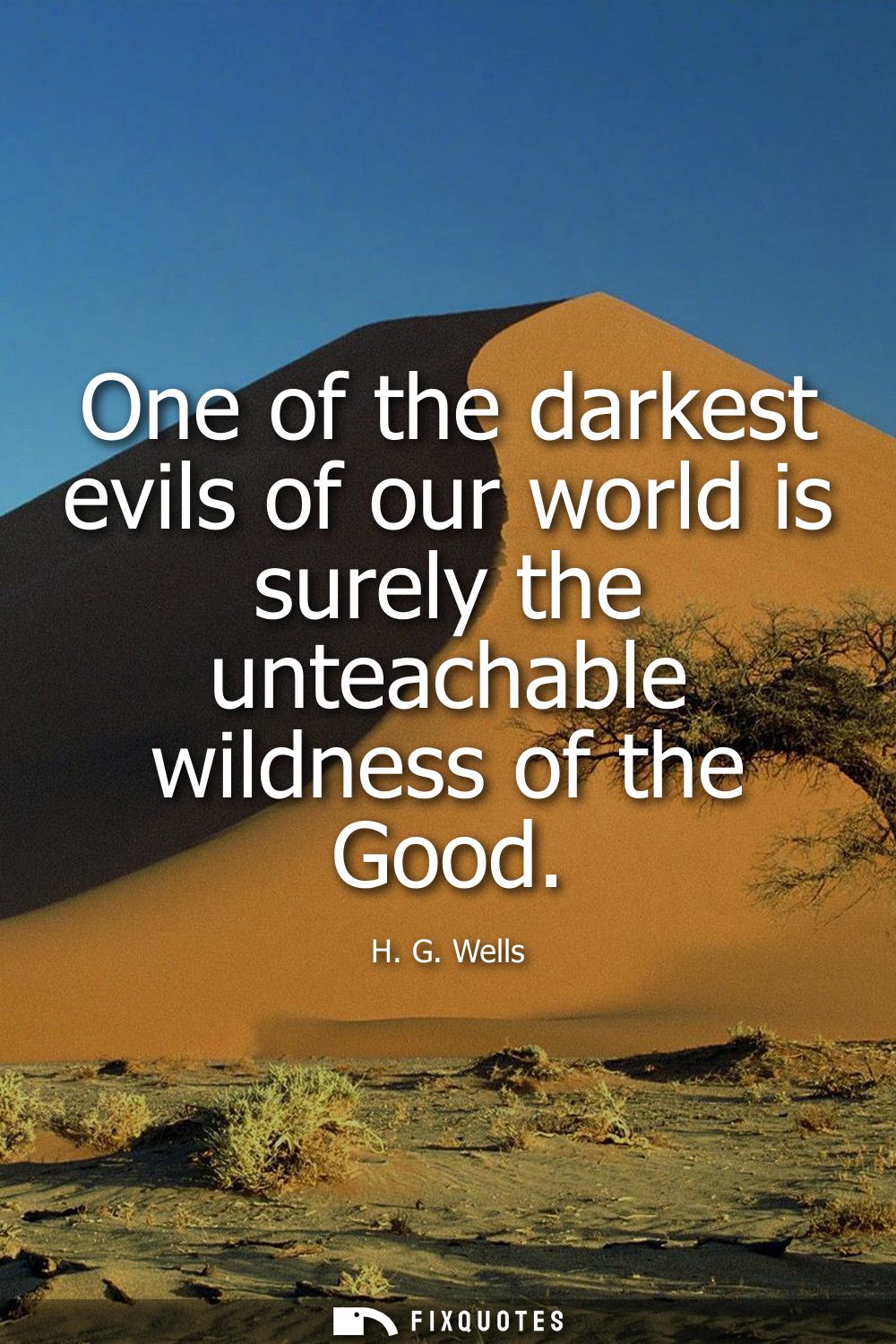
"One of the darkest evils of our world is surely the unteachable wildness of the Good"
About this Quote
Wells wrote in an age of grand moral projects sold as progress - empire as uplift, war as civilization’s necessary surgery, scientific rationality as a permission slip to redesign human lives. Against that backdrop, the phrase “darkest evils” reads less like melodrama than diagnosis. He’s naming how atrocities often arrive wearing the clean uniform of benevolence. The people doing harm may genuinely think they’re rescuing, purifying, improving. That’s precisely the problem: they’re insulated from doubt by their own halo.
The sentence works because it flips a comforting binary. “Good” isn’t automatically tame or wise; it can be feral, a force that can’t be reasoned with because it has mistaken conviction for morality. Wells’s subtext is modern, even algorithmic: the most catastrophic actors are often those certain they’re on the right side of history, and therefore exempt from learning, compromise, or shame. The quote is a demand for teachability as the minimum safeguard against moral violence.
Quote Details
| Topic | Ethics & Morality |
|---|---|
| Source | Help us find the source |
| Cite |
Citation Formats
APA Style (7th ed.)
Wells, H.G. (2026, January 18). One of the darkest evils of our world is surely the unteachable wildness of the Good. FixQuotes. https://fixquotes.com/quotes/one-of-the-darkest-evils-of-our-world-is-surely-12840/
Chicago Style
Wells, H.G. "One of the darkest evils of our world is surely the unteachable wildness of the Good." FixQuotes. January 18, 2026. https://fixquotes.com/quotes/one-of-the-darkest-evils-of-our-world-is-surely-12840/.
MLA Style (9th ed.)
"One of the darkest evils of our world is surely the unteachable wildness of the Good." FixQuotes, 18 Jan. 2026, https://fixquotes.com/quotes/one-of-the-darkest-evils-of-our-world-is-surely-12840/. Accessed 28 Mar. 2026.