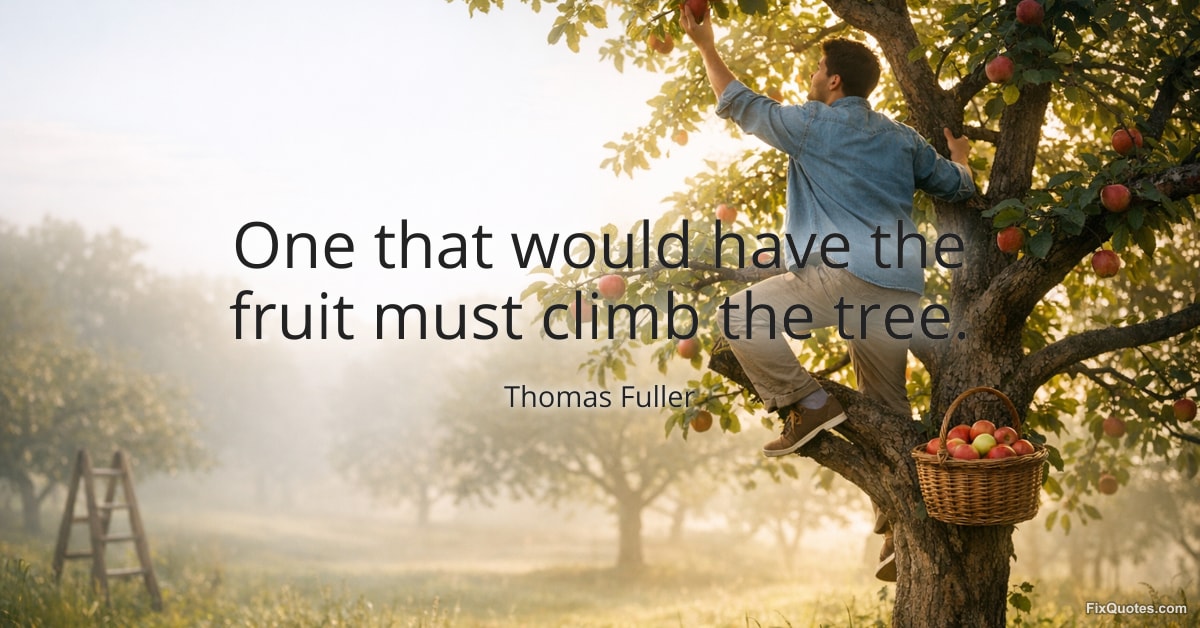
"One that would have the fruit must climb the tree"
About this Quote
Desire, Fuller implies, is not a mood; its proof is physical. "One that would have the fruit must climb the tree" takes a homely image and turns it into a quiet moral trap: if you want the sweetness, you accept the scratchy bark, the height, the risk of falling. The line works because it refuses to flatter the listener with grand talk of destiny or deserving. It puts agency back in the body. No climb, no fruit.
As a 17th-century English clergyman, Fuller is writing into a world where "vocation" and "virtue" are inseparable from effort. The proverb carries a Protestant-inflected ethic without preaching a sermon: salvation may be divine, but daily life is a ledger of diligence. The tree is also social reality. In a rigid hierarchy of patronage, land, and status, advancement often required literal and figurative climbing - apprenticeship, deference, strategic alliances. Fuller doesn't pretend that the fruit is evenly distributed; he just insists thatn that wanting is not a claim.
The subtext is mildly corrective: stop complaining about the harvest if you never entered the orchard. That scold can sound bracing or cruel depending on who's listening. Read from below, it can become bootstrap rhetoric. Read more carefully, it is an argument about consent: by choosing a goal, you choose its costs. Fuller makes the bargain explicit, which is why the proverb survives. It names the part we prefer to keep vague: effort isn't an accessory to desire; it's the admission price.
As a 17th-century English clergyman, Fuller is writing into a world where "vocation" and "virtue" are inseparable from effort. The proverb carries a Protestant-inflected ethic without preaching a sermon: salvation may be divine, but daily life is a ledger of diligence. The tree is also social reality. In a rigid hierarchy of patronage, land, and status, advancement often required literal and figurative climbing - apprenticeship, deference, strategic alliances. Fuller doesn't pretend that the fruit is evenly distributed; he just insists thatn that wanting is not a claim.
The subtext is mildly corrective: stop complaining about the harvest if you never entered the orchard. That scold can sound bracing or cruel depending on who's listening. Read from below, it can become bootstrap rhetoric. Read more carefully, it is an argument about consent: by choosing a goal, you choose its costs. Fuller makes the bargain explicit, which is why the proverb survives. It names the part we prefer to keep vague: effort isn't an accessory to desire; it's the admission price.
Quote Details
| Topic | Perseverance |
|---|
More Quotes by Thomas
Add to List