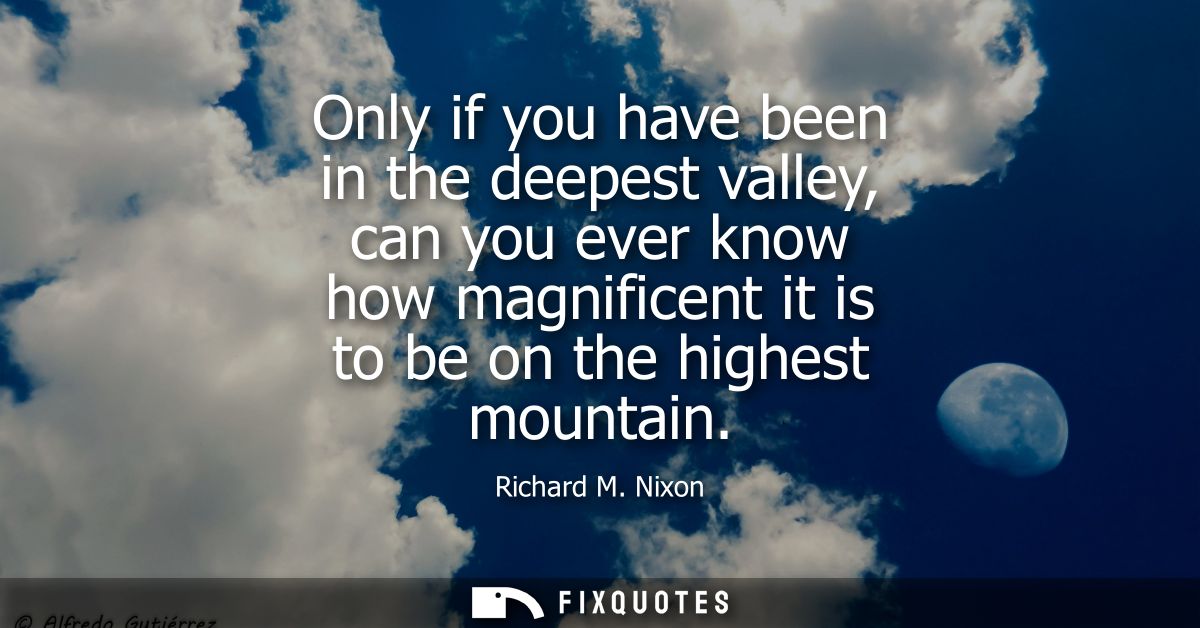
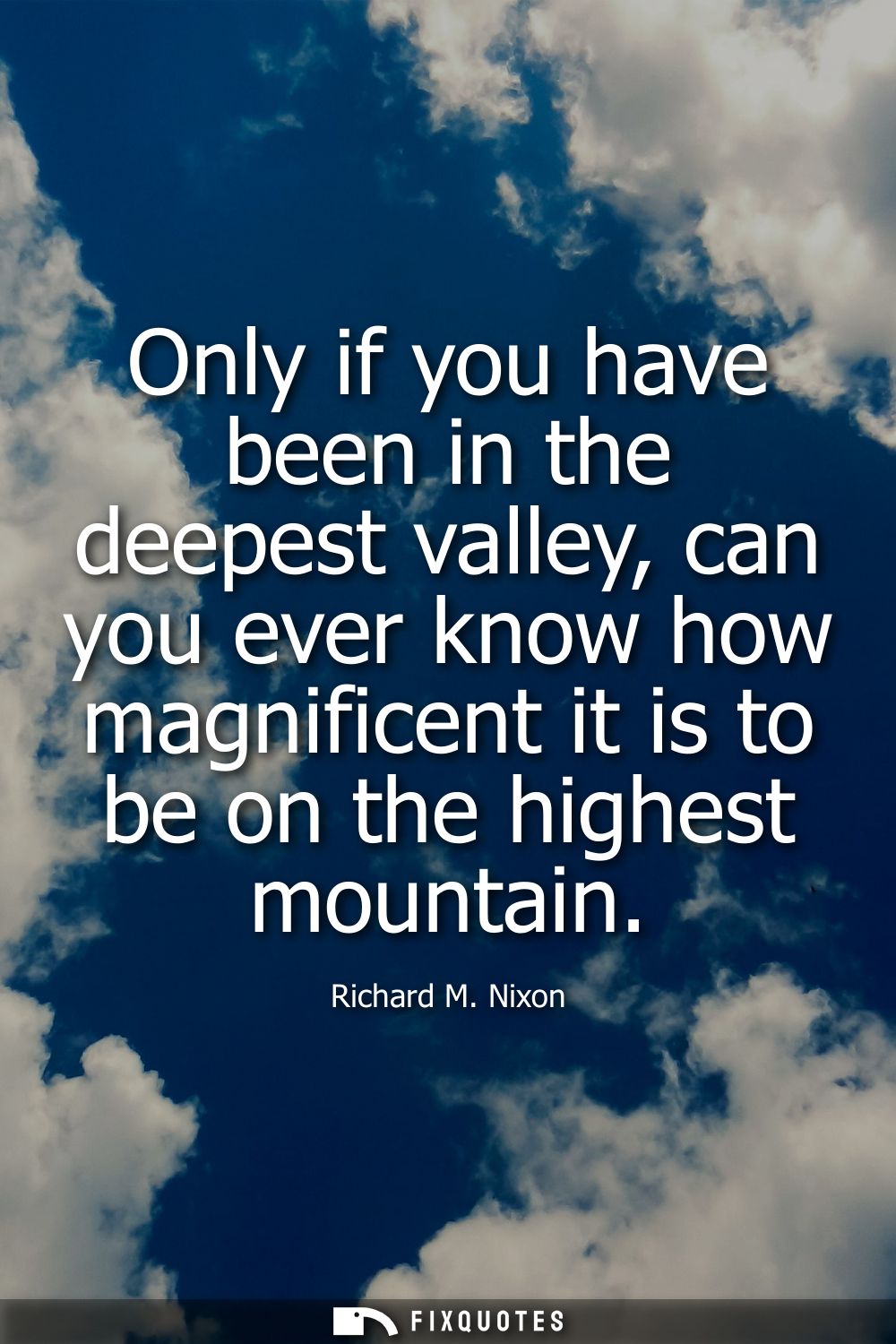
"Only if you have been in the deepest valley can you ever know how magnificent it is to be on the highest mountain"
About this Quote
The subtext is more complicated, because Nixon’s valleys were both real and self-mythologized. He experienced spectacular reversals (most famously the 1960 loss and the 1962 California defeat, when he delivered his “you won’t have Nixon to kick around anymore” exit). He also produced valleys of his own making. When the speaker is Nixon, “valley” can’t help but echo with Watergate-era associations: disgrace, exposure, consequences. The mountain, in that light, isn’t just success; it’s rehabilitation, the hope of being remembered for geopolitics rather than paranoia.
Rhetorically, the quote works because it turns a defensiveness into a promise. It asks listeners to reframe humiliation as an investment that will pay off in a sweeter view from the top. That’s classic Nixon: grievance transmuted into discipline, adversity used not to soften the self, but to harden a narrative of deserved ascent.
Quote Details
| Topic | Overcoming Obstacles |
|---|---|
| Source | Help us find the source |
| Cite |
Citation Formats
APA Style (7th ed.)
Nixon, Richard M. (2026, February 16). Only if you have been in the deepest valley can you ever know how magnificent it is to be on the highest mountain. FixQuotes. https://fixquotes.com/quotes/only-if-you-have-been-in-the-deepest-valley-can-35723/
Chicago Style
Nixon, Richard M. "Only if you have been in the deepest valley can you ever know how magnificent it is to be on the highest mountain." FixQuotes. February 16, 2026. https://fixquotes.com/quotes/only-if-you-have-been-in-the-deepest-valley-can-35723/.
MLA Style (9th ed.)
"Only if you have been in the deepest valley can you ever know how magnificent it is to be on the highest mountain." FixQuotes, 16 Feb. 2026, https://fixquotes.com/quotes/only-if-you-have-been-in-the-deepest-valley-can-35723/. Accessed 9 Mar. 2026.