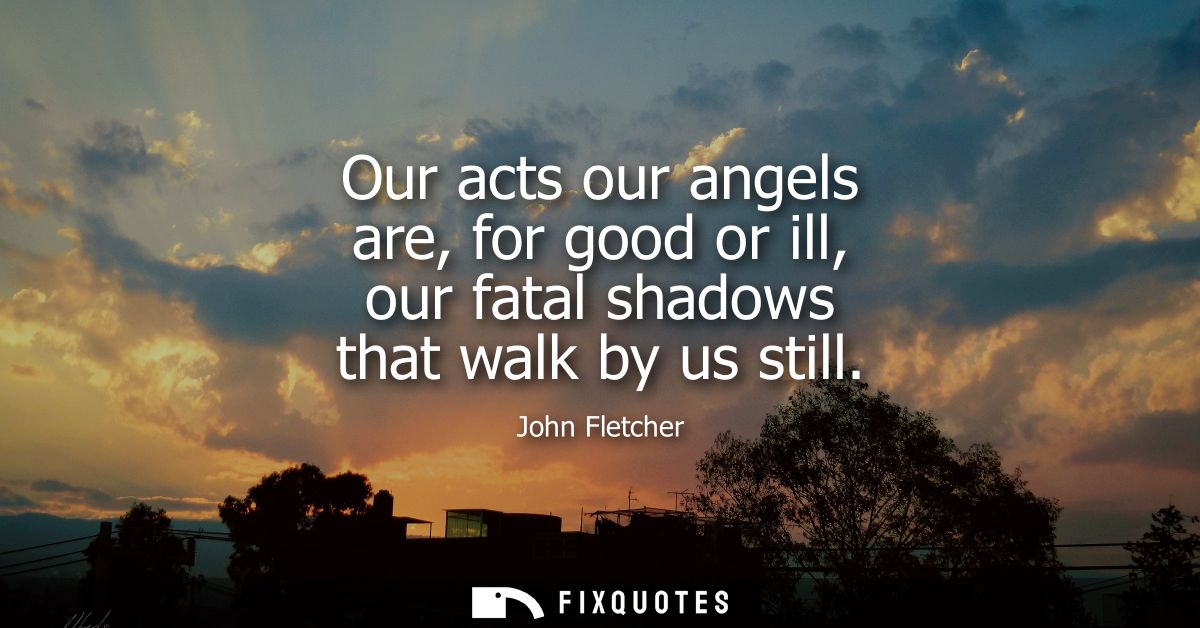
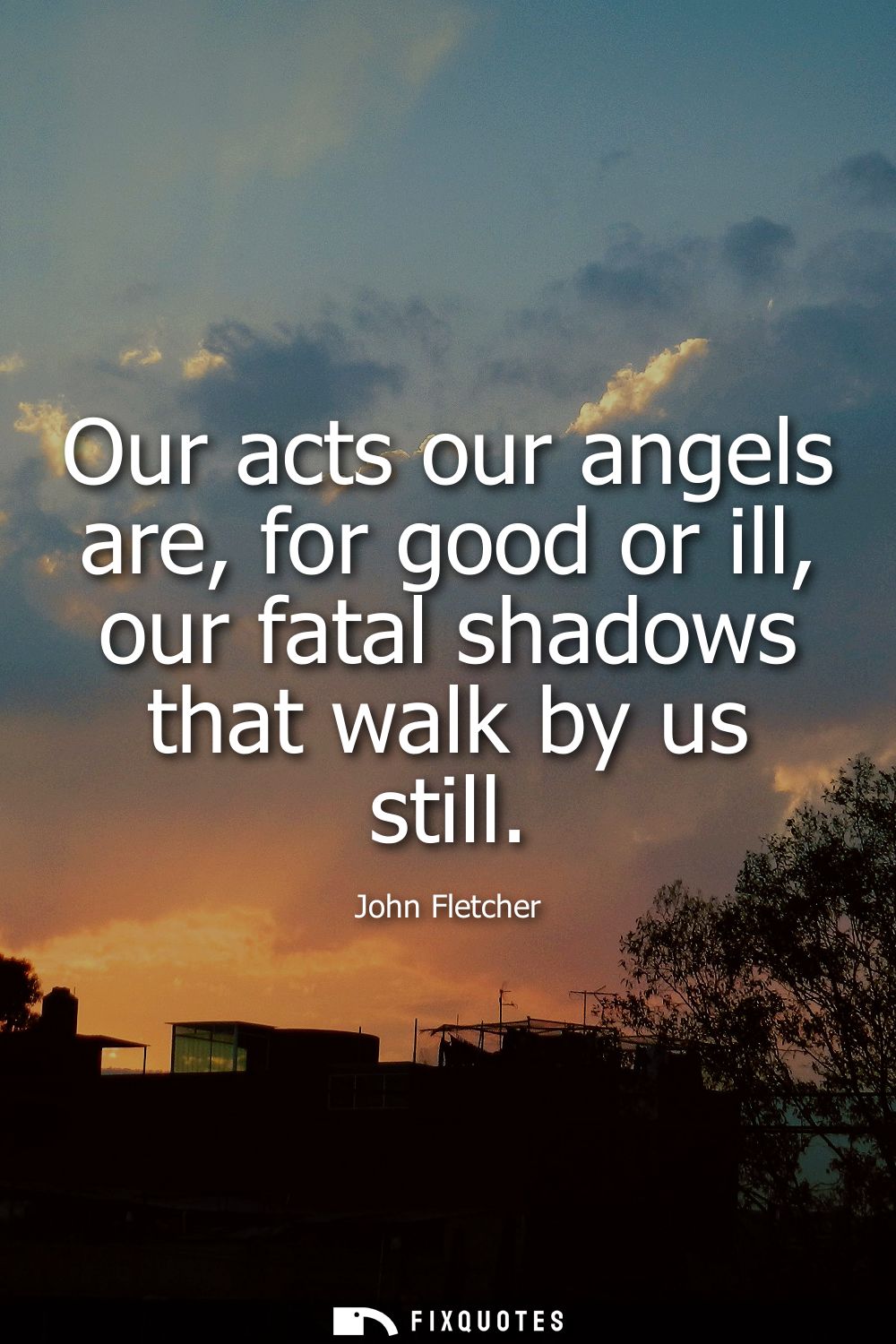
"Our acts our angels are, for good or ill, our fatal shadows that walk by us still"
About this Quote
The subtext is steeped in early 17th-century anxiety about agency and consequence. Fletcher is writing in a theatrical culture obsessed with moral causality: tragedies where one choice metastasizes into a destiny, and comedies where a lie keeps breeding new lies. “For good or ill” compresses a whole worldview into four words: the shadow isn’t only guilt; it’s also merit, the accumulated weight of generosity, bravery, restraint. Either way, you’re haunted - but by yourself.
Calling the shadow “fatal” is the slyest move. It suggests doom, but also inevitability: not that the universe is cruel, but that cause and effect is. Fletcher’s intent feels less like sermonizing than like stagecraft. It’s a line meant to land in the body, not the intellect: a reminder that in a world of masks and performances, the one role you can’t exit is the one written by what you’ve already done.
Quote Details
| Topic | Ethics & Morality |
|---|---|
| Source | Line from the play The Faithful Shepherdess by John Fletcher: “Our acts our angels are, or good or ill, our fatal shadows that walk by us still.” |
| Cite |
Citation Formats
APA Style (7th ed.)
Fletcher, John. (2026, January 15). Our acts our angels are, for good or ill, our fatal shadows that walk by us still. FixQuotes. https://fixquotes.com/quotes/our-acts-our-angels-are-for-good-or-ill-our-fatal-99489/
Chicago Style
Fletcher, John. "Our acts our angels are, for good or ill, our fatal shadows that walk by us still." FixQuotes. January 15, 2026. https://fixquotes.com/quotes/our-acts-our-angels-are-for-good-or-ill-our-fatal-99489/.
MLA Style (9th ed.)
"Our acts our angels are, for good or ill, our fatal shadows that walk by us still." FixQuotes, 15 Jan. 2026, https://fixquotes.com/quotes/our-acts-our-angels-are-for-good-or-ill-our-fatal-99489/. Accessed 13 Feb. 2026.