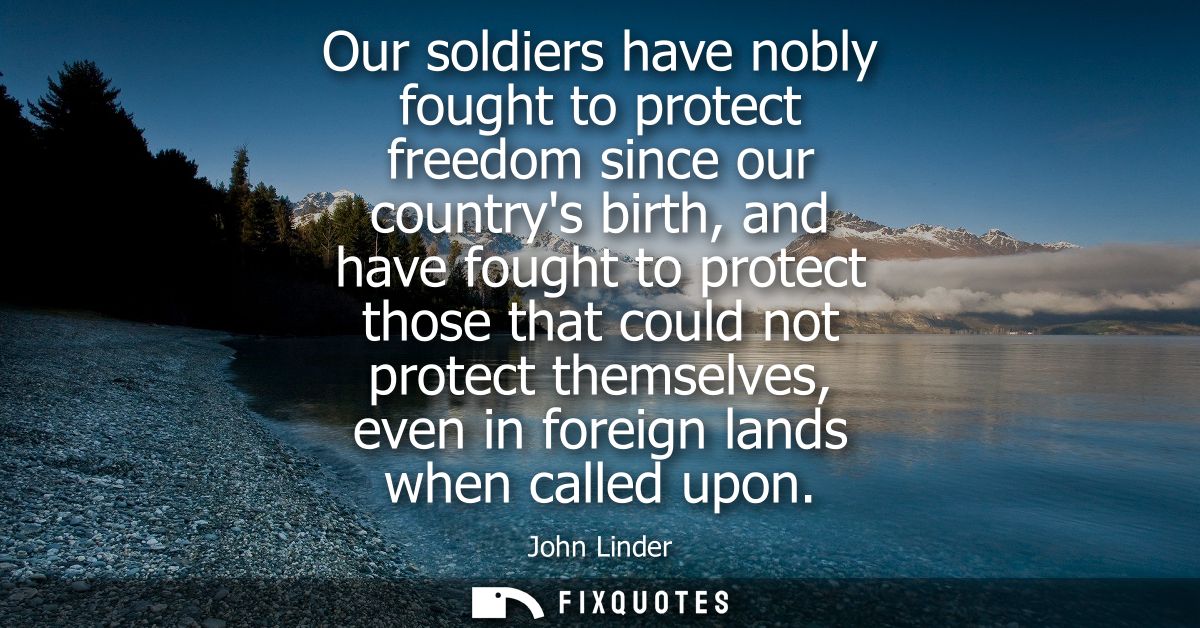
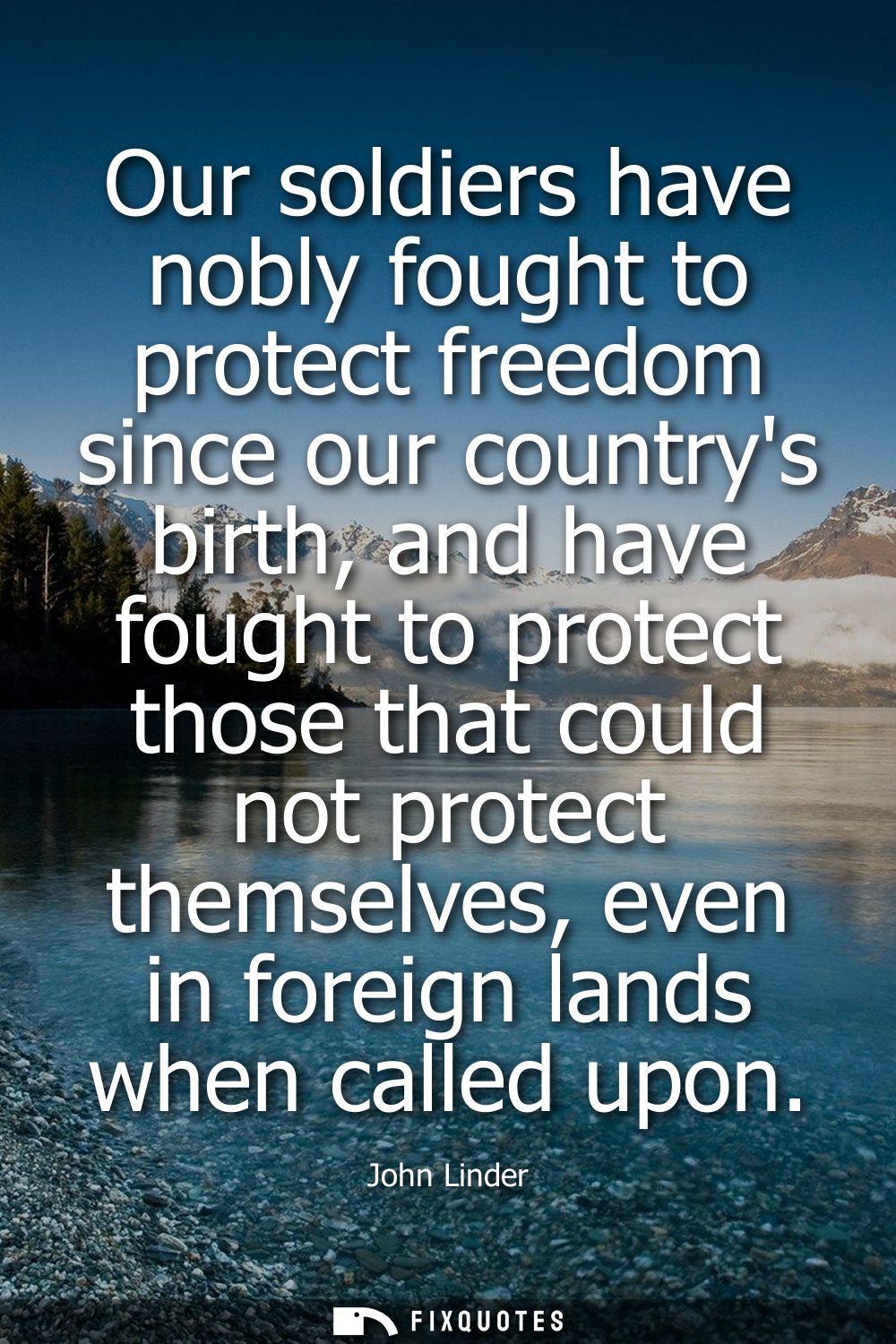
"Our soldiers have nobly fought to protect freedom since our country's birth, and have fought to protect those that could not protect themselves, even in foreign lands, when called upon"
About this Quote
The key word is “freedom,” deployed as a catchall moral alibi. It’s elastic enough to cover defensive wars, disastrous interventions, and everything in between, while sounding nonpartisan and incontestable. Pair that with “those that could not protect themselves,” and you get a classic paternalistic script: America as adult-in-the-room, righteous by definition, empowered to decide who needs saving and how. That framing quietly sidelines the agency of people in “foreign lands” and, just as importantly, domestic dissent. If the mission is rescue, critics become obstructors of compassion.
Context matters: coming from a politician, this is less memorial than messaging. It’s the kind of sentence built for ceremonies, campaign stops, and votes on defense spending - language that wraps military service in civic sanctity and asks the audience to transfer that reverence to the decisions made by leaders. The subtext is transactional: honor the soldier, trust the state, stop asking awkward questions about costs, consequences, or contradictions.
Quote Details
| Topic | Military & Soldier |
|---|---|
| Source | Help us find the source |
| Cite |
Citation Formats
APA Style (7th ed.)
Linder, John. (2026, February 18). Our soldiers have nobly fought to protect freedom since our country's birth, and have fought to protect those that could not protect themselves, even in foreign lands, when called upon. FixQuotes. https://fixquotes.com/quotes/our-soldiers-have-nobly-fought-to-protect-freedom-57510/
Chicago Style
Linder, John. "Our soldiers have nobly fought to protect freedom since our country's birth, and have fought to protect those that could not protect themselves, even in foreign lands, when called upon." FixQuotes. February 18, 2026. https://fixquotes.com/quotes/our-soldiers-have-nobly-fought-to-protect-freedom-57510/.
MLA Style (9th ed.)
"Our soldiers have nobly fought to protect freedom since our country's birth, and have fought to protect those that could not protect themselves, even in foreign lands, when called upon." FixQuotes, 18 Feb. 2026, https://fixquotes.com/quotes/our-soldiers-have-nobly-fought-to-protect-freedom-57510/. Accessed 3 Apr. 2026.