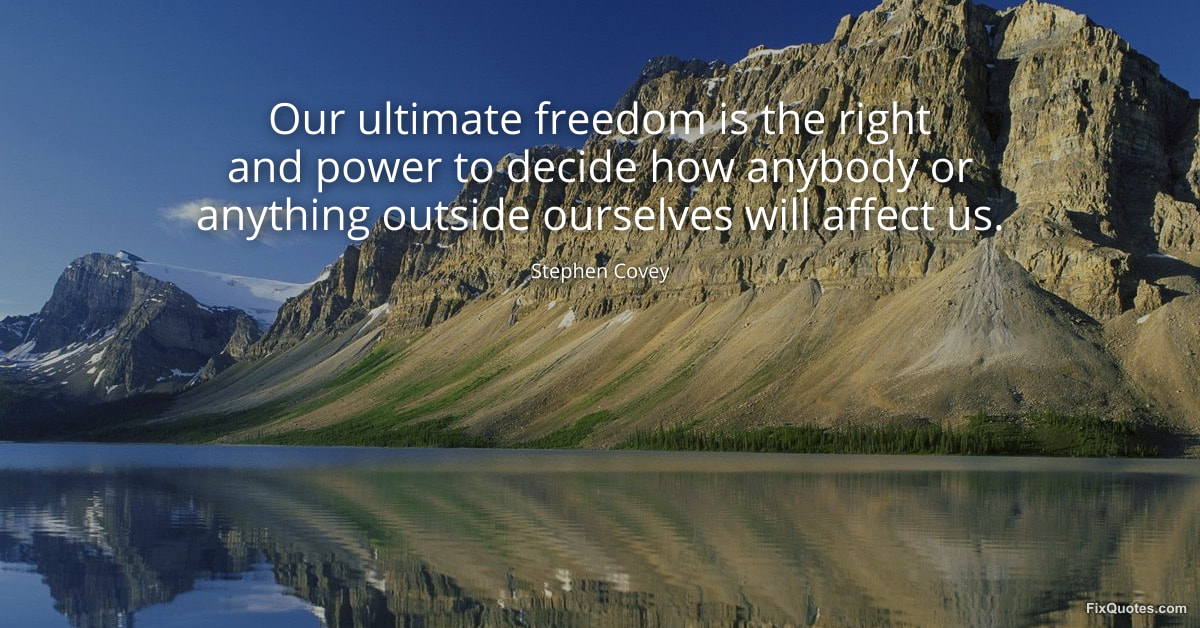
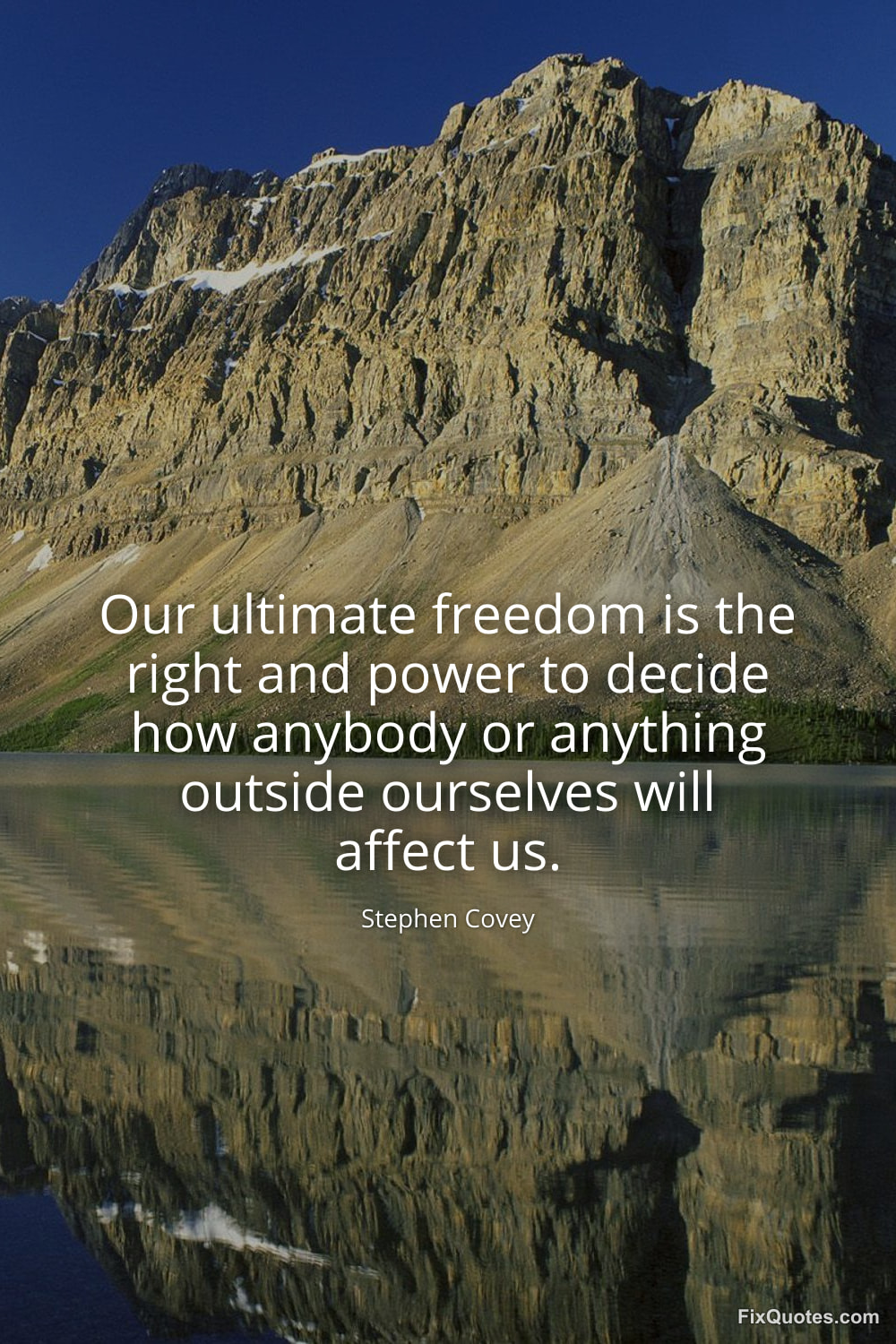
"Our ultimate freedom is the right and power to decide how anybody or anything outside ourselves will affect us"
About this Quote
Covey’s line reads like a manifesto for the boardroom self: calm, unflappable, “highly effective” under pressure. As a businessman and management guru, he’s not writing poetry; he’s selling a portable form of control. The genius is how it reframes freedom away from politics or circumstance and into an internal asset you can cultivate, like a skill or a brand. If you can’t command the market, command your reaction to it.
The specific intent is motivational, but not in the soft, inspirational-poster way. It’s a strategy statement: outsource less of your emotional life to other people’s behavior, corporate chaos, or bad news. “Right and power” matters here. “Right” borrows the language of civic liberty; “power” borrows the language of business leverage. Together they imply you’re not just allowed to self-regulate, you’re capable of it - and if you’re not, that’s a solvable performance gap.
The subtext carries a distinctly late-20th-century self-management ethic: the good worker, spouse, or leader doesn’t demand the world change; they change their inputs, their interpretations, their response. That’s empowering, and it’s also quietly disciplinary. If your feelings are always your responsibility, then other people and systems get a little less accountable for what they do to you.
Contextually, it fits Covey’s broader “proactive” philosophy: success begins where stimulus meets response. It’s the language of resilience before “resilience” became corporate wallpaper - and it still lands because it offers something rare: a lever you can actually pull.
The specific intent is motivational, but not in the soft, inspirational-poster way. It’s a strategy statement: outsource less of your emotional life to other people’s behavior, corporate chaos, or bad news. “Right and power” matters here. “Right” borrows the language of civic liberty; “power” borrows the language of business leverage. Together they imply you’re not just allowed to self-regulate, you’re capable of it - and if you’re not, that’s a solvable performance gap.
The subtext carries a distinctly late-20th-century self-management ethic: the good worker, spouse, or leader doesn’t demand the world change; they change their inputs, their interpretations, their response. That’s empowering, and it’s also quietly disciplinary. If your feelings are always your responsibility, then other people and systems get a little less accountable for what they do to you.
Contextually, it fits Covey’s broader “proactive” philosophy: success begins where stimulus meets response. It’s the language of resilience before “resilience” became corporate wallpaper - and it still lands because it offers something rare: a lever you can actually pull.
Quote Details
| Topic | Freedom |
|---|---|
| Source | Help us find the source |
More Quotes by Stephen
Add to List