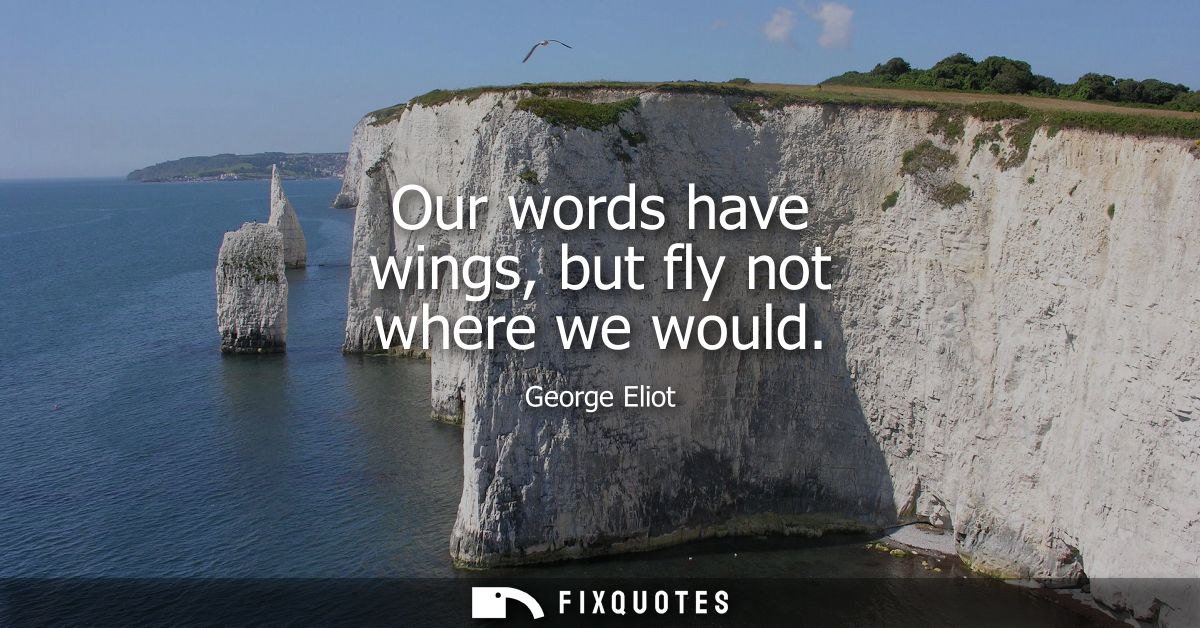
"Our words have wings, but fly not where we would"
About this Quote
Language is never just a delivery system; it is a release. George Eliot’s line lands because it treats speech as something you set free and then can’t fully steer, a neat inversion of the comforting idea that intentions control outcomes. “Wings” is generous, almost romantic - words can travel, circulate, endure. The sting is in the second half: they “fly not where we would.” The sentence pivots from possibility to helplessness, capturing how quickly meaning slips its leash once it leaves the mouth or the page.
Eliot is writing out of a Victorian world obsessed with propriety, reputation, and the social afterlife of a remark. In her novels, a single phrase can harden into gossip, a moral verdict, a marriage prospect lost. The subtext is that society doesn’t merely hear words; it repurposes them. People translate language through class prejudice, gender expectations, wounded pride, and the hunger for narrative. Your sentence becomes their story.
The intent isn’t to argue for silence but for humility about communication. We like to imagine our words as arrows aimed at a target: clear point, clean hit. Eliot calls them birds: they scatter, they perch in unintended places, they get mistaken for omens. There’s also an author’s rueful self-awareness here - writing itself is an act of letting sentences out into the wild, where readers will inevitably find meanings the writer didn’t plan. In that tension between craft and loss of control, Eliot nails the modern condition: you can choose your words, not their destination.
Eliot is writing out of a Victorian world obsessed with propriety, reputation, and the social afterlife of a remark. In her novels, a single phrase can harden into gossip, a moral verdict, a marriage prospect lost. The subtext is that society doesn’t merely hear words; it repurposes them. People translate language through class prejudice, gender expectations, wounded pride, and the hunger for narrative. Your sentence becomes their story.
The intent isn’t to argue for silence but for humility about communication. We like to imagine our words as arrows aimed at a target: clear point, clean hit. Eliot calls them birds: they scatter, they perch in unintended places, they get mistaken for omens. There’s also an author’s rueful self-awareness here - writing itself is an act of letting sentences out into the wild, where readers will inevitably find meanings the writer didn’t plan. In that tension between craft and loss of control, Eliot nails the modern condition: you can choose your words, not their destination.
Quote Details
| Topic | Wisdom |
|---|
More Quotes by George
Add to List