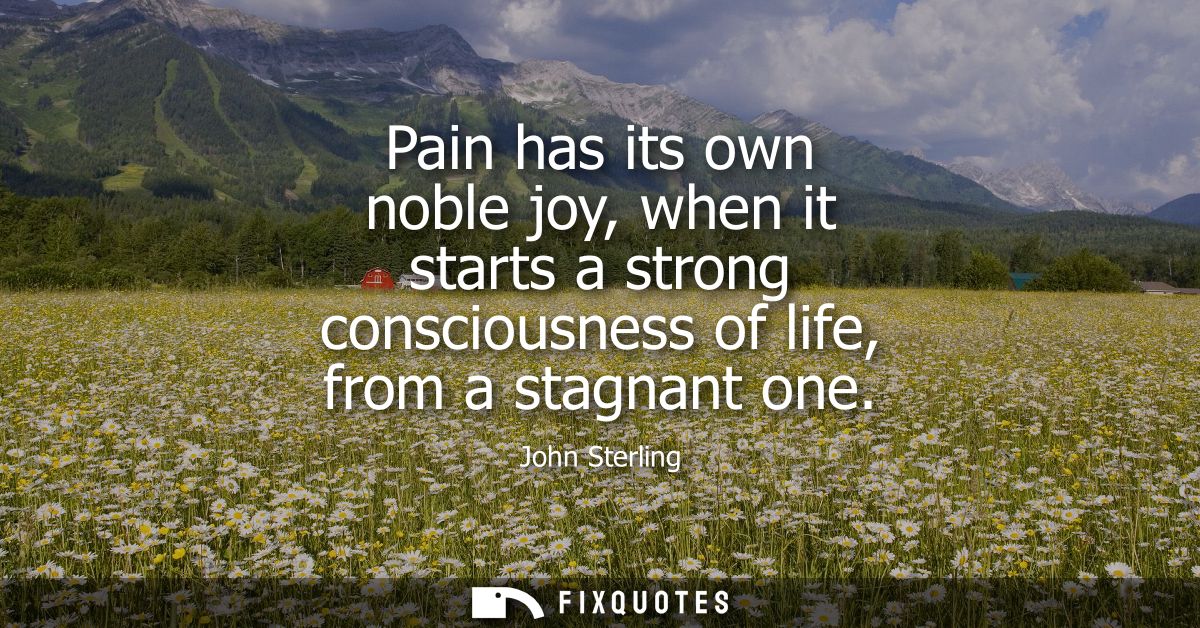
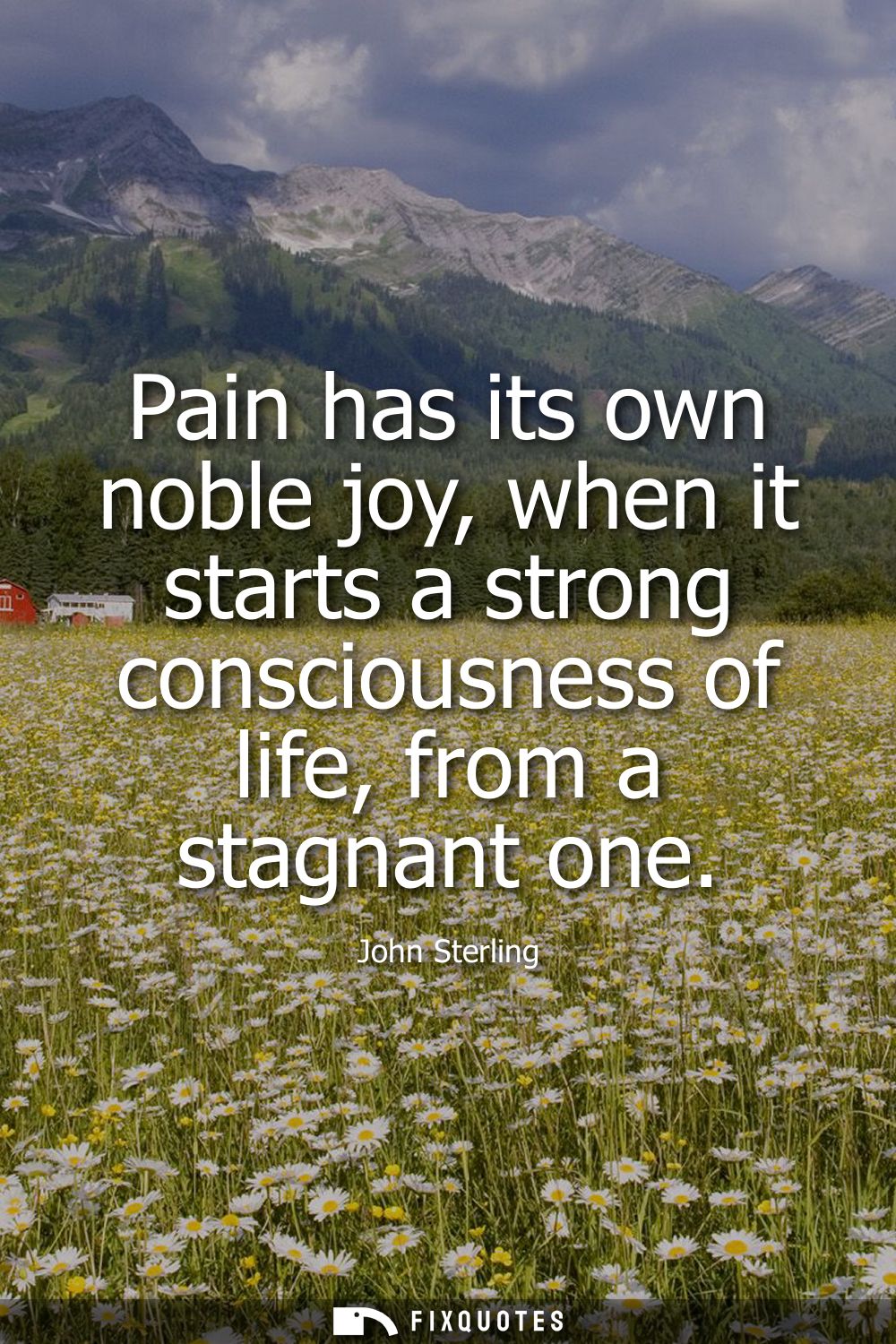
"Pain has its own noble joy when it starts a strong consciousness of life from a stagnant one"
About this Quote
The craft is in the contrast. "Strong consciousness of life" isn’t mystical; it’s almost physiological, an intensification of attention. Sterling builds a small drama of transformation: from "stagnant" to "strong". The sentence makes pain instrumental, not redemptive. It doesn’t claim suffering is good in itself; it claims it can produce a specific mental effect: awareness sharpened by stakes.
Context matters. Sterling wrote in an age fascinated by moral earnestness, spiritual striving, and the idea that character is forged under pressure. Early-19th-century Britain was also a culture negotiating rapid social change and personal doubt; religion’s certainties were wobbling for many educated writers, and "consciousness" becomes the new altar. The subtext feels almost therapeutic before therapy: if life feels dull and unreal, intensity - even the unwanted kind - can restore meaning. It’s a stern comfort, and it works because it refuses sentimentality while still offering a lifeline: wake up, feel, live.
Quote Details
| Topic | Wisdom |
|---|---|
| Source | Help us find the source |
| Cite |
Citation Formats
APA Style (7th ed.)
Sterling, John. (2026, February 16). Pain has its own noble joy when it starts a strong consciousness of life from a stagnant one. FixQuotes. https://fixquotes.com/quotes/pain-has-its-own-noble-joy-when-it-starts-a-131175/
Chicago Style
Sterling, John. "Pain has its own noble joy when it starts a strong consciousness of life from a stagnant one." FixQuotes. February 16, 2026. https://fixquotes.com/quotes/pain-has-its-own-noble-joy-when-it-starts-a-131175/.
MLA Style (9th ed.)
"Pain has its own noble joy when it starts a strong consciousness of life from a stagnant one." FixQuotes, 16 Feb. 2026, https://fixquotes.com/quotes/pain-has-its-own-noble-joy-when-it-starts-a-131175/. Accessed 27 Mar. 2026.