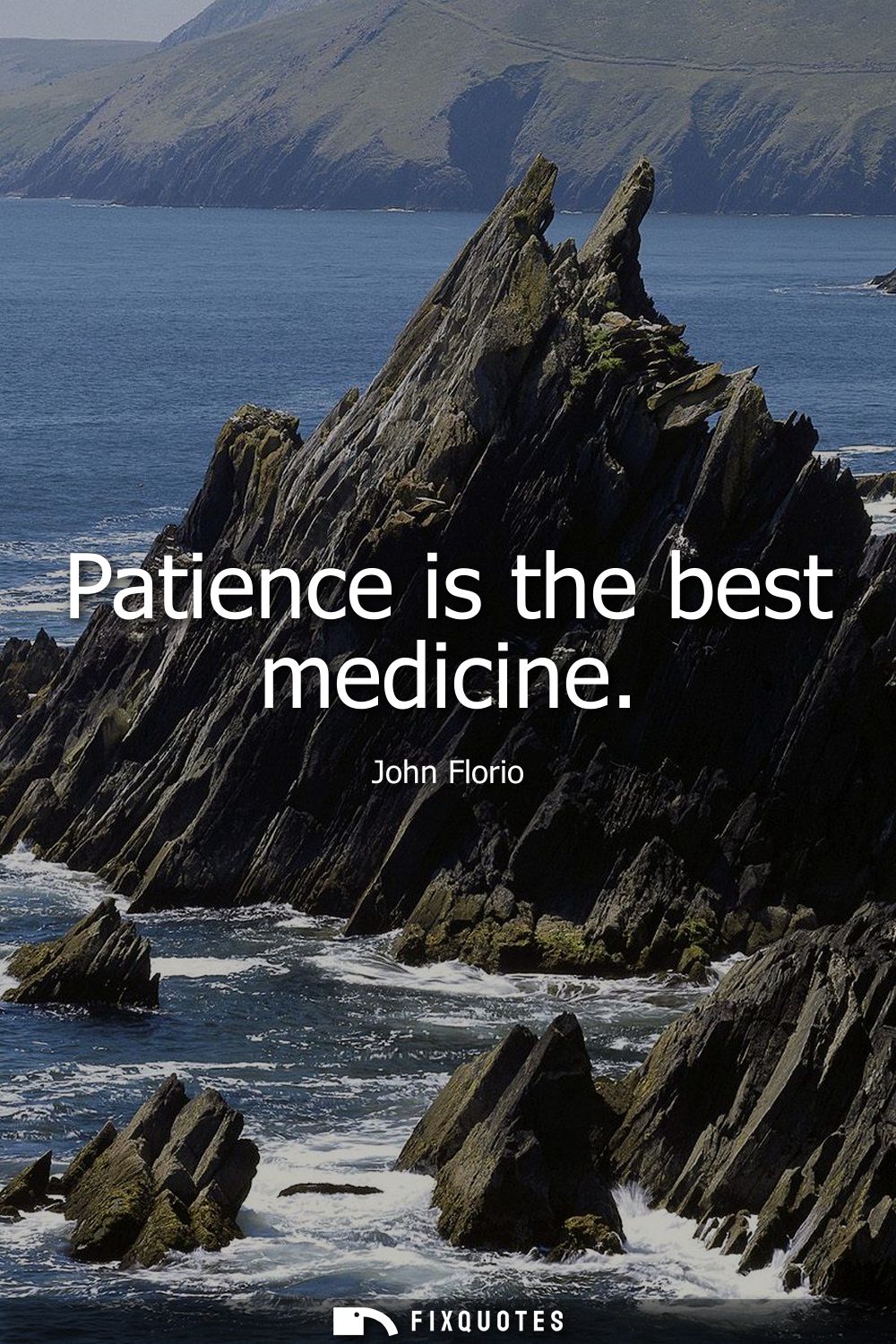
"Patience is the best medicine"
About this Quote
A tidy proverb like this works because it sounds like care advice while smuggling in a moral command. "Patience is the best medicine" borrows the authority of the clinic to sell a psychological discipline: wait, endure, don’t flail. In Florio's era, "medicine" wasn’t just a pill you took; it was a regimen - a whole theory of balance, temperament, and time. The line flatters delay as treatment, turning what can feel like powerless inaction into a chosen practice with a promised payoff.
The subtext is social as much as personal. Late-Elizabethan and early Jacobean England was anxious about volatility: religious conflict, court intrigue, plague cycles, and precarious livelihoods. Patience wasn’t merely a private virtue; it was a political lubricant. If you can persuade people that waiting is healthful, you reduce the costs of dissent and panic. The phrase gently recruits the speaker into authority: I’m not denying you relief, I’m prescribing it.
Florio, a writer and translator steeped in Renaissance humanism, also understood proverbs as portable technology - language that travels farther than arguments. The brilliance here is its economy. "Best" is a quiet flex, implying competition: against anger, against rash action, against quack cures, against desperate shortcuts. It’s soothing and slightly chastising at once. You can hear the implied diagnosis: your impatience is the symptom; your suffering may not end quickly, but your response can be disciplined now.
The subtext is social as much as personal. Late-Elizabethan and early Jacobean England was anxious about volatility: religious conflict, court intrigue, plague cycles, and precarious livelihoods. Patience wasn’t merely a private virtue; it was a political lubricant. If you can persuade people that waiting is healthful, you reduce the costs of dissent and panic. The phrase gently recruits the speaker into authority: I’m not denying you relief, I’m prescribing it.
Florio, a writer and translator steeped in Renaissance humanism, also understood proverbs as portable technology - language that travels farther than arguments. The brilliance here is its economy. "Best" is a quiet flex, implying competition: against anger, against rash action, against quack cures, against desperate shortcuts. It’s soothing and slightly chastising at once. You can hear the implied diagnosis: your impatience is the symptom; your suffering may not end quickly, but your response can be disciplined now.
Quote Details
| Topic | Wisdom |
|---|
More Quotes by John
Add to List