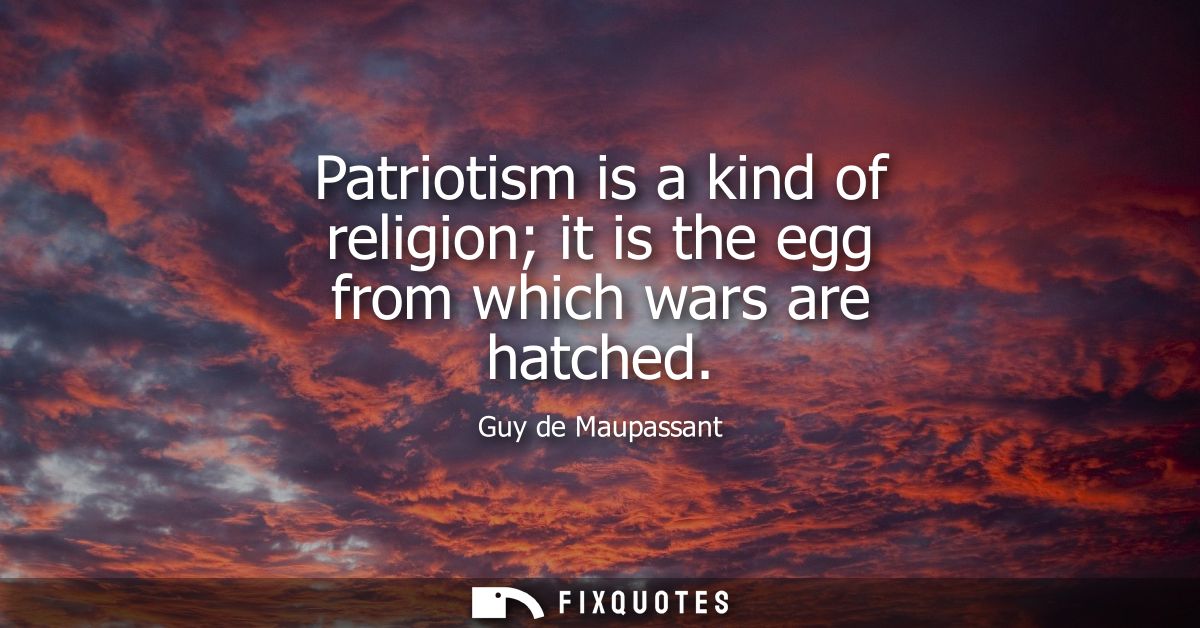
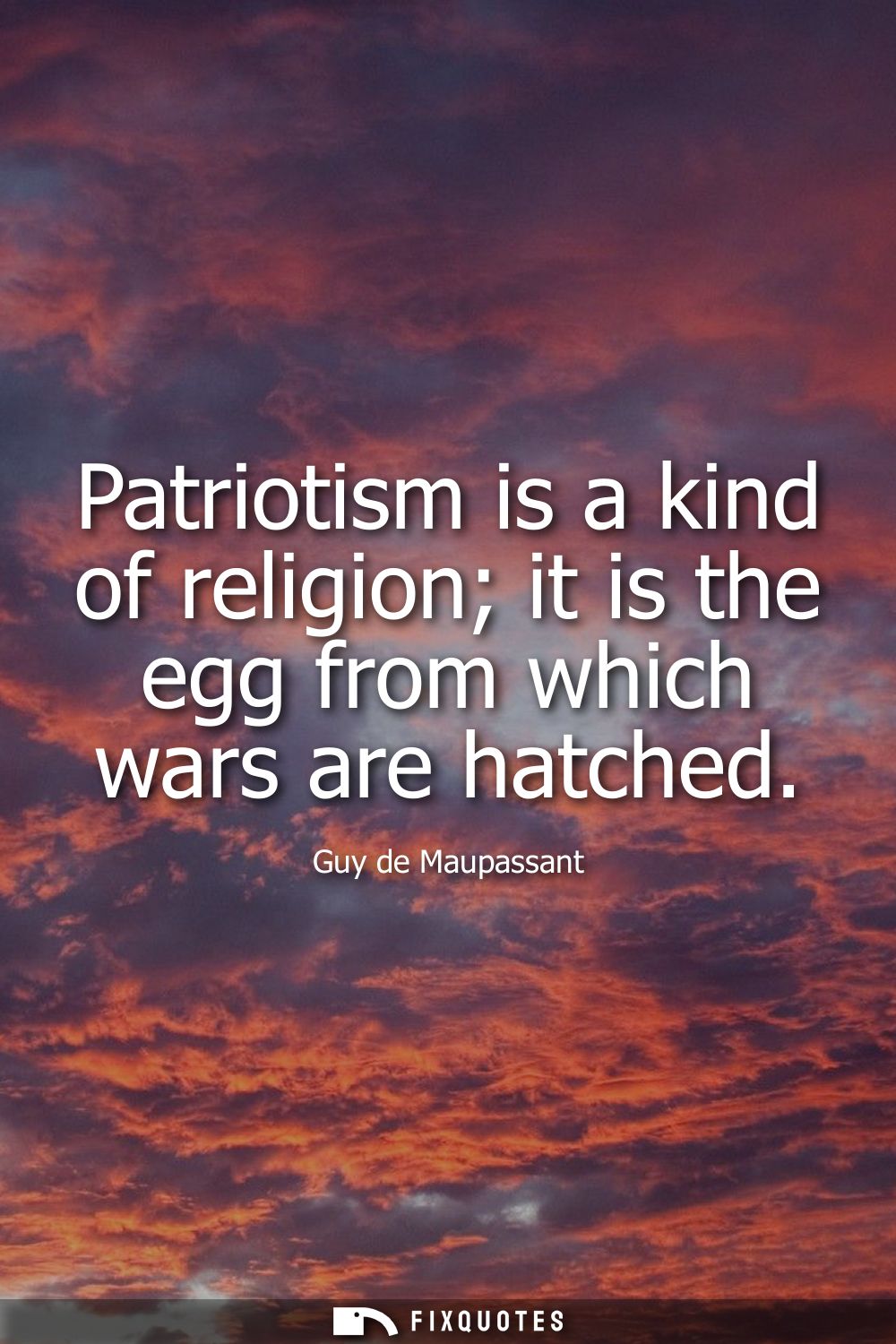
"Patriotism is a kind of religion; it is the egg from which wars are hatched"
About this Quote
The second image does the real work. War isn’t framed as a tragic accident or a necessary evil but as a biological outcome: an egg that hatches on schedule. That metaphor shifts blame away from a single villain and toward a culture that incubates violence long before the first shot. “Hatched” implies warmth, patience, nurturing. Someone has to sit on the egg. The line quietly accuses respectable citizens, not just generals.
Context sharpens the cynicism. Maupassant lived through the Franco-Prussian War and the humiliating collapse of 1870, then watched nationalism harden into a compensatory identity. In that atmosphere, “patriotism” becomes a socially approved intoxication: it flatters the individual with borrowed grandeur while preparing them to accept sacrifice as virtue. The subtext is bleakly modern: if you can get people to worship an abstraction called the nation, you can get them to kill for it - and call it righteousness while you’re at it.
Quote Details
| Topic | War |
|---|---|
| Source | Later attribution: Guy de Maupassant (Guy de Maupassant) modern compilation
Evidence:
sed miss harriet patriotism is a kind of religion it is the egg from which wars are hatched |
| Cite |
Citation Formats
APA Style (7th ed.)
Maupassant, Guy de. (2026, March 21). Patriotism is a kind of religion; it is the egg from which wars are hatched. FixQuotes. https://fixquotes.com/quotes/patriotism-is-a-kind-of-religion-it-is-the-egg-137359/
Chicago Style
Maupassant, Guy de. "Patriotism is a kind of religion; it is the egg from which wars are hatched." FixQuotes. March 21, 2026. https://fixquotes.com/quotes/patriotism-is-a-kind-of-religion-it-is-the-egg-137359/.
MLA Style (9th ed.)
"Patriotism is a kind of religion; it is the egg from which wars are hatched." FixQuotes, 21 Mar. 2026, https://fixquotes.com/quotes/patriotism-is-a-kind-of-religion-it-is-the-egg-137359/. Accessed 21 Mar. 2026.