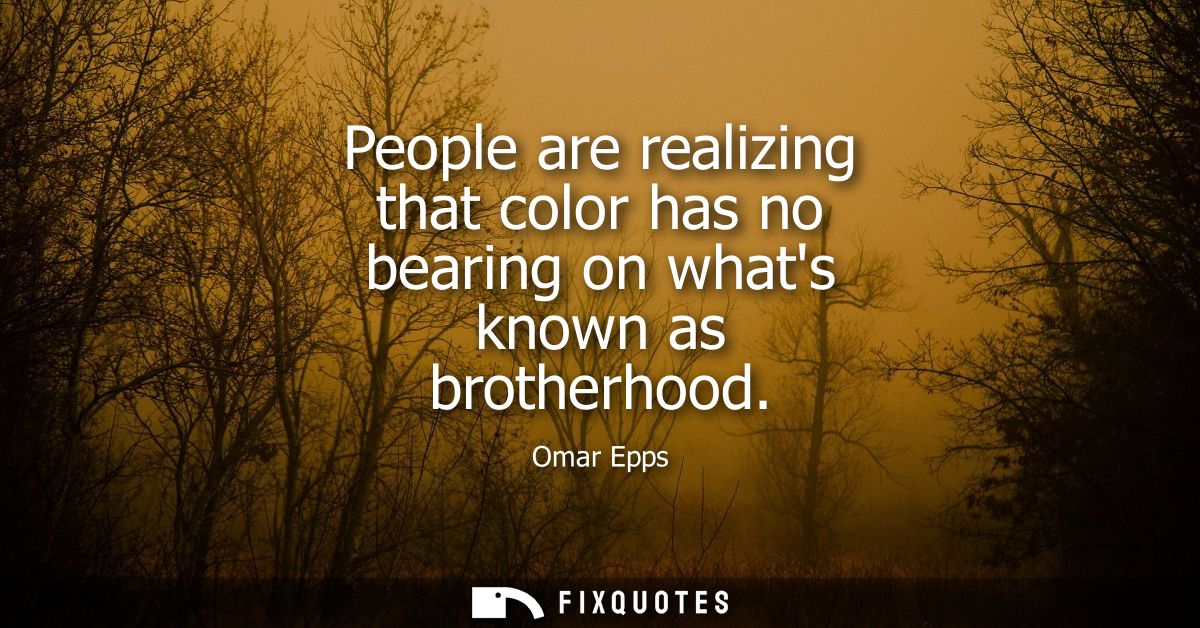
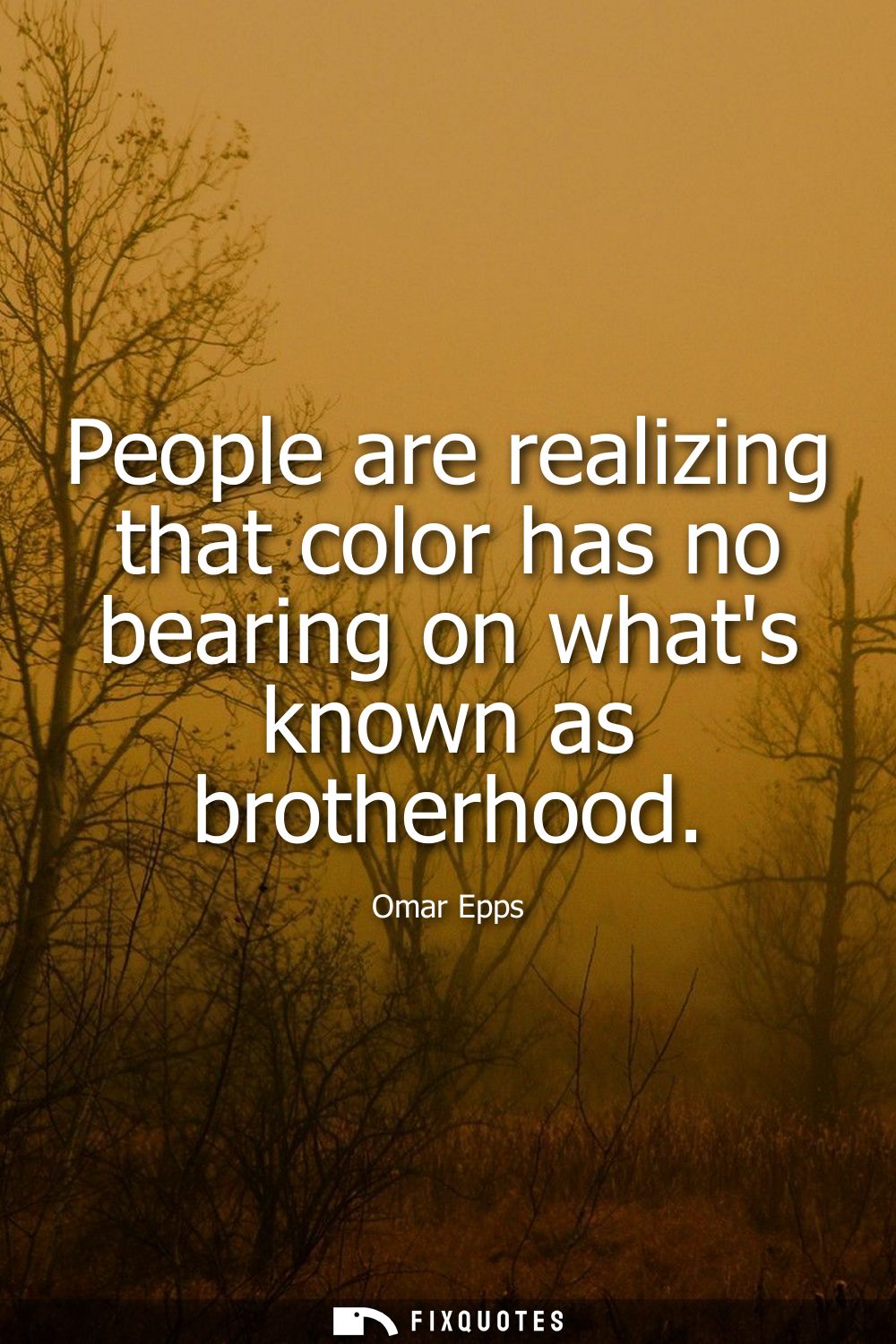
"People are realizing that color has no bearing on what's known as brotherhood"
About this Quote
The most pointed move is the shift from “color” to “what’s known as brotherhood.” Color is treated as a social fact with consequences; brotherhood is treated like a concept under dispute, something people claim allegiance to without agreeing on its requirements. That phrasing hints at hypocrisy: institutions and communities love the language of unity, right up until it demands redistribution of empathy, safety, and opportunity.
Coming from an actor, the intent feels culturally tactical rather than philosophical. Epps has spent a career in narratives where race is either foregrounded or politely erased; he understands how “brotherhood” gets staged. The quote reads as a push against performative solidarity, the kind that celebrates diversity in the abstract while tolerating segregation in practice. It also carries a cautious optimism: “realizing” implies movement, but not victory. Brotherhood isn’t declared here; it’s measured by whether we stop treating skin tone as admissible evidence about who deserves belonging.
Quote Details
| Topic | Equality |
|---|---|
| Source | Help us find the source |
| Cite |
Citation Formats
APA Style (7th ed.)
Epps, Omar. (2026, January 16). People are realizing that color has no bearing on what's known as brotherhood. FixQuotes. https://fixquotes.com/quotes/people-are-realizing-that-color-has-no-bearing-on-118798/
Chicago Style
Epps, Omar. "People are realizing that color has no bearing on what's known as brotherhood." FixQuotes. January 16, 2026. https://fixquotes.com/quotes/people-are-realizing-that-color-has-no-bearing-on-118798/.
MLA Style (9th ed.)
"People are realizing that color has no bearing on what's known as brotherhood." FixQuotes, 16 Jan. 2026, https://fixquotes.com/quotes/people-are-realizing-that-color-has-no-bearing-on-118798/. Accessed 7 Apr. 2026.