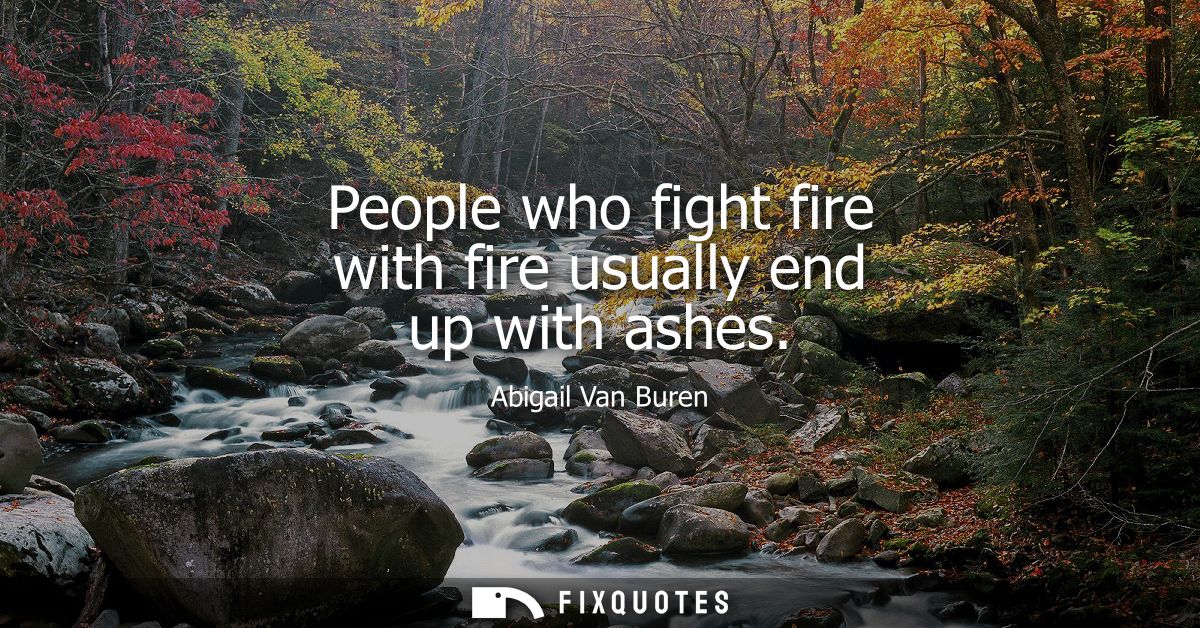
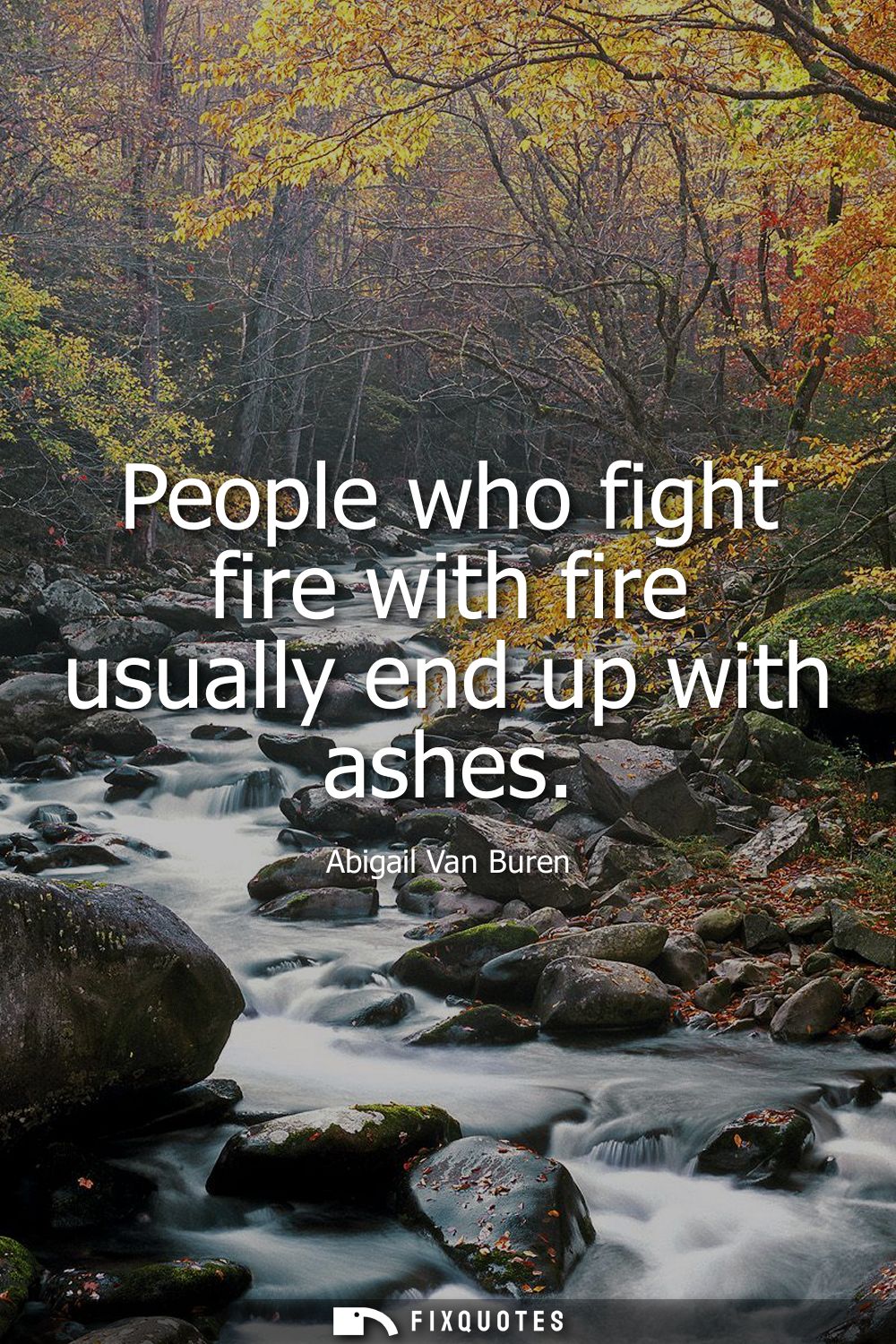
"People who fight fire with fire usually end up with ashes"
About this Quote
“People who fight fire with fire usually end up with ashes” is advice-column wisdom at its sharpest: a homely image that lands like a verdict. Abigail Van Buren, writing as “Dear Abby,” wasn’t offering philosophy for the seminar room; she was arming ordinary readers with a memorable rule for navigating messy human conflict. The line works because it rejects the fantasy of symmetrical revenge - the comforting idea that matching someone’s cruelty will restore balance. Van Buren’s metaphor insists on a harsher arithmetic: escalation doesn’t cancel harm, it multiplies it, and the final tally is collective loss.
The subtext is moral, but also practical. “Fire” is anger, spite, humiliation, the urge to teach someone a lesson. “Ashes” are what’s left after the drama: scorched relationships, reputations, jobs, custody arrangements, friend groups. It’s a warning about collateral damage, aimed at people who feel justified - the most dangerous emotional state, because it turns retaliation into self-respect. By framing vengeance as self-immolation, Van Buren shifts the reader’s identity from righteous avenger to potential casualty.
Context matters: advice columnists were a kind of public therapist before therapy went mainstream, translating private crises into social norms. In mid-century American culture, where “keeping the peace” and maintaining appearances were prized, this line reinforces a civic ethic of de-escalation. It’s not naive optimism; it’s a crisp admission that the tools of harm are lousy tools for repair.
The subtext is moral, but also practical. “Fire” is anger, spite, humiliation, the urge to teach someone a lesson. “Ashes” are what’s left after the drama: scorched relationships, reputations, jobs, custody arrangements, friend groups. It’s a warning about collateral damage, aimed at people who feel justified - the most dangerous emotional state, because it turns retaliation into self-respect. By framing vengeance as self-immolation, Van Buren shifts the reader’s identity from righteous avenger to potential casualty.
Context matters: advice columnists were a kind of public therapist before therapy went mainstream, translating private crises into social norms. In mid-century American culture, where “keeping the peace” and maintaining appearances were prized, this line reinforces a civic ethic of de-escalation. It’s not naive optimism; it’s a crisp admission that the tools of harm are lousy tools for repair.
Quote Details
| Topic | Wisdom |
|---|---|
| Source | Help us find the source |
| Cite |
Citation Formats
APA Style (7th ed.)
Buren, Abigail Van. (2026, January 16). People who fight fire with fire usually end up with ashes. FixQuotes. https://fixquotes.com/quotes/people-who-fight-fire-with-fire-usually-end-up-131485/
Chicago Style
Buren, Abigail Van. "People who fight fire with fire usually end up with ashes." FixQuotes. January 16, 2026. https://fixquotes.com/quotes/people-who-fight-fire-with-fire-usually-end-up-131485/.
MLA Style (9th ed.)
"People who fight fire with fire usually end up with ashes." FixQuotes, 16 Jan. 2026, https://fixquotes.com/quotes/people-who-fight-fire-with-fire-usually-end-up-131485/. Accessed 5 Feb. 2026.
More Quotes by Abigail
Add to List