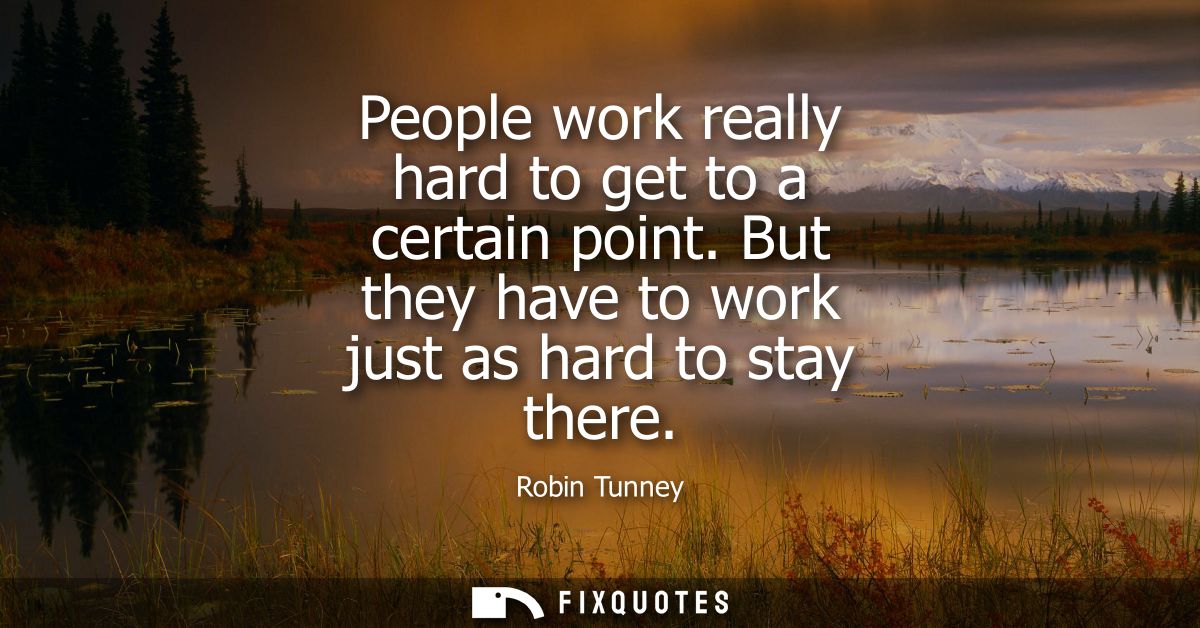
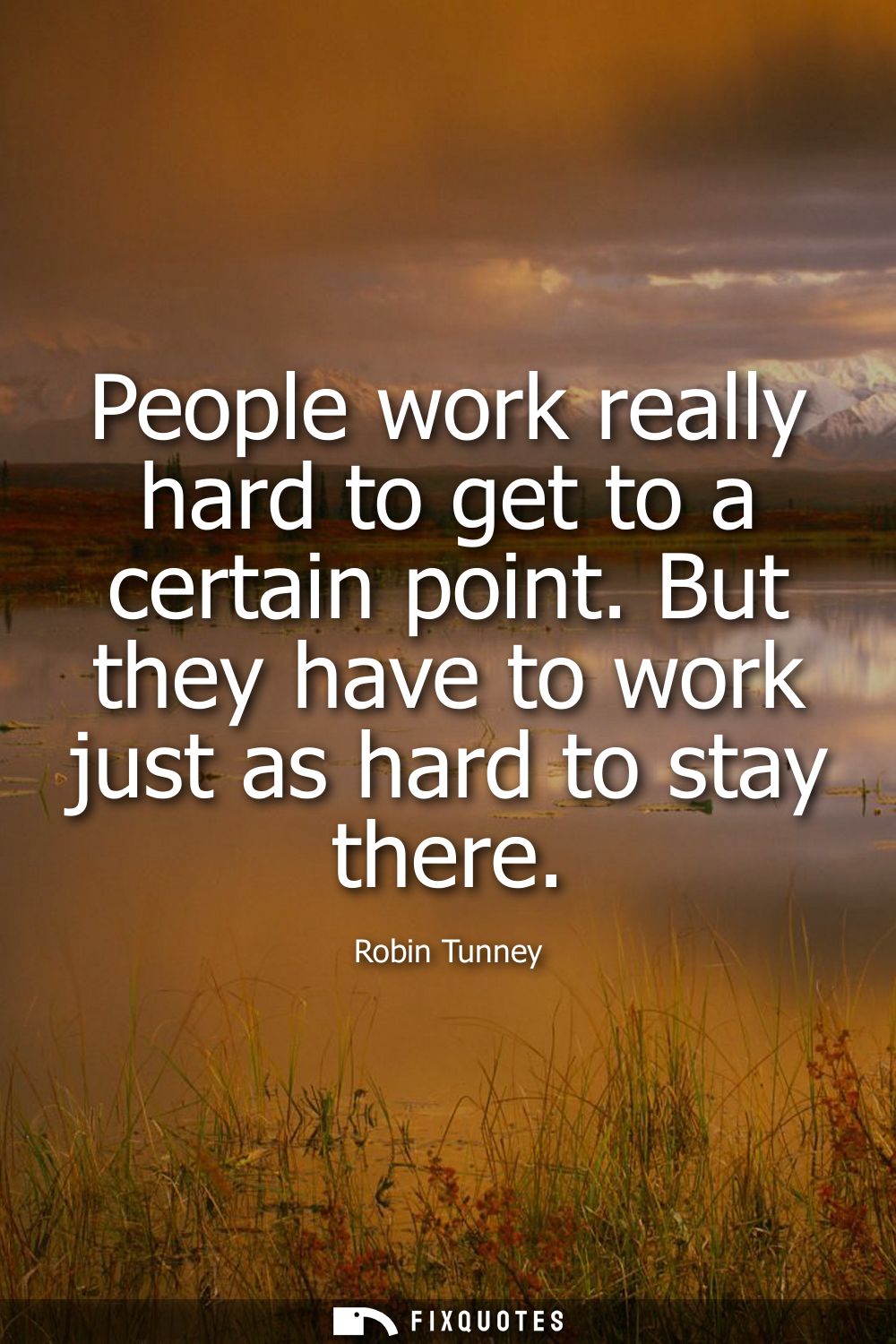
"People work really hard to get to a certain point. But they have to work just as hard to stay there"
About this Quote
The intent is practical, almost parental: don’t confuse a milestone with stability. The subtext is sharper. “A certain point” is deliberately vague because it can be anything in the public eye: a hit role, a pay jump, being briefly unavoidable. The real threat isn’t failure, it’s complacency - the assumption that talent alone keeps the doors open. In entertainment, staying power is its own performance, requiring constant recalibration: choosing projects that don’t trap you, maintaining relationships, managing image, staying employable as tastes and algorithms shift.
It also quietly critiques how we talk about “making it.” The phrase suggests meritocracy, as if hard work converts cleanly into permanence. Tunney’s framing exposes the maintenance costs that are rarely counted: emotional labor, strategic patience, and the ongoing pressure to prove you’re still worth the room. It’s a sober message dressed in simple language, the kind of blunt realism performers trade backstage - not to kill ambition, but to keep it from being naive.
Quote Details
| Topic | Work Ethic |
|---|---|
| Source | Help us find the source |
| Cite |
Citation Formats
APA Style (7th ed.)
Tunney, Robin. (2026, January 17). People work really hard to get to a certain point. But they have to work just as hard to stay there. FixQuotes. https://fixquotes.com/quotes/people-work-really-hard-to-get-to-a-certain-point-75515/
Chicago Style
Tunney, Robin. "People work really hard to get to a certain point. But they have to work just as hard to stay there." FixQuotes. January 17, 2026. https://fixquotes.com/quotes/people-work-really-hard-to-get-to-a-certain-point-75515/.
MLA Style (9th ed.)
"People work really hard to get to a certain point. But they have to work just as hard to stay there." FixQuotes, 17 Jan. 2026, https://fixquotes.com/quotes/people-work-really-hard-to-get-to-a-certain-point-75515/. Accessed 31 Mar. 2026.