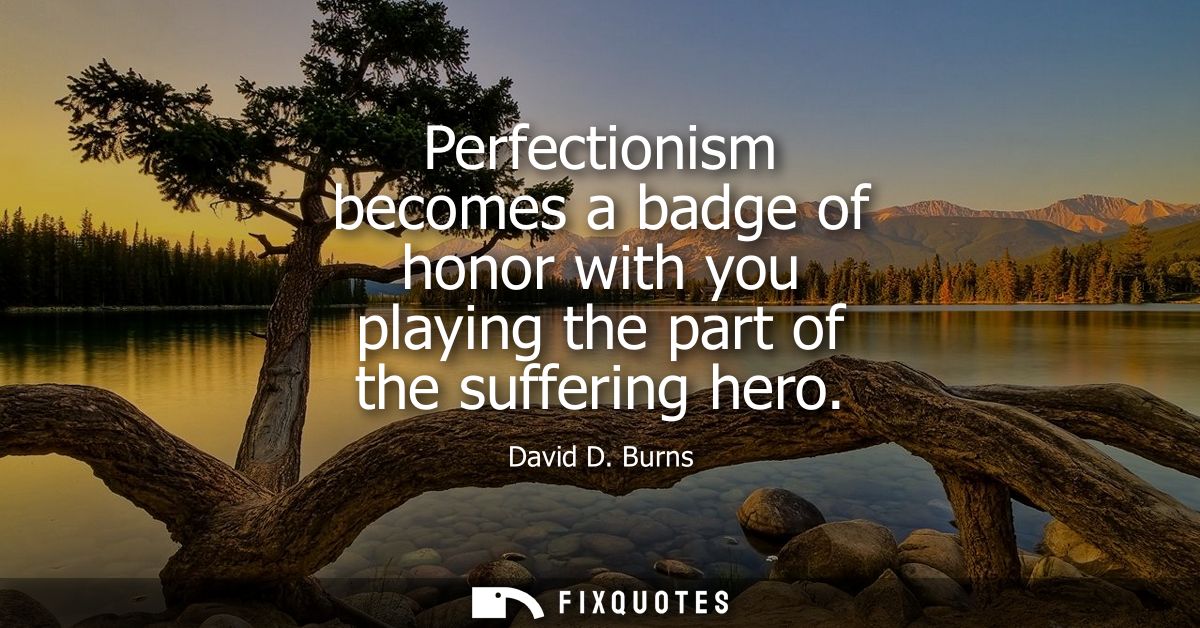
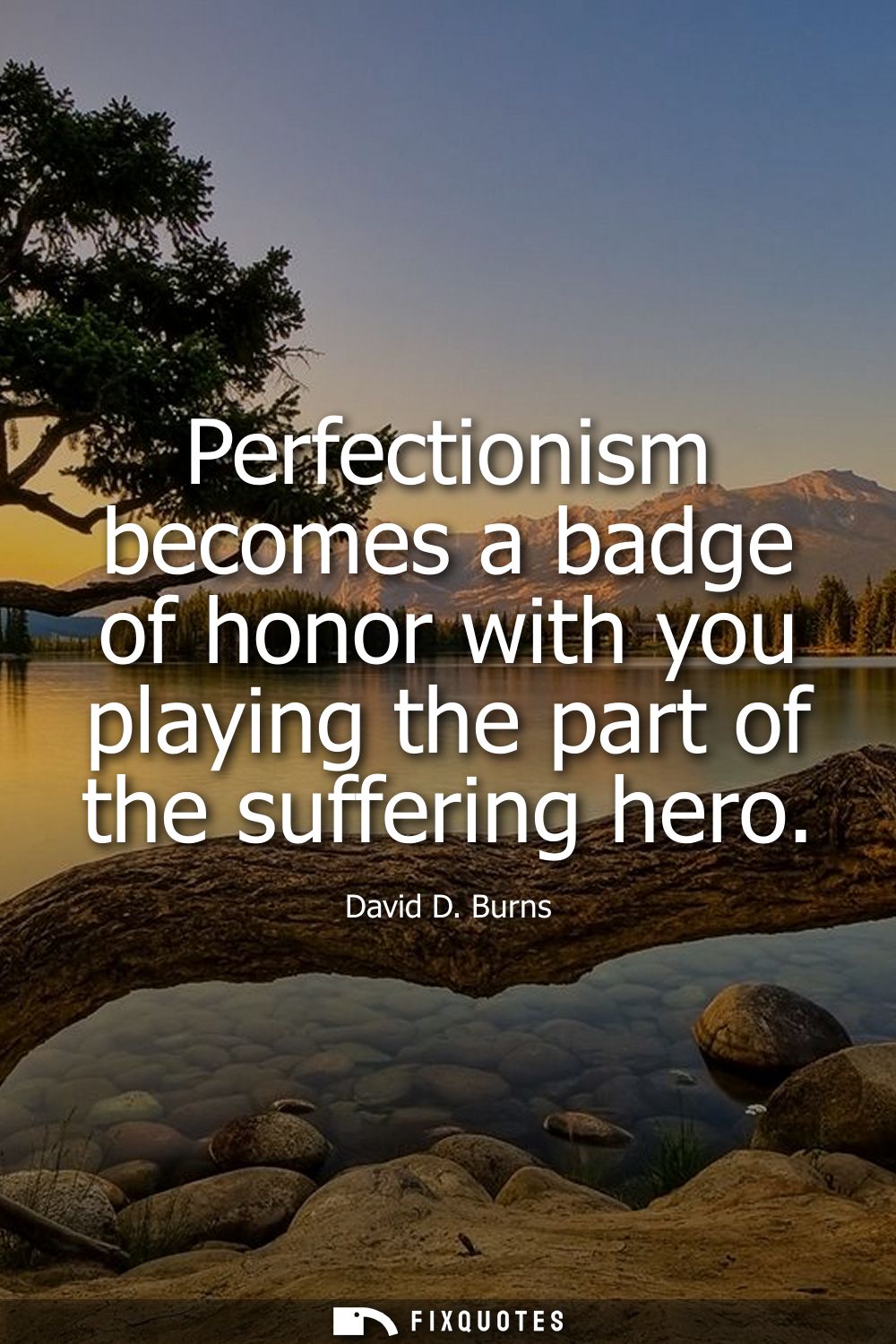
"Perfectionism becomes a badge of honor with you playing the part of the suffering hero"
About this Quote
"Playing the part" is the knife twist. Burns suggests the perfectionist isn't merely trapped; they're performing, often unconsciously, for an imagined audience of bosses, parents, peers, or internalized ideals. The subtext is that the pain isn't incidental - it's part of the script. If you always feel inadequate, you never have to risk finding out what "good enough" would actually look like. Perfectionism becomes a sophisticated avoidance strategy: delay the exposure of real work, real feedback, real limits, by staying in rehearsal forever.
The "suffering hero" line punctures the romantic myth that torment equals virtue. It calls out a moral inflation: mistakes become shameful, rest becomes suspect, ease becomes evidence you didn't try. Coming from Burns, a clinician associated with cognitive therapy, the intent is corrective rather than cruel - a prompt to notice the secondary gains of self-criticism. It's not "stop caring". It's "stop mistaking pain for proof."
Quote Details
| Topic | Self-Improvement |
|---|---|
| Source | Help us find the source |
| Cite |
Citation Formats
APA Style (7th ed.)
Burns, David D. (2026, January 16). Perfectionism becomes a badge of honor with you playing the part of the suffering hero. FixQuotes. https://fixquotes.com/quotes/perfectionism-becomes-a-badge-of-honor-with-you-103493/
Chicago Style
Burns, David D. "Perfectionism becomes a badge of honor with you playing the part of the suffering hero." FixQuotes. January 16, 2026. https://fixquotes.com/quotes/perfectionism-becomes-a-badge-of-honor-with-you-103493/.
MLA Style (9th ed.)
"Perfectionism becomes a badge of honor with you playing the part of the suffering hero." FixQuotes, 16 Jan. 2026, https://fixquotes.com/quotes/perfectionism-becomes-a-badge-of-honor-with-you-103493/. Accessed 16 Mar. 2026.