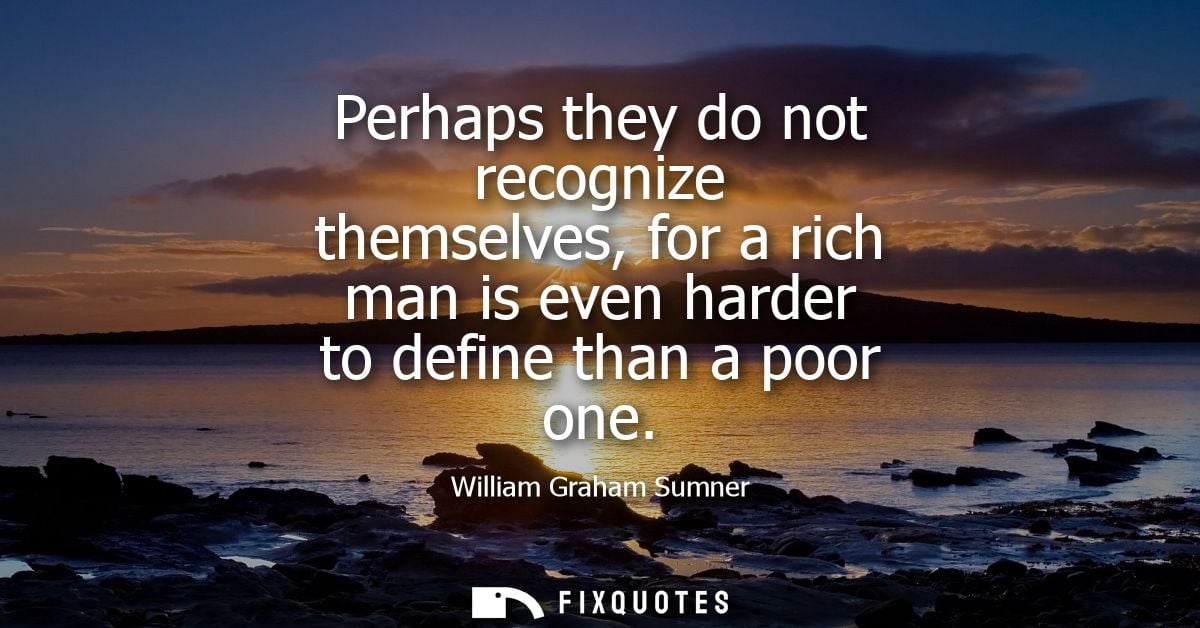
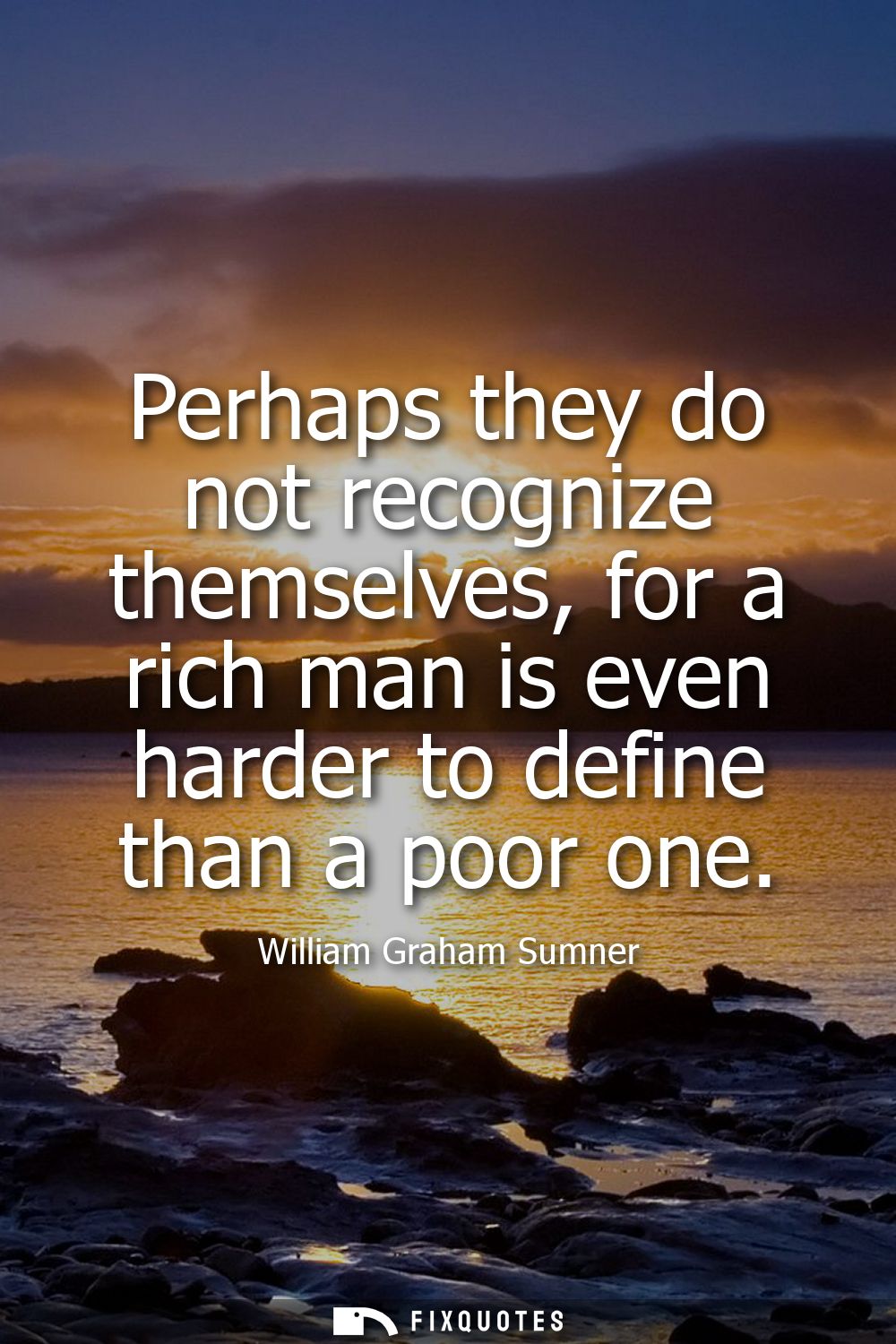
"Perhaps they do not recognize themselves, for a rich man is even harder to define than a poor one"
About this Quote
The subtext is strategic: if you can’t define the rich, it’s harder to hold them accountable. Calls for redistribution, taxation, or moral scrutiny depend on naming the target. Sumner, a major voice in Gilded Age social thought, wrote in a period when industrial fortunes were exploding and inequality was becoming undeniable. His work often argued against state intervention and in favor of laissez-faire. In that context, the definitional problem becomes a political tool: ambiguity as ideology.
There’s also a psychological jab embedded in “Perhaps they do not recognize themselves.” It suggests a cultivated innocence among elites, a self-image that frames their position as earned, normal, even precarious - anything but structurally advantaged. The wit here is cool and clinical: the poor are “definable” because society forces them to be; the rich evade definition because society lets them. Sumner captures how power hides in plain sight, then pretends not to see its own reflection.
Quote Details
| Topic | Wealth |
|---|---|
| Source | Help us find the source |
| Cite |
Citation Formats
APA Style (7th ed.)
Sumner, William Graham. (2026, January 16). Perhaps they do not recognize themselves, for a rich man is even harder to define than a poor one. FixQuotes. https://fixquotes.com/quotes/perhaps-they-do-not-recognize-themselves-for-a-96696/
Chicago Style
Sumner, William Graham. "Perhaps they do not recognize themselves, for a rich man is even harder to define than a poor one." FixQuotes. January 16, 2026. https://fixquotes.com/quotes/perhaps-they-do-not-recognize-themselves-for-a-96696/.
MLA Style (9th ed.)
"Perhaps they do not recognize themselves, for a rich man is even harder to define than a poor one." FixQuotes, 16 Jan. 2026, https://fixquotes.com/quotes/perhaps-they-do-not-recognize-themselves-for-a-96696/. Accessed 27 Mar. 2026.