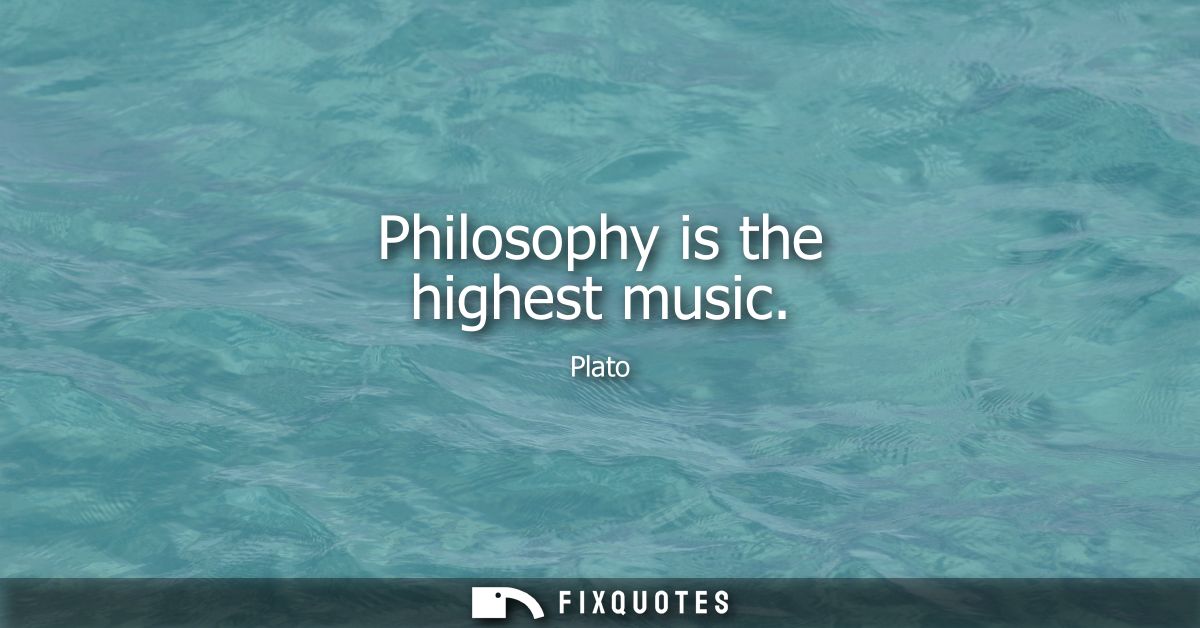
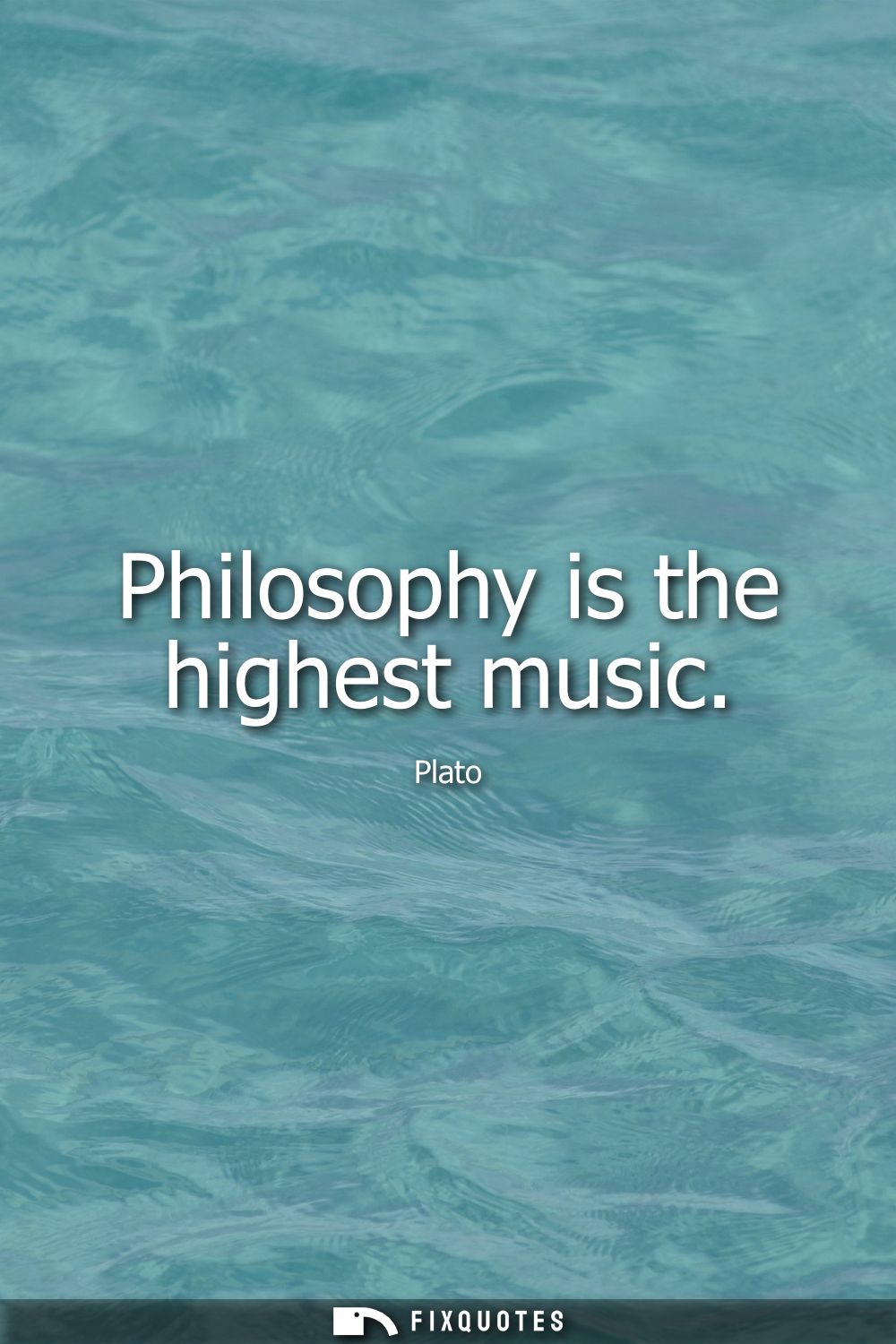
"Philosophy is the highest music"
About this Quote
Plato’s line is a provocation disguised as praise: a deliberate attempt to steal the glamour of music and hand it to philosophy. In his Athens, “music” (mousike) wasn’t just melody; it named the whole cultural system of rhythm, poetry, education, and civic formation. Calling philosophy the “highest music” is Plato arguing that the most important art isn’t the one that pleases the ear, but the one that tunes the soul.
The intent is polemical. Plato admired art’s power while distrusting its capacity to seduce. In the Republic he worries that certain songs and stories soften citizens, train them to confuse emotion with truth, and make them crave imitation rather than reality. So he reframes the competition: philosophy can do what music claims to do - harmonize us - but with a stricter standard. Not harmony as vibe, but harmony as alignment with what is real.
The subtext is also political. “Highest” implies hierarchy, and Plato’s whole project is a hierarchy of the mind: appetites below, reason above; the cave’s shadows below, the Forms above. Music becomes a metaphor for order, and philosophy becomes the conductor. It’s a sleek rebrand of authority: the philosopher-king isn’t a scold; he’s the one who hears the true pitch.
Why it works is that it flatters both instincts at once: the longing for beauty and the craving for certainty. Plato promises you can have rapture without being fooled by it - ecstasy that answers to reason.
The intent is polemical. Plato admired art’s power while distrusting its capacity to seduce. In the Republic he worries that certain songs and stories soften citizens, train them to confuse emotion with truth, and make them crave imitation rather than reality. So he reframes the competition: philosophy can do what music claims to do - harmonize us - but with a stricter standard. Not harmony as vibe, but harmony as alignment with what is real.
The subtext is also political. “Highest” implies hierarchy, and Plato’s whole project is a hierarchy of the mind: appetites below, reason above; the cave’s shadows below, the Forms above. Music becomes a metaphor for order, and philosophy becomes the conductor. It’s a sleek rebrand of authority: the philosopher-king isn’t a scold; he’s the one who hears the true pitch.
Why it works is that it flatters both instincts at once: the longing for beauty and the craving for certainty. Plato promises you can have rapture without being fooled by it - ecstasy that answers to reason.
Quote Details
| Topic | Wisdom |
|---|---|
| Source | Help us find the source |
| Cite |
Citation Formats
APA Style (7th ed.)
Plato. (2026, January 17). Philosophy is the highest music. FixQuotes. https://fixquotes.com/quotes/philosophy-is-the-highest-music-29305/
Chicago Style
Plato. "Philosophy is the highest music." FixQuotes. January 17, 2026. https://fixquotes.com/quotes/philosophy-is-the-highest-music-29305/.
MLA Style (9th ed.)
"Philosophy is the highest music." FixQuotes, 17 Jan. 2026, https://fixquotes.com/quotes/philosophy-is-the-highest-music-29305/. Accessed 4 Apr. 2026.
More Quotes by Plato
Add to List