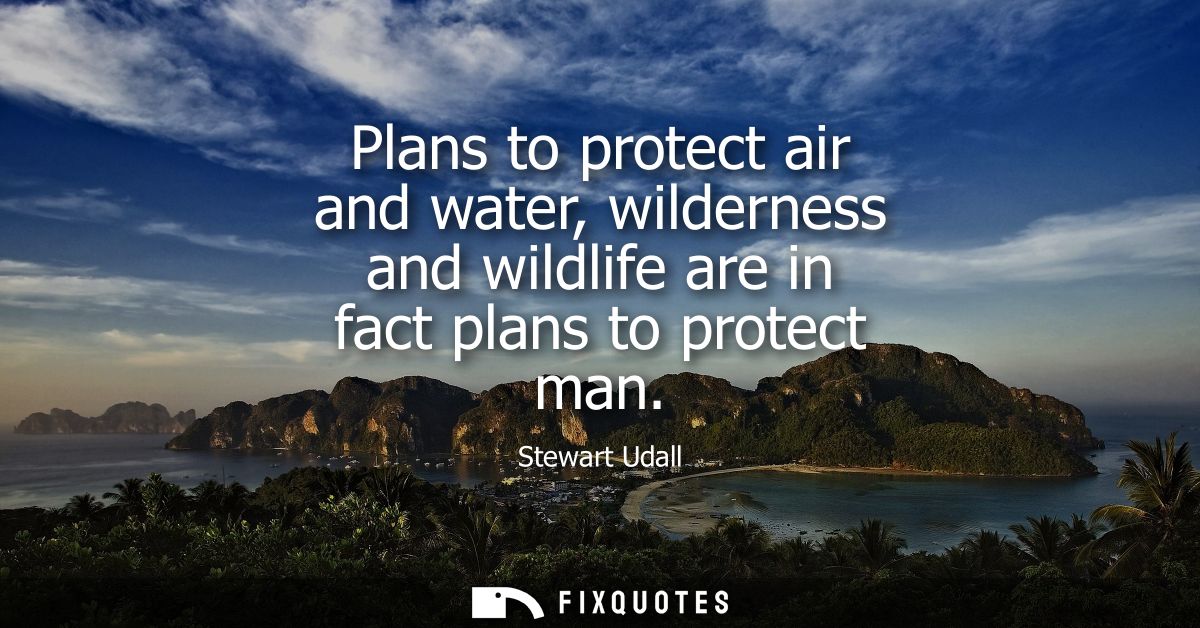
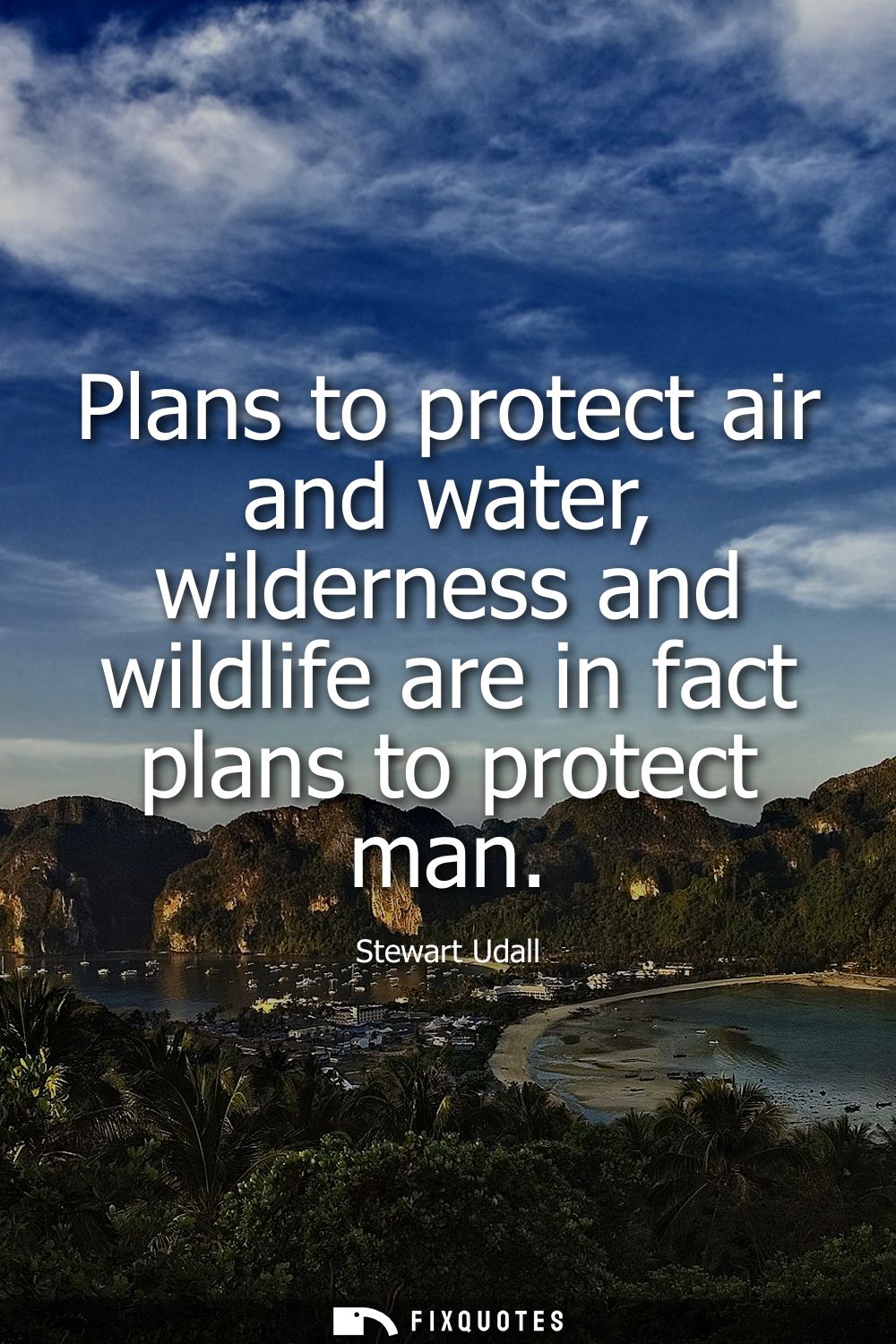
"Plans to protect air and water, wilderness and wildlife are in fact plans to protect man"
About this Quote
The subtext is strategic and slightly cynical. Udall knows that “nature” can feel abstract to a voter who’s worried about wages and war. So he recenters the beneficiary: “man.” It’s anthropocentric on purpose, a rhetorical bridge between the romantic language of preservation and the bread-and-butter logic of governance. In that era of rapid industrial expansion, smog, poisoned rivers, and the dawning fear of ecological limits, he’s making the case that environmental degradation is not an externality; it’s a boomerang.
Context matters: Udall helped build the modern conservation state before “environmentalism” became a mass identity. His sentence reads like a memo for coalition-building: you don’t win durable protections by asking people to love wilderness. You win by showing them it’s already in their lungs, their water pipes, their food chain, their kids’ future.
Quote Details
| Topic | Nature |
|---|---|
| Source | Help us find the source |
| Cite |
Citation Formats
APA Style (7th ed.)
Udall, Stewart. (2026, January 15). Plans to protect air and water, wilderness and wildlife are in fact plans to protect man. FixQuotes. https://fixquotes.com/quotes/plans-to-protect-air-and-water-wilderness-and-162527/
Chicago Style
Udall, Stewart. "Plans to protect air and water, wilderness and wildlife are in fact plans to protect man." FixQuotes. January 15, 2026. https://fixquotes.com/quotes/plans-to-protect-air-and-water-wilderness-and-162527/.
MLA Style (9th ed.)
"Plans to protect air and water, wilderness and wildlife are in fact plans to protect man." FixQuotes, 15 Jan. 2026, https://fixquotes.com/quotes/plans-to-protect-air-and-water-wilderness-and-162527/. Accessed 10 Mar. 2026.