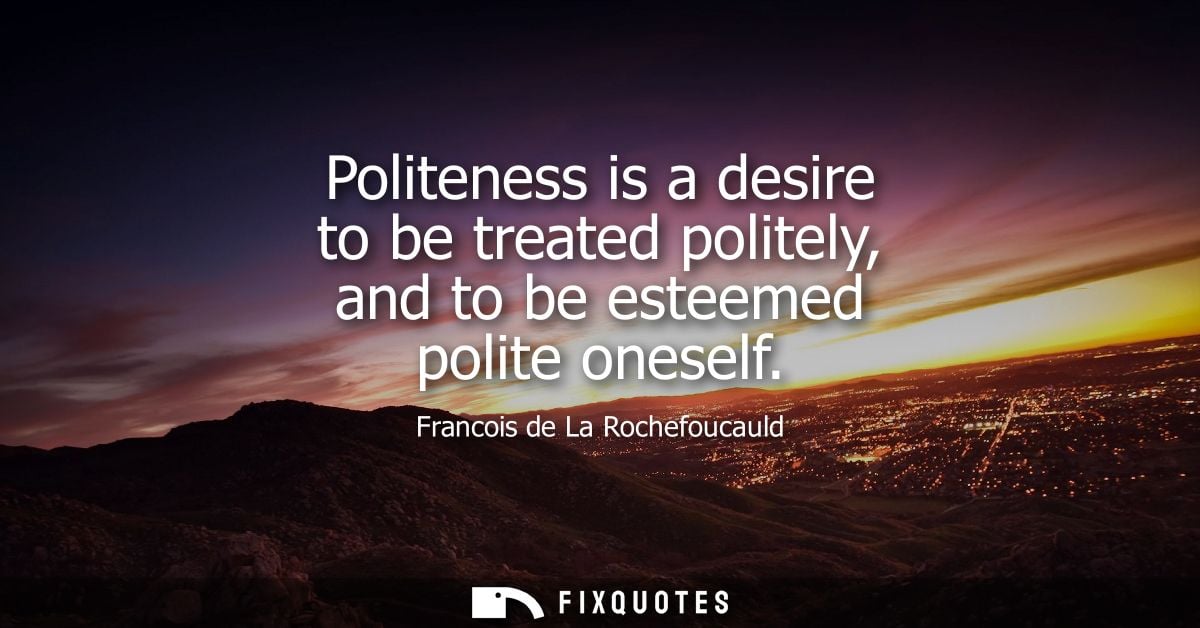
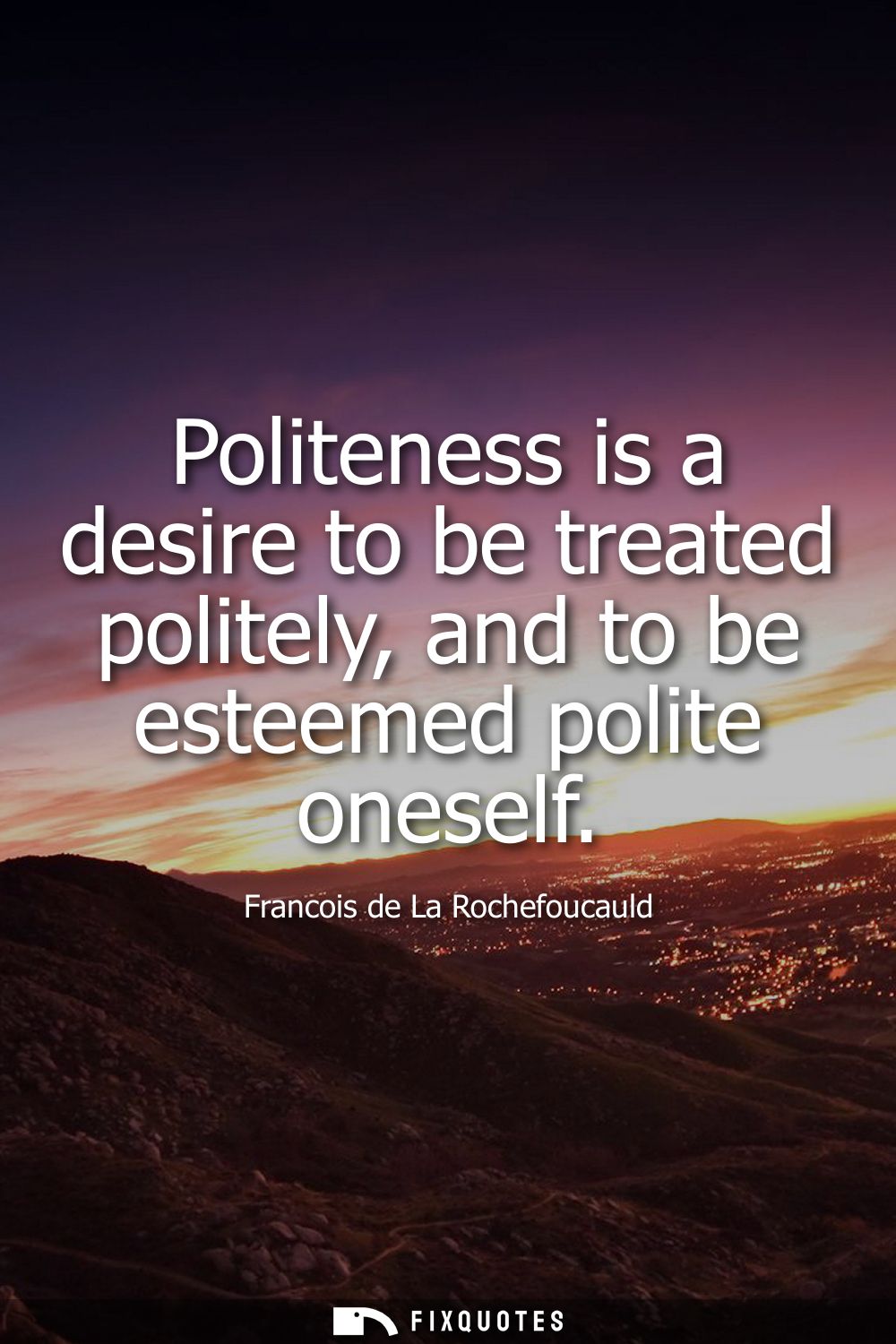
"Politeness is a desire to be treated politely, and to be esteemed polite oneself"
About this Quote
That double aim matters. The first half is transactional, almost behavioral: politeness as preemptive defense against rudeness. The second half is reputational: politeness as branding. La Rochefoucauld knows that societies don’t just punish bad behavior; they reward the appearance of goodness. The phrase "esteemed polite oneself" pinpoints the real engine: not inner moral feeling, but public credit. In a world of rank, patronage, and surveillance-by-gossip, your character is something other people confer on you, and "polite" is a safe, portable label.
Context sharpens the cynicism. Writing out of 17th-century French aristocratic life, where status depended on performance and alliances could turn on a remark, La Rochefoucauld treats civility as strategy. Politeness isn’t fake in the sense of meaningless; it’s functional. It oils the machinery of hierarchy while letting everyone pretend the machine runs on virtue. The sting is that he doesn’t exempt anyone: even our best manners may be less about kindness than about the craving to be spared, approved, and admired.
Quote Details
| Topic | Respect |
|---|---|
| Source | Help us find the source |
| Cite |
Citation Formats
APA Style (7th ed.)
Rochefoucauld, Francois de La. (2026, January 17). Politeness is a desire to be treated politely, and to be esteemed polite oneself. FixQuotes. https://fixquotes.com/quotes/politeness-is-a-desire-to-be-treated-politely-and-35977/
Chicago Style
Rochefoucauld, Francois de La. "Politeness is a desire to be treated politely, and to be esteemed polite oneself." FixQuotes. January 17, 2026. https://fixquotes.com/quotes/politeness-is-a-desire-to-be-treated-politely-and-35977/.
MLA Style (9th ed.)
"Politeness is a desire to be treated politely, and to be esteemed polite oneself." FixQuotes, 17 Jan. 2026, https://fixquotes.com/quotes/politeness-is-a-desire-to-be-treated-politely-and-35977/. Accessed 6 Mar. 2026.