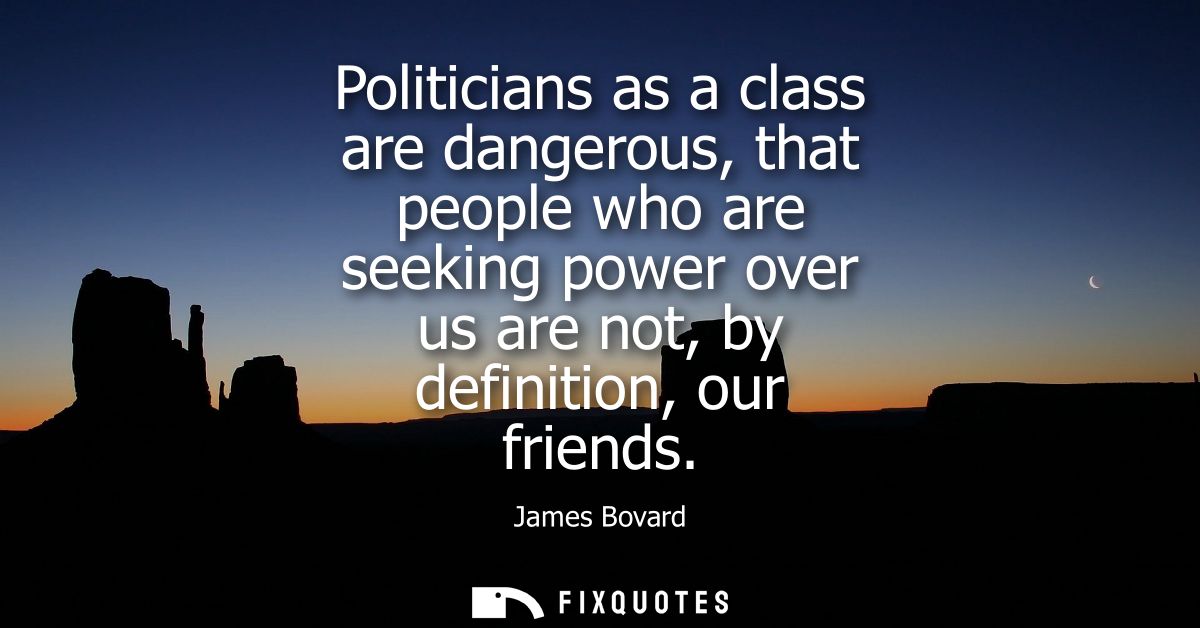
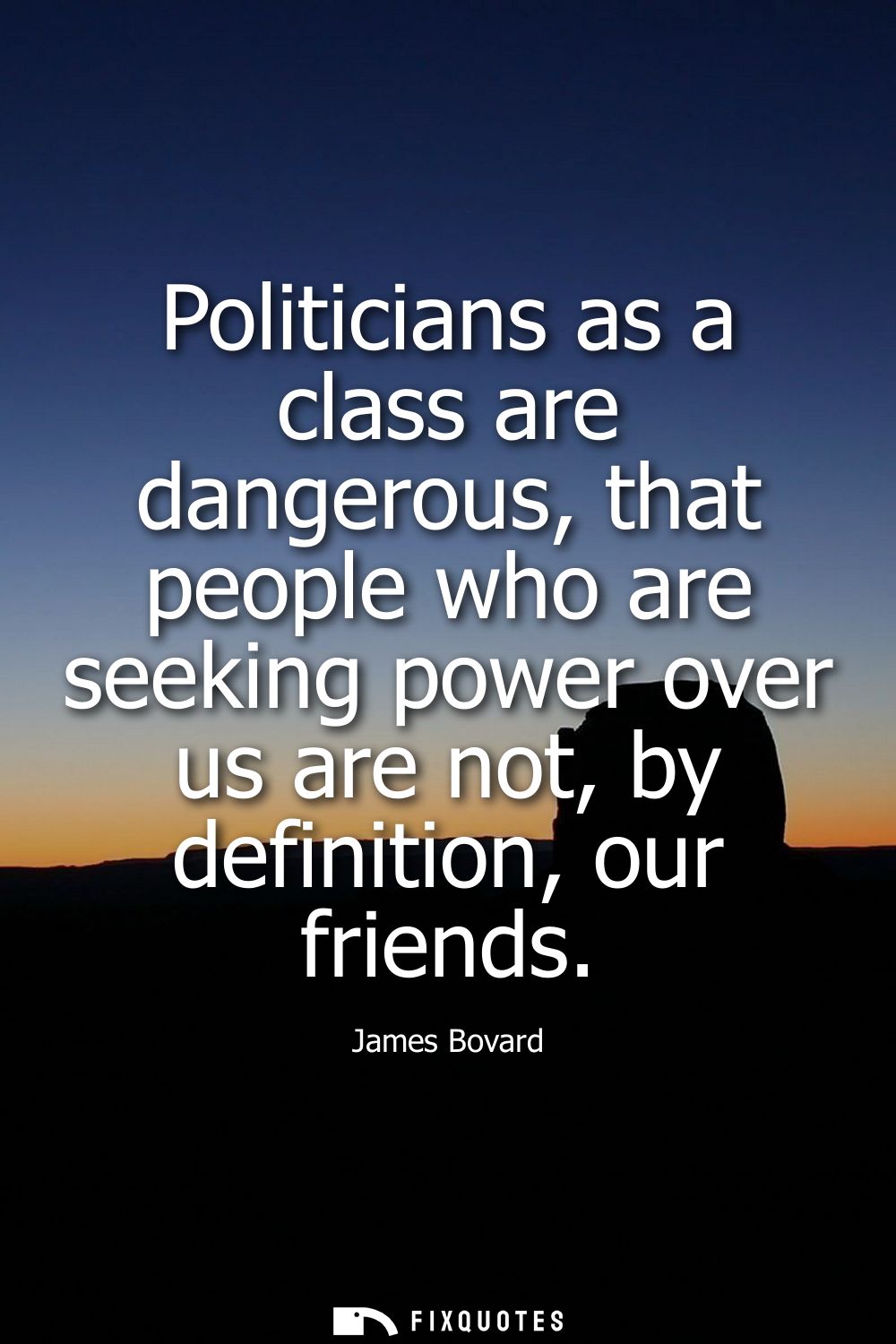
"Politicians as a class are dangerous, that people who are seeking power over us are not, by definition, our friends"
About this Quote
The subtext is a hard libertarian anthropology: power warps, and the state is a machine that rewards people most comfortable using coercion. Calling politicians “not... our friends” is a rhetorical downgrade from the lofty to the intimate. Bovard isn’t arguing policy; he’s severing the emotional bond that campaigns cultivate. Friendship implies reciprocity and consent; governance often implies asymmetry and compulsion. He’s asking readers to stop confusing applause lines with alignment, and to treat political affection as a vulnerability.
Contextually, Bovard writes from the post-Watergate, post-Iran-Contra, big-government skepticism tradition, where scandal isn’t an exception but evidence of a system that attracts the wrong temperament. The quote works because it weaponizes plain language to puncture civic romanticism: if someone wants authority over you, assume they are negotiating against your interests, not guarding them.
Quote Details
| Topic | Freedom |
|---|---|
| Source | Help us find the source |
| Cite |
Citation Formats
APA Style (7th ed.)
Bovard, James. (2026, January 16). Politicians as a class are dangerous, that people who are seeking power over us are not, by definition, our friends. FixQuotes. https://fixquotes.com/quotes/politicians-as-a-class-are-dangerous-that-people-108990/
Chicago Style
Bovard, James. "Politicians as a class are dangerous, that people who are seeking power over us are not, by definition, our friends." FixQuotes. January 16, 2026. https://fixquotes.com/quotes/politicians-as-a-class-are-dangerous-that-people-108990/.
MLA Style (9th ed.)
"Politicians as a class are dangerous, that people who are seeking power over us are not, by definition, our friends." FixQuotes, 16 Jan. 2026, https://fixquotes.com/quotes/politicians-as-a-class-are-dangerous-that-people-108990/. Accessed 8 Feb. 2026.