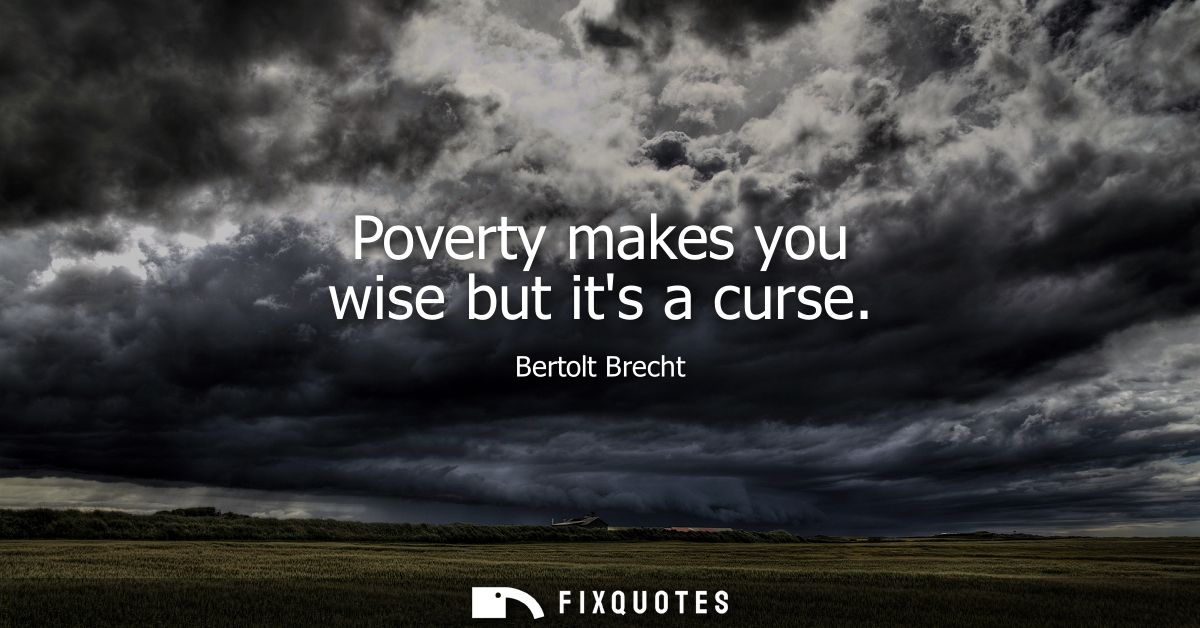
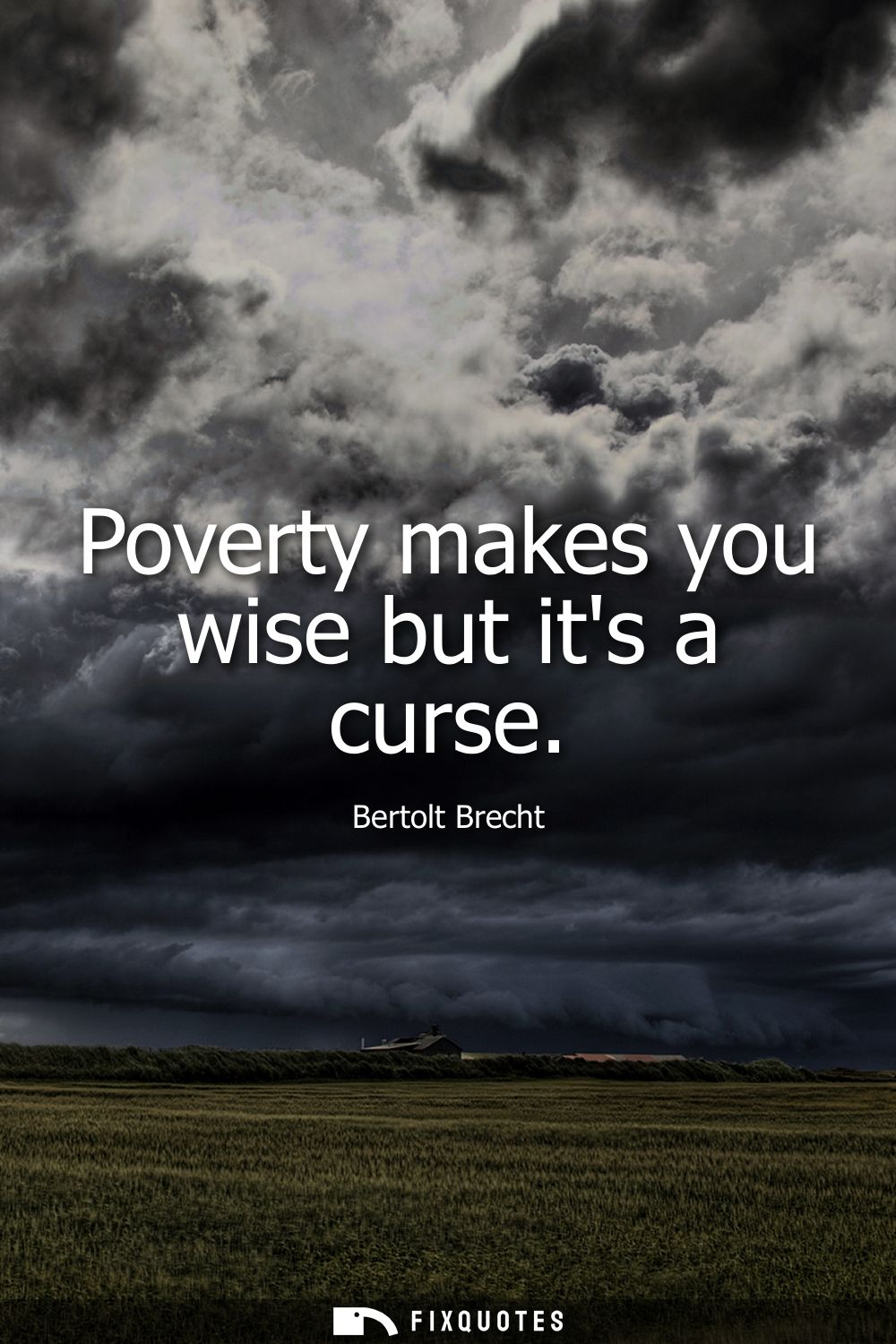
"Poverty makes you wise, but it's a curse"
About this Quote
Brecht’s line is a trapdoor: it offers the sentimental consolation people like to grant the poor ("suffering teaches you") and then yanks it away with a blunt moral accounting. "Poverty makes you wise" sounds like a proverb, almost a compliment. Brecht lets that familiar piety hang in the air just long enough for the second clause to detonate it. Wisdom, he implies, is not a gift poverty bestows; it’s a survival skill extracted under duress. You learn the price of bread, the mood of landlords, the mechanics of humiliation. That knowledge is real, but it is purchased with time, health, and choices.
The subtext is class critique disguised as aphorism. Brecht is allergic to romanticizing deprivation because romanticism functions politically: it anesthetizes audiences who can afford to admire the poor from a safe seat. Call poverty a character-building experience and you make it easier to tolerate as a social arrangement. Brecht’s theater was built to interrupt that tolerance. The line carries his signature irony: if poverty produces "wisdom", then society is manufacturing wisdom by manufacturing misery. The punchline is not spiritual; it’s logistical.
Context matters: Brecht wrote under the shadow of war, fascism, and exile, watching systems that needed desperation to keep wages low and obedience high. In that world, poverty doesn’t merely limit options; it reorganizes your inner life around scarcity. The curse is not only material want but the way it forces intelligence into defensive shapes. Brecht’s intent is to deny the audience the comfort of admiration and demand the discomfort of responsibility.
The subtext is class critique disguised as aphorism. Brecht is allergic to romanticizing deprivation because romanticism functions politically: it anesthetizes audiences who can afford to admire the poor from a safe seat. Call poverty a character-building experience and you make it easier to tolerate as a social arrangement. Brecht’s theater was built to interrupt that tolerance. The line carries his signature irony: if poverty produces "wisdom", then society is manufacturing wisdom by manufacturing misery. The punchline is not spiritual; it’s logistical.
Context matters: Brecht wrote under the shadow of war, fascism, and exile, watching systems that needed desperation to keep wages low and obedience high. In that world, poverty doesn’t merely limit options; it reorganizes your inner life around scarcity. The curse is not only material want but the way it forces intelligence into defensive shapes. Brecht’s intent is to deny the audience the comfort of admiration and demand the discomfort of responsibility.
Quote Details
| Topic | Wisdom |
|---|---|
| Source | Help us find the source |
| Cite |
Citation Formats
APA Style (7th ed.)
Brecht, Bertolt. (2026, February 20). Poverty makes you wise, but it's a curse. FixQuotes. https://fixquotes.com/quotes/poverty-makes-you-wise-but-its-a-curse-12925/
Chicago Style
Brecht, Bertolt. "Poverty makes you wise, but it's a curse." FixQuotes. February 20, 2026. https://fixquotes.com/quotes/poverty-makes-you-wise-but-its-a-curse-12925/.
MLA Style (9th ed.)
"Poverty makes you wise, but it's a curse." FixQuotes, 20 Feb. 2026, https://fixquotes.com/quotes/poverty-makes-you-wise-but-its-a-curse-12925/. Accessed 31 Mar. 2026.
More Quotes by Bertolt
Add to List