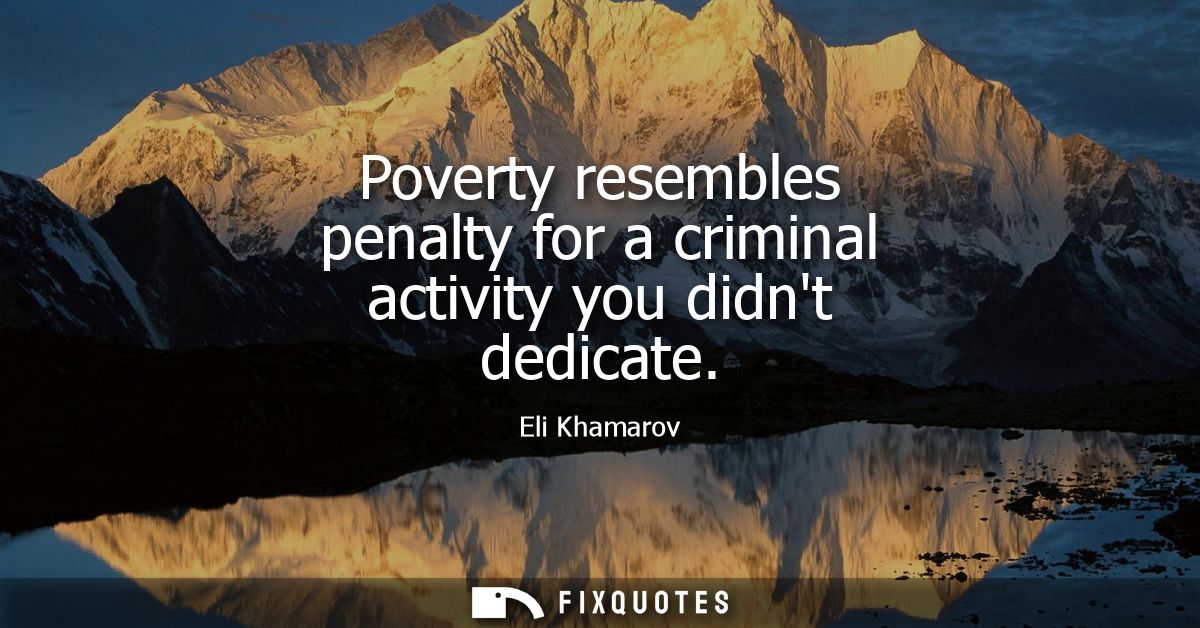
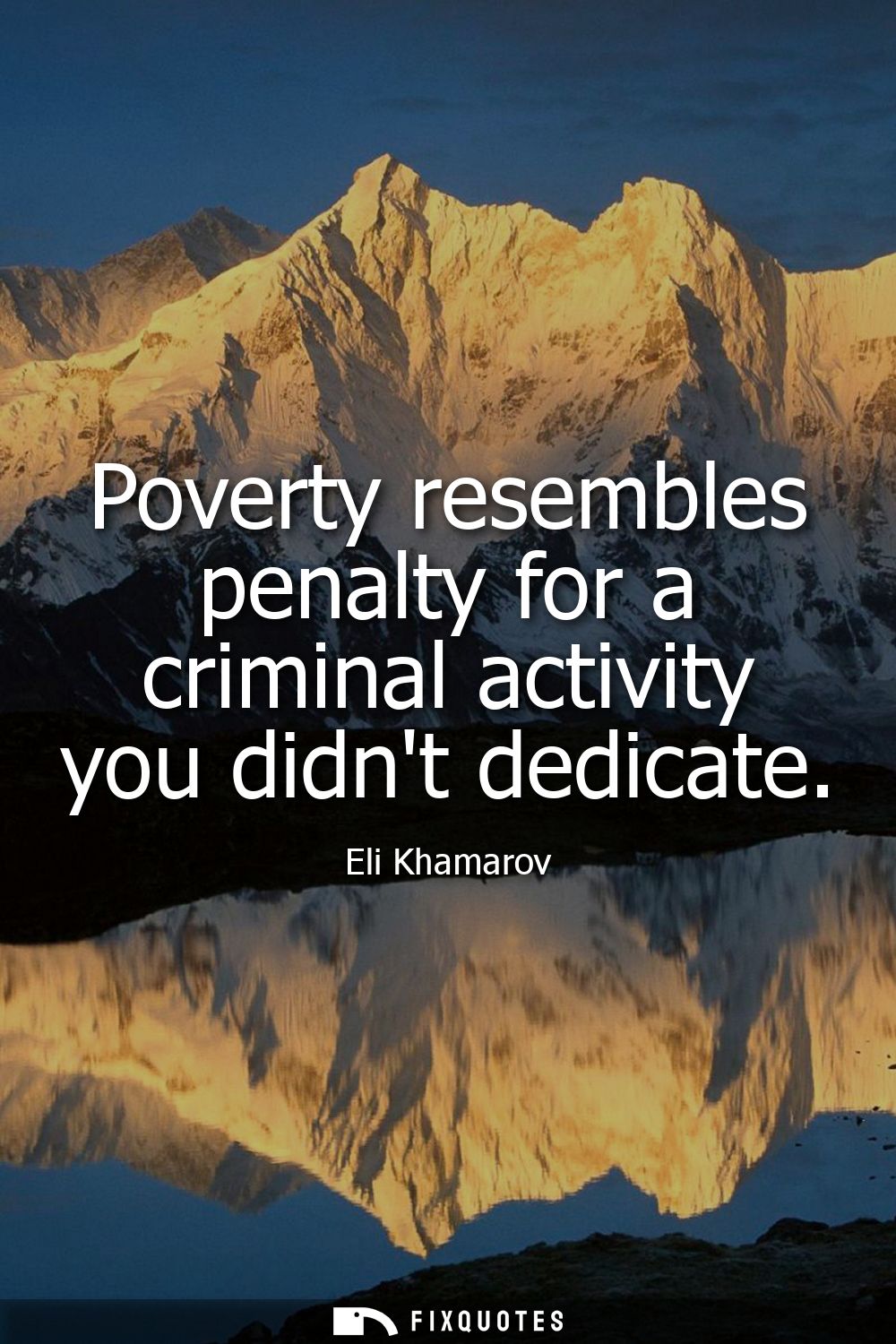
"Poverty resembles penalty for a criminal activity you didn't dedicate"
About this Quote
The subtext is an indictment of how societies narrate scarcity. We treat being broke as evidence of a personal defect: laziness, bad choices, moral weakness. Khamarov points at the absurdity of that story by making poverty a mistaken charge, a bureaucratic error with real-world consequences. You don’t just lack money; you wear suspicion. You’re audited socially: your clothes, your neighborhood, your teeth, your time all become “evidence.”
Context matters: Khamarov, a Russian-born writer who emigrated to the United States, writes in the long shadow of systems that promised dignity while distributing humiliation. The quote lands as both immigrant clarity and dark humor: capitalism and bureaucracy can be different uniforms for the same ritual, where the poor must constantly prove they’re not guilty of their own condition. The line doesn’t ask for pity; it demands we notice the rigged trial.
Quote Details
| Topic | Justice |
|---|---|
| Source | Help us find the source |
| Cite |
Citation Formats
APA Style (7th ed.)
Khamarov, Eli. (2026, January 15). Poverty resembles penalty for a criminal activity you didn't dedicate. FixQuotes. https://fixquotes.com/quotes/poverty-resembles-penalty-for-a-criminal-activity-172864/
Chicago Style
Khamarov, Eli. "Poverty resembles penalty for a criminal activity you didn't dedicate." FixQuotes. January 15, 2026. https://fixquotes.com/quotes/poverty-resembles-penalty-for-a-criminal-activity-172864/.
MLA Style (9th ed.)
"Poverty resembles penalty for a criminal activity you didn't dedicate." FixQuotes, 15 Jan. 2026, https://fixquotes.com/quotes/poverty-resembles-penalty-for-a-criminal-activity-172864/. Accessed 11 Feb. 2026.