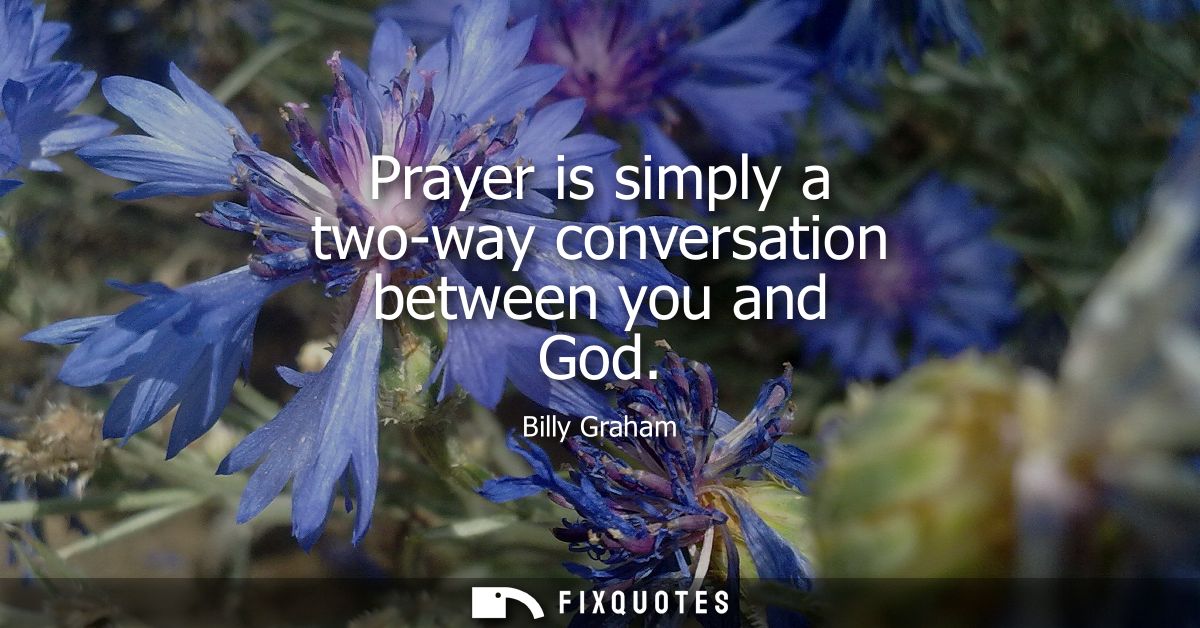
"Prayer is simply a two-way conversation between you and God"
About this Quote
Graham takes a practice that can feel foggy, formal, or intimidating and snaps it into a familiar shape: a conversation. That’s not just a comforting metaphor; it’s a strategic reframing. “Simply” works like a pressure-release valve, stripping prayer of priestly gatekeeping and spiritual performance anxiety. If prayer is a two-way conversation, then it’s not primarily a speech you deliver correctly, not a ritual you “get right,” not a vending-machine transaction where the right words produce the right outcomes. It’s relationship.
The phrase also carries a quiet rebuke. A conversation implies attention, honesty, and listening; it implies you don’t monopolize the air. Graham is poking at the common habit of treating prayer as an anxiously curated monologue - requests, apologies, bargaining - without the harder discipline of receptivity. “Two-way” smuggles in an ethic: make space, be still, expect response. For evangelicals in Graham’s orbit, that response might be scripture, conscience, circumstance, or the “still small voice” language Protestant culture has long used to describe inner conviction.
Context matters: Graham built a mass-media ministry that invited millions to personal faith outside traditional liturgical structures. This line matches that populist theology. It democratizes access to God while keeping authority intact: God speaks, you listen. The intimacy is real, but so is the asymmetry; it’s a conversation where the other party is ultimate, and your transformation is the implied goal. In a modern world where loneliness and noise compete for attention, Graham’s genius is making prayer sound less like ceremony and more like contact.
The phrase also carries a quiet rebuke. A conversation implies attention, honesty, and listening; it implies you don’t monopolize the air. Graham is poking at the common habit of treating prayer as an anxiously curated monologue - requests, apologies, bargaining - without the harder discipline of receptivity. “Two-way” smuggles in an ethic: make space, be still, expect response. For evangelicals in Graham’s orbit, that response might be scripture, conscience, circumstance, or the “still small voice” language Protestant culture has long used to describe inner conviction.
Context matters: Graham built a mass-media ministry that invited millions to personal faith outside traditional liturgical structures. This line matches that populist theology. It democratizes access to God while keeping authority intact: God speaks, you listen. The intimacy is real, but so is the asymmetry; it’s a conversation where the other party is ultimate, and your transformation is the implied goal. In a modern world where loneliness and noise compete for attention, Graham’s genius is making prayer sound less like ceremony and more like contact.
Quote Details
| Topic | Prayer |
|---|
More Quotes by Billy
Add to List