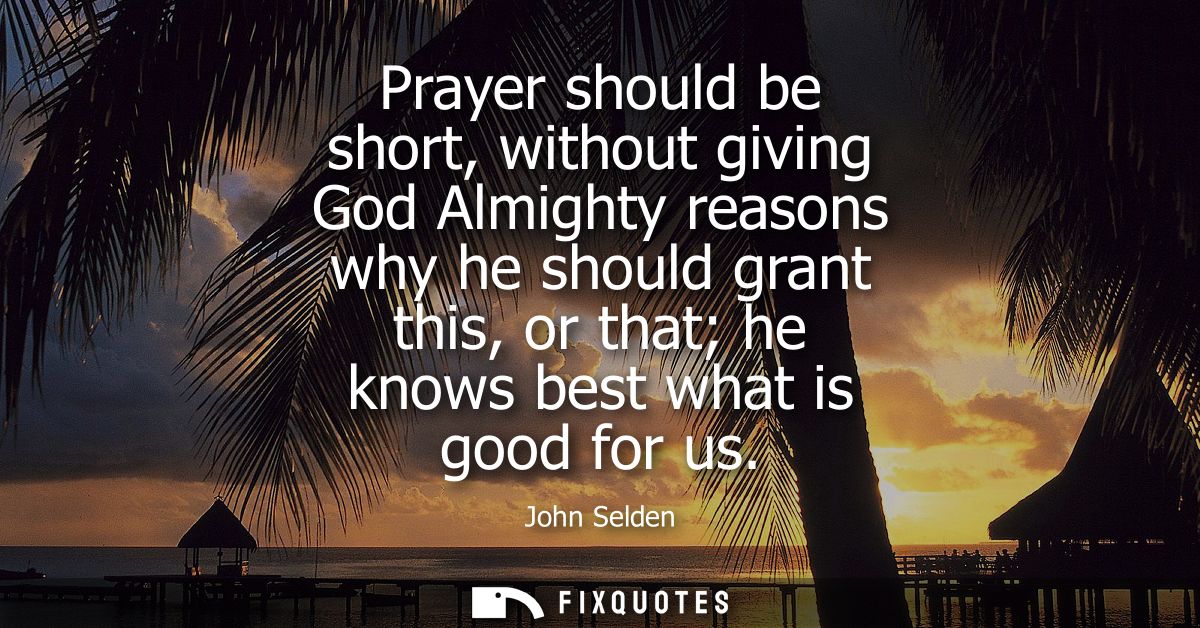
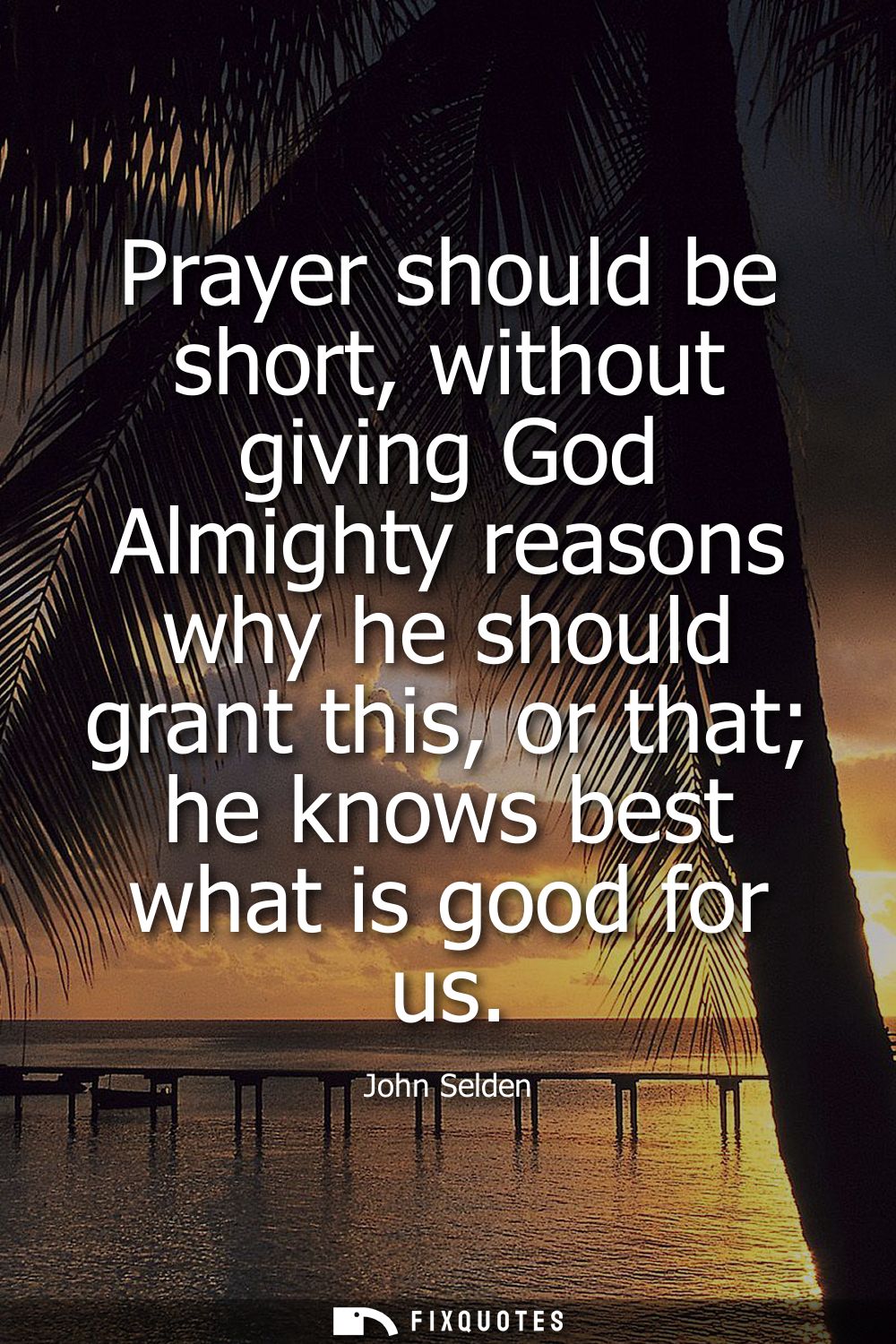
"Prayer should be short, without giving God Almighty reasons why he should grant this, or that; he knows best what is good for us"
About this Quote
The subtext is political as much as theological. In early modern England, public religion was entangled with power, rhetoric, and performance. Prayer could become another stage for display - proving one’s godliness, broadcasting allegiance, signaling moral superiority. Selden’s preference for brevity pushes against that performative economy. Keep it short; don’t audition your conscience.
His closing clause, “he knows best what is good for us,” does double work. It asserts divine omniscience while also disciplining the petitioner’s ego. The point isn’t that asking is wrong; it’s that arguing is absurd. Selden frames elaborate prayer as a category error: you don’t “reason” with an all-knowing sovereign. That’s a pointed metaphor from a man steeped in law and governance.
What makes it land is its cool, almost bureaucratic deflation of religious verbosity. Selden isn’t sentimental about faith; he’s suspicious of the ways people use faith to negotiate control. The ideal prayer, in his view, is less persuasion than surrender.
Quote Details
| Topic | Prayer |
|---|---|
| Source | Help us find the source |
| Cite |
Citation Formats
APA Style (7th ed.)
Selden, John. (2026, January 17). Prayer should be short, without giving God Almighty reasons why he should grant this, or that; he knows best what is good for us. FixQuotes. https://fixquotes.com/quotes/prayer-should-be-short-without-giving-god-27897/
Chicago Style
Selden, John. "Prayer should be short, without giving God Almighty reasons why he should grant this, or that; he knows best what is good for us." FixQuotes. January 17, 2026. https://fixquotes.com/quotes/prayer-should-be-short-without-giving-god-27897/.
MLA Style (9th ed.)
"Prayer should be short, without giving God Almighty reasons why he should grant this, or that; he knows best what is good for us." FixQuotes, 17 Jan. 2026, https://fixquotes.com/quotes/prayer-should-be-short-without-giving-god-27897/. Accessed 10 Feb. 2026.