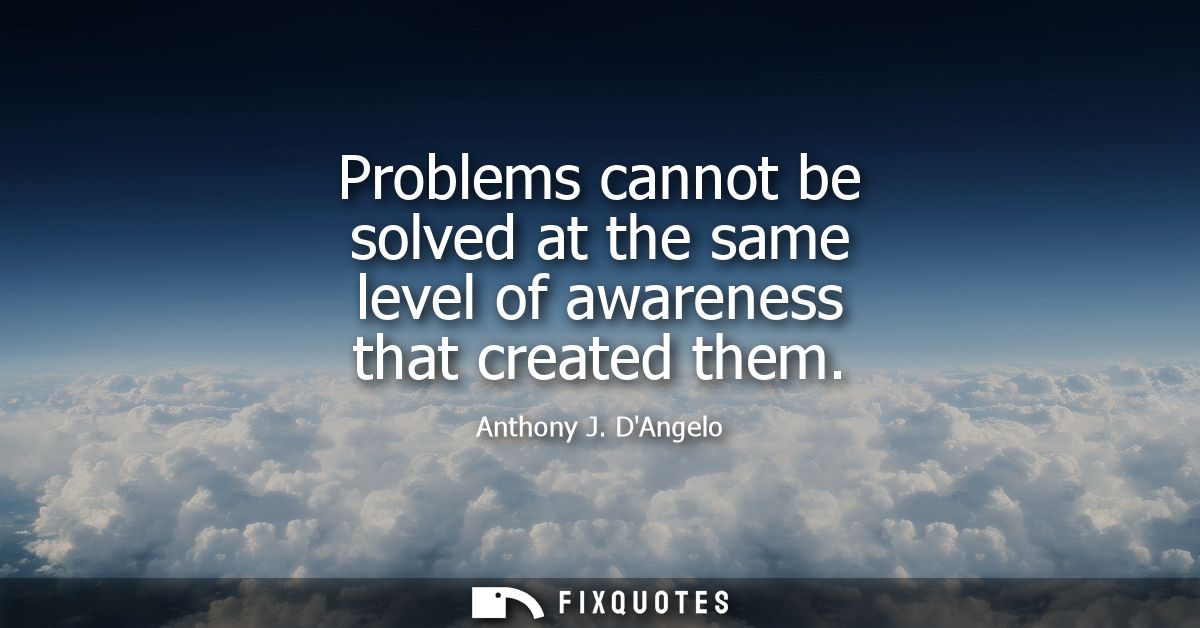
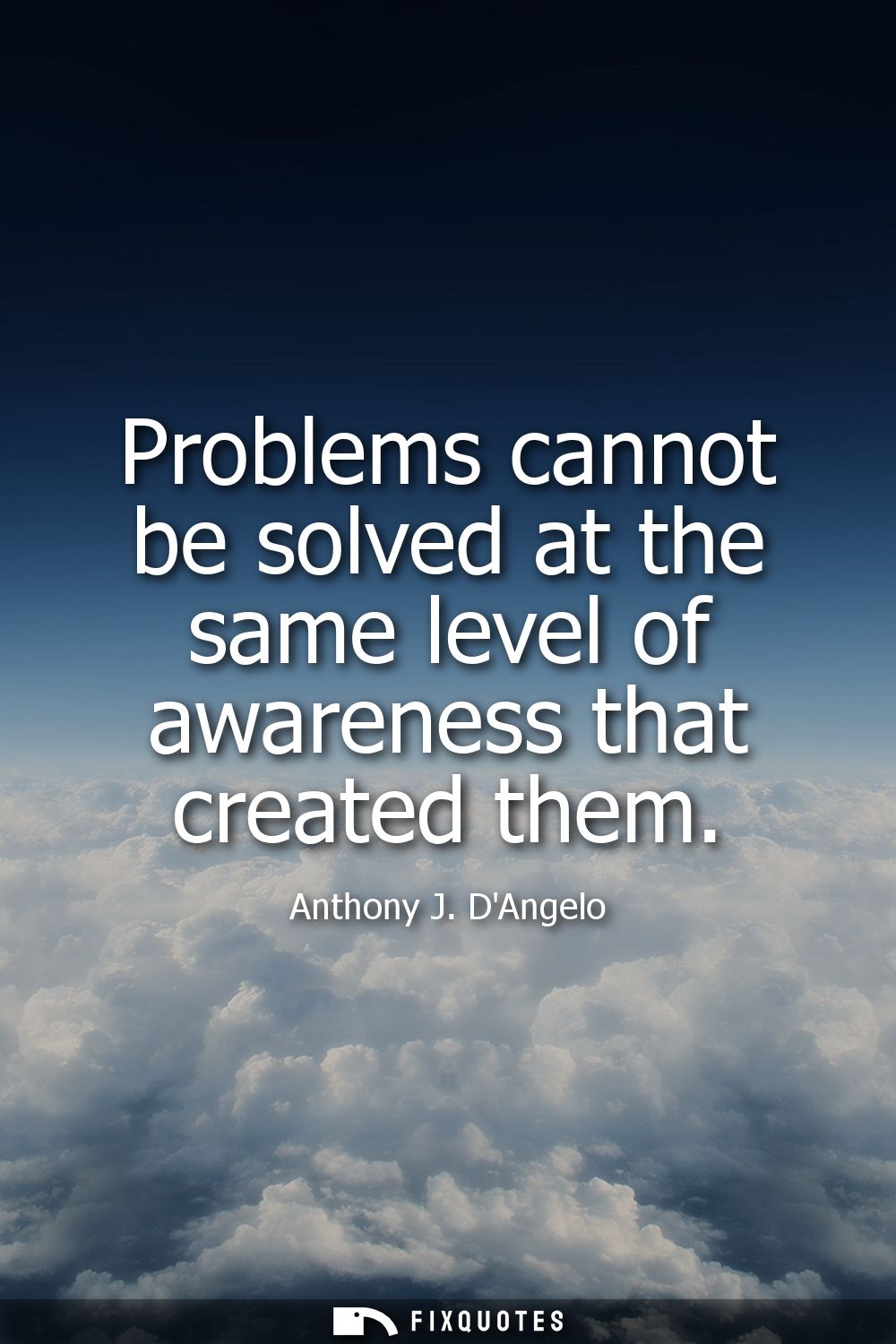
"Problems cannot be solved at the same level of awareness that created them"
About this Quote
The intent is motivational, but the subtext is a quiet indictment of hustle culture and managerial "solutionism". It suggests that many of our fixes are performative: we rearrange the furniture of our lives and institutions while refusing to question the architecture. The line also flatters the reader in a strategic way. It implies that resolution is not a matter of brute force but of growth, reflection, even wisdom. That framing makes change feel less like surrender and more like evolution.
Context matters because the quote borrows the cadence often attributed to Einstein, tapping into the cultural authority of genius without needing technical proof. In late-20th-century self-development language, "awareness" becomes a bridge between psychology and spirituality: therapy-speak without the diagnosis, mindfulness without the religion. It's sticky because it reframes failure as miscalibration, not moral weakness, and gives you a next step that is both vague (raise awareness) and empowering (you can).
Quote Details
| Topic | Wisdom |
|---|---|
| Source | Help us find the source |
| Cite |
Citation Formats
APA Style (7th ed.)
D'Angelo, Anthony J. (2026, January 14). Problems cannot be solved at the same level of awareness that created them. FixQuotes. https://fixquotes.com/quotes/problems-cannot-be-solved-at-the-same-level-of-172346/
Chicago Style
D'Angelo, Anthony J. "Problems cannot be solved at the same level of awareness that created them." FixQuotes. January 14, 2026. https://fixquotes.com/quotes/problems-cannot-be-solved-at-the-same-level-of-172346/.
MLA Style (9th ed.)
"Problems cannot be solved at the same level of awareness that created them." FixQuotes, 14 Jan. 2026, https://fixquotes.com/quotes/problems-cannot-be-solved-at-the-same-level-of-172346/. Accessed 25 Mar. 2026.