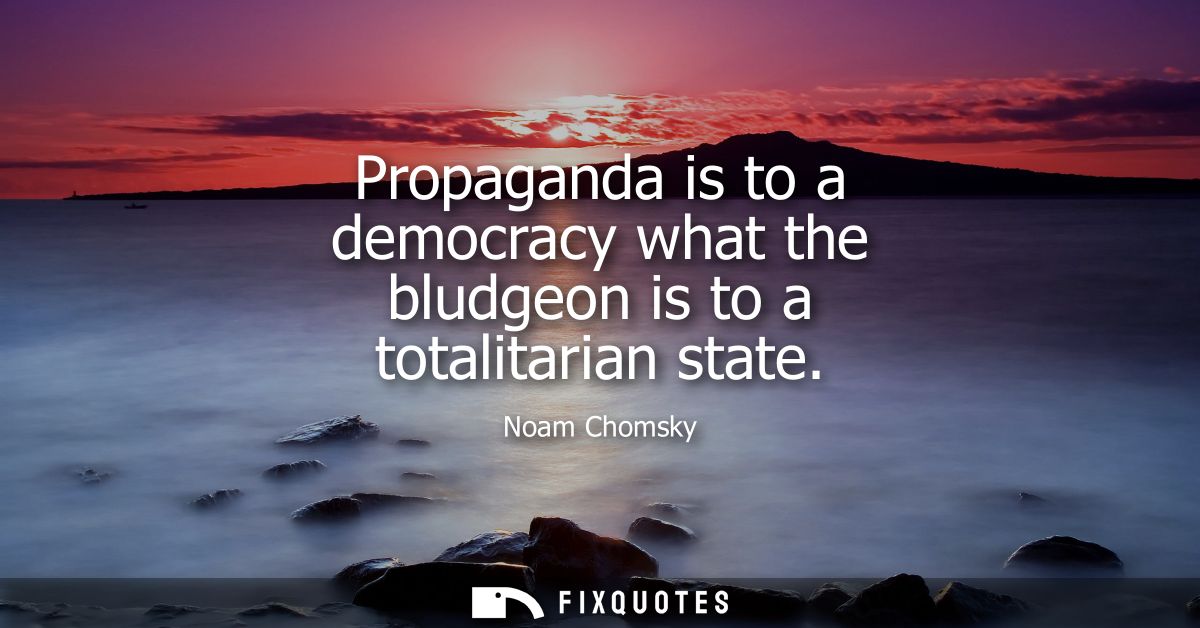
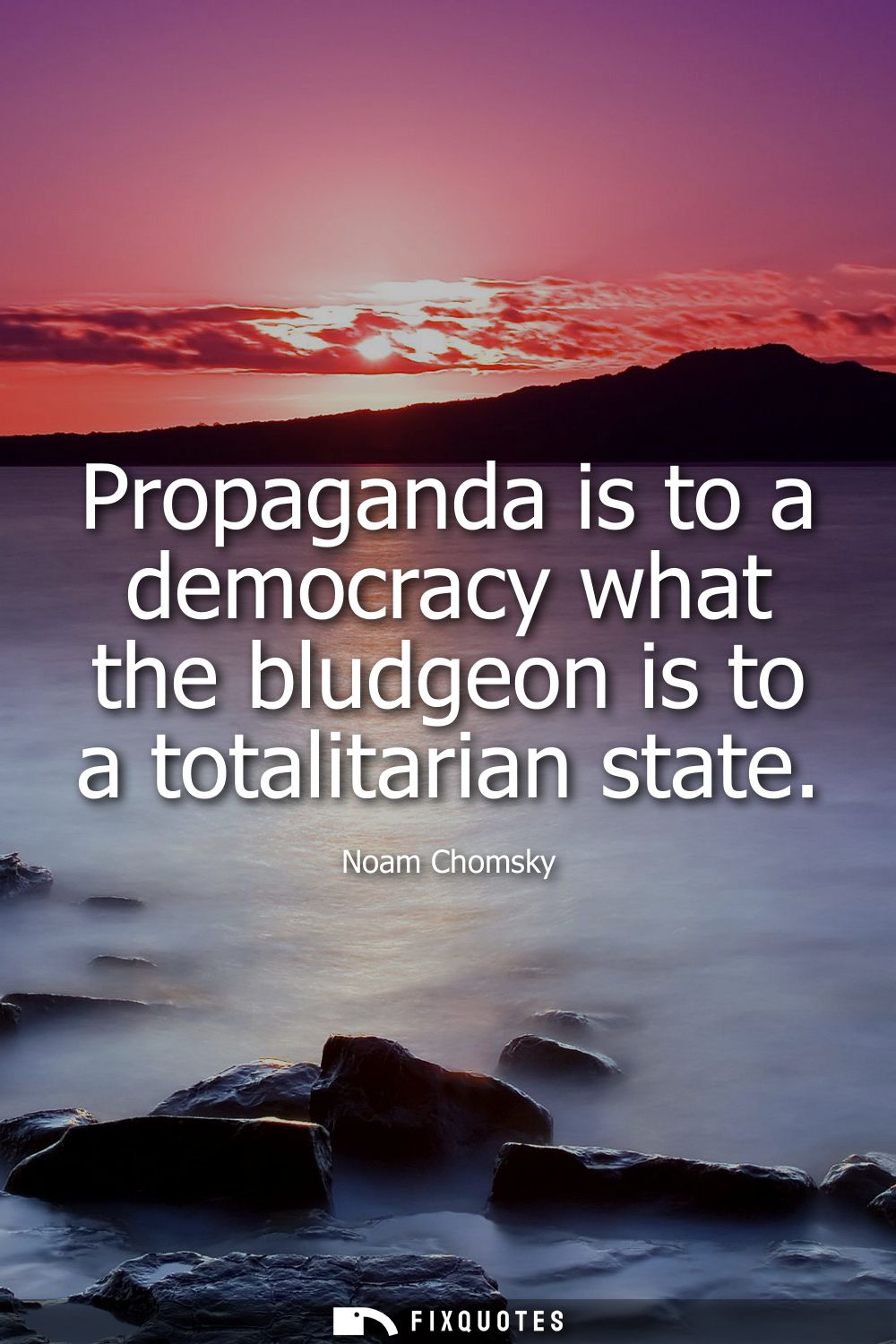
"Propaganda is to a democracy what the bludgeon is to a totalitarian state"
About this Quote
The subtext is accusatory and structural. Chomsky isn’t indicting a few bad actors or a single administration; he’s pointing to a system where power is maintained through narrative management. If totalitarian regimes rely on fear to silence dissent, democracies can rely on saturation: framing, repetition, selective outrage, and the narrowing of “reasonable” opinion until the public argues inside boundaries drawn by elites. A bludgeon breaks bones; propaganda breaks attention, memory, and the ability to imagine alternatives.
Context matters: Chomsky’s lifelong critique of U.S. media, foreign policy, and corporate influence treats information as infrastructure - who owns it, who sets agendas, who gets expert status. The analogy also carries a warning for citizens: if you think you’re immune because you’re not being threatened, you’re already halfway captured. The most effective propaganda doesn’t sound like commands; it sounds like common sense.
Quote Details
| Topic | Freedom |
|---|---|
| Source | Help us find the source |
| Cite |
Citation Formats
APA Style (7th ed.)
Chomsky, Noam. (2026, January 16). Propaganda is to a democracy what the bludgeon is to a totalitarian state. FixQuotes. https://fixquotes.com/quotes/propaganda-is-to-a-democracy-what-the-bludgeon-is-100688/
Chicago Style
Chomsky, Noam. "Propaganda is to a democracy what the bludgeon is to a totalitarian state." FixQuotes. January 16, 2026. https://fixquotes.com/quotes/propaganda-is-to-a-democracy-what-the-bludgeon-is-100688/.
MLA Style (9th ed.)
"Propaganda is to a democracy what the bludgeon is to a totalitarian state." FixQuotes, 16 Jan. 2026, https://fixquotes.com/quotes/propaganda-is-to-a-democracy-what-the-bludgeon-is-100688/. Accessed 12 Feb. 2026.