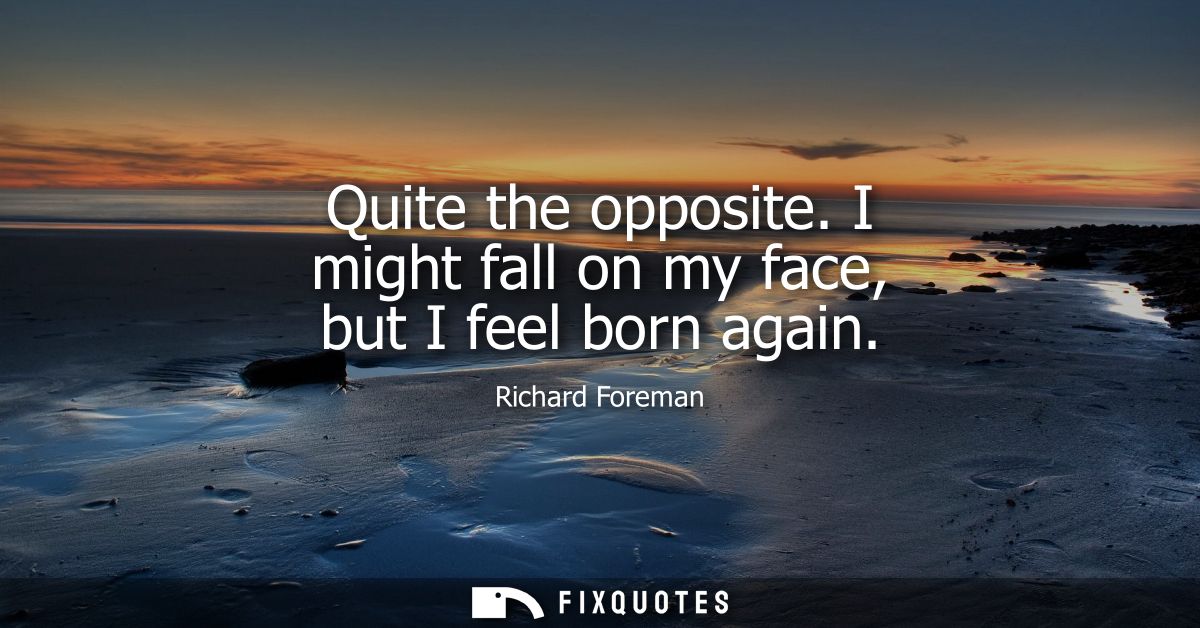
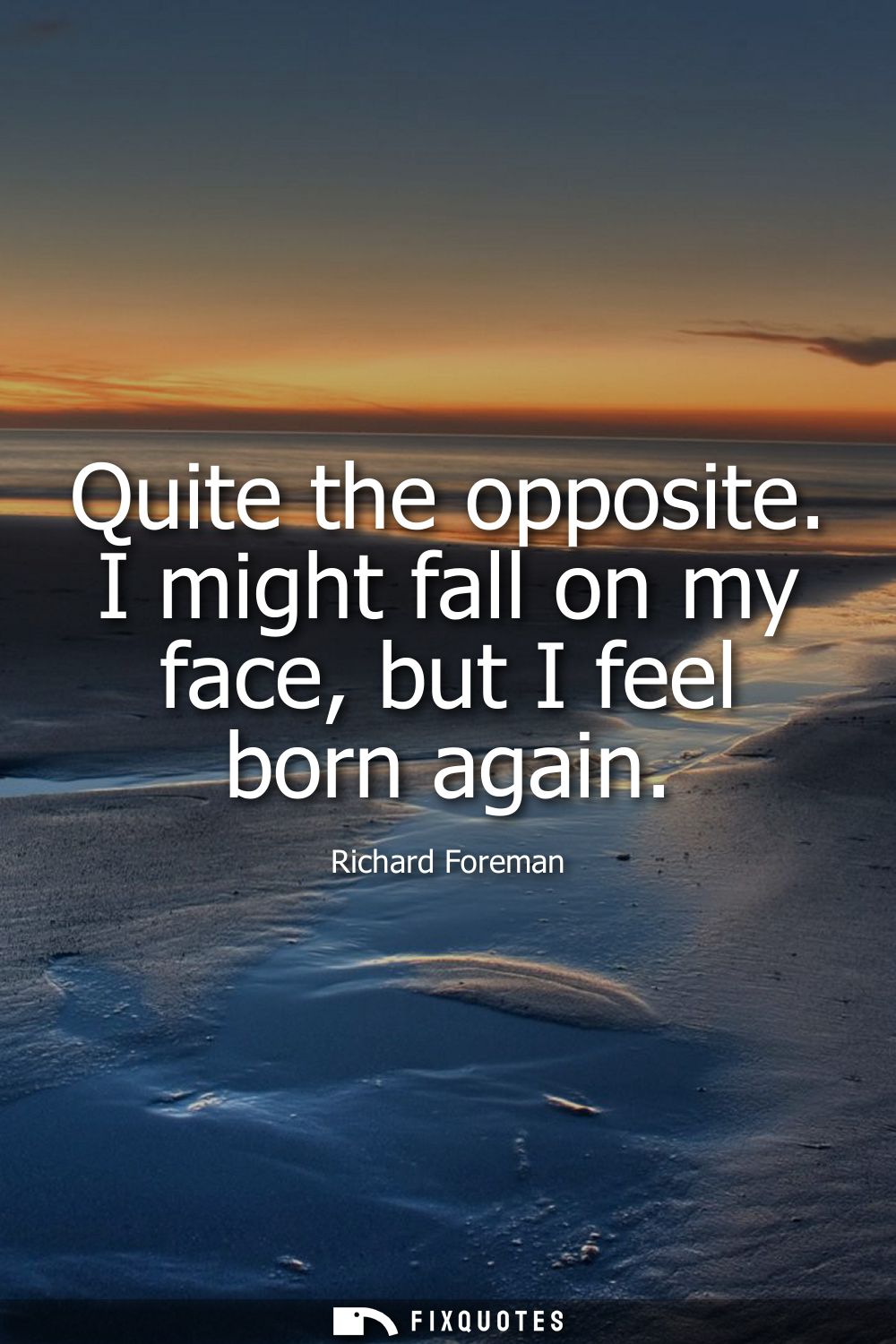
"Quite the opposite. I might fall on my face, but I feel born again"
About this Quote
“Quite the opposite” lands like a director’s note spoken in defiance of the room. Foreman, a playwright whose work repeatedly sabotages comfort, starts by rejecting the expected reading: that risk leads to humiliation, that falling is failure, that the body’s loss of control is the end of dignity. The line is engineered as a reversal, a quick pivot from social shame (“fall on my face”) to a startling, almost ecstatic payoff (“born again”). It’s not optimism so much as an aesthetic dare.
The subtext is theatrical: the stage is one of the few public places where failure can be transformed into meaning in real time. To “fall on my face” evokes slapstick, embarrassment, and exposure; it’s the body becoming spectacle. Foreman reframes that spectacle as a kind of rebirth, suggesting that the collapse of composure can clear the air of performance-as-politeness. When your mask slips, you may finally be doing something honest.
There’s also a sly critique of self-protective culture embedded here. “Born again” borrows the language of spiritual renewal, but without the sermon. Foreman isn’t selling redemption; he’s describing the jolt of aliveness that comes from stepping outside rehearsed identity. The intent feels less like confession than provocation: if art is supposed to wake us up, then maybe the face-plant is the point. In a Foreman universe, the bruise is evidence you were really there.
The subtext is theatrical: the stage is one of the few public places where failure can be transformed into meaning in real time. To “fall on my face” evokes slapstick, embarrassment, and exposure; it’s the body becoming spectacle. Foreman reframes that spectacle as a kind of rebirth, suggesting that the collapse of composure can clear the air of performance-as-politeness. When your mask slips, you may finally be doing something honest.
There’s also a sly critique of self-protective culture embedded here. “Born again” borrows the language of spiritual renewal, but without the sermon. Foreman isn’t selling redemption; he’s describing the jolt of aliveness that comes from stepping outside rehearsed identity. The intent feels less like confession than provocation: if art is supposed to wake us up, then maybe the face-plant is the point. In a Foreman universe, the bruise is evidence you were really there.
Quote Details
| Topic | New Beginnings |
|---|---|
| Source | Help us find the source |
| Cite |
Citation Formats
APA Style (7th ed.)
Foreman, Richard. (2026, January 16). Quite the opposite. I might fall on my face, but I feel born again. FixQuotes. https://fixquotes.com/quotes/quite-the-opposite-i-might-fall-on-my-face-but-i-85955/
Chicago Style
Foreman, Richard. "Quite the opposite. I might fall on my face, but I feel born again." FixQuotes. January 16, 2026. https://fixquotes.com/quotes/quite-the-opposite-i-might-fall-on-my-face-but-i-85955/.
MLA Style (9th ed.)
"Quite the opposite. I might fall on my face, but I feel born again." FixQuotes, 16 Jan. 2026, https://fixquotes.com/quotes/quite-the-opposite-i-might-fall-on-my-face-but-i-85955/. Accessed 2 Apr. 2026.
More Quotes by Richard
Add to List