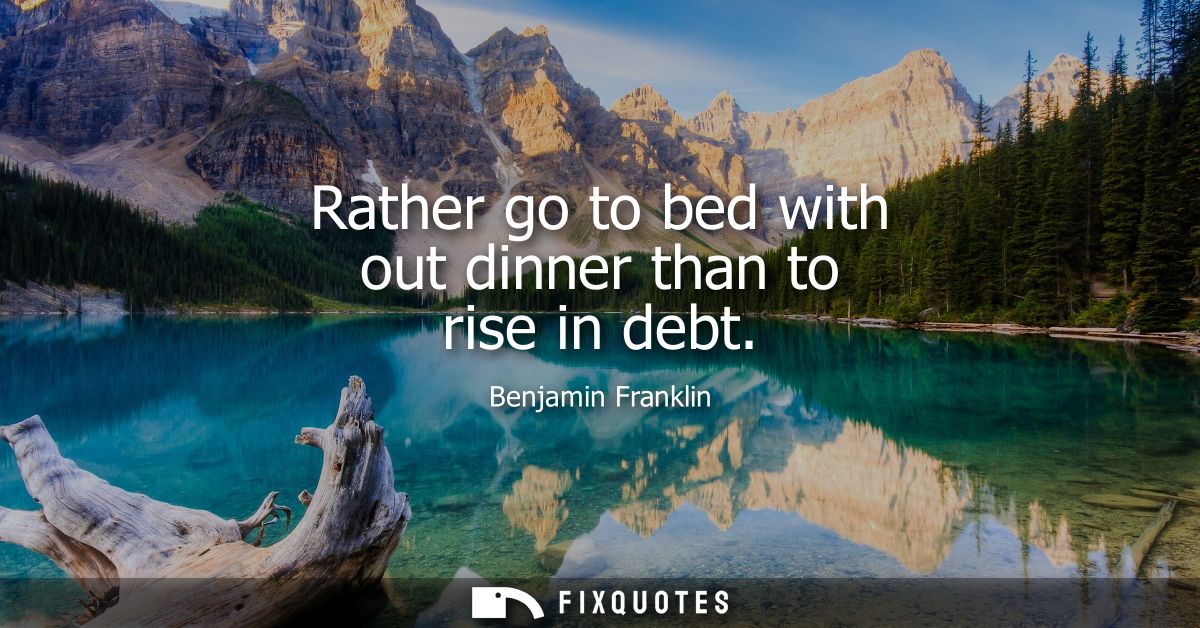
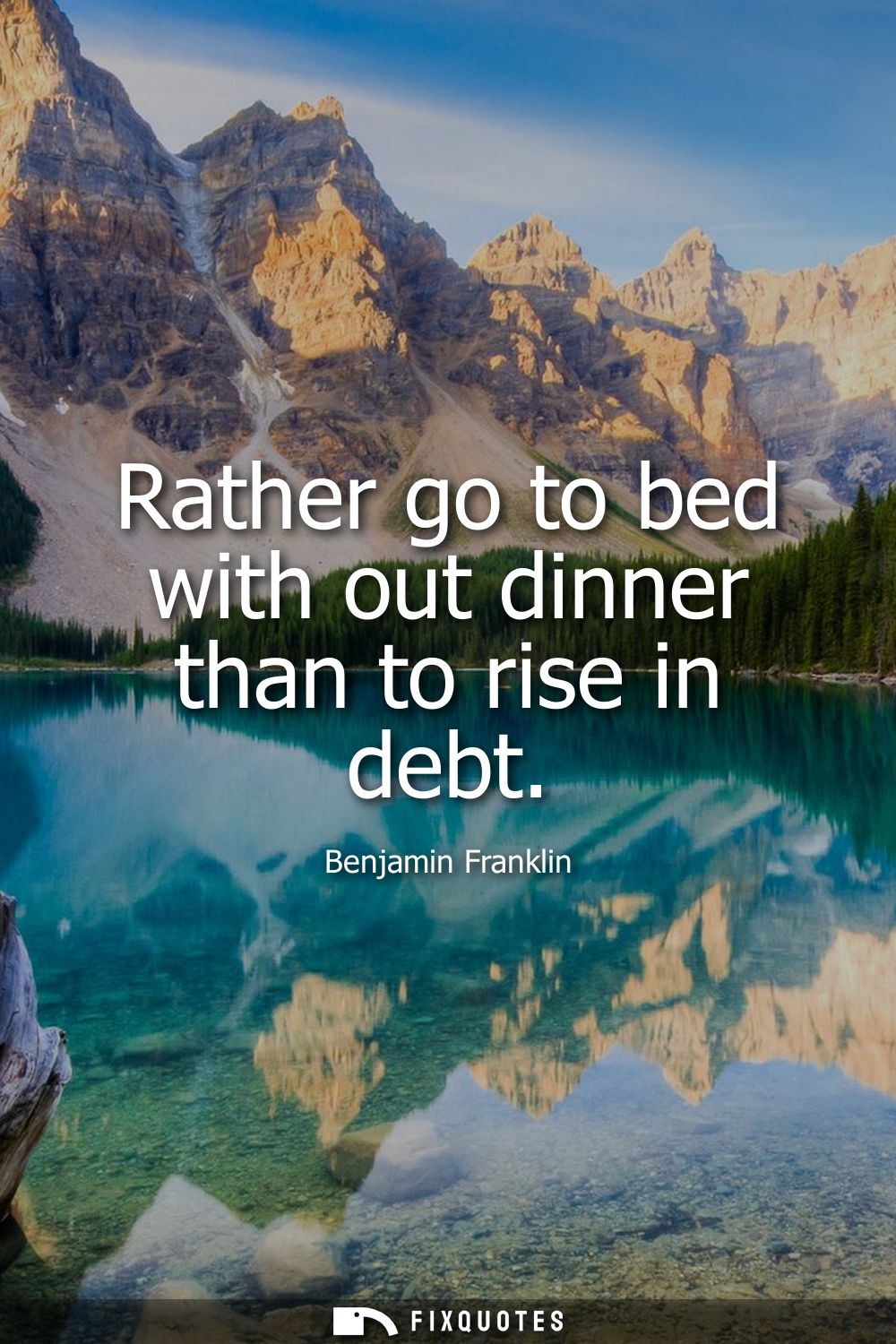
"Rather go to bed with out dinner than to rise in debt"
About this Quote
Franklin turns thrift into a dare: you can tolerate hunger for a night, but debt will haunt your mornings. The line works because it drags finance out of ledgers and into the body. “Go to bed without dinner” is visceral and immediate; “rise in debt” is quieter, longer, and psychologically corrosive. The contrast isn’t just about money. It’s about agency. Skipping dinner is a choice. Waking up indebted is a condition that chooses you.
As a politician and civic builder, Franklin wasn’t merely dispensing homespun advice; he was marketing a social ethic suited to a precarious, credit-driven colonial economy. In 18th-century Anglo-American life, credit was both lubricant and trap: a way to buy tools, land, and inventory, but also a fast track to public humiliation, lawsuits, or debtor’s prison. Franklin’s subtext is that character is legible in your balance sheet. Debt doesn’t only threaten solvency; it threatens standing.
There’s also a distinctly Franklinian suspicion of indulgence dressed up as necessity. Dinner here doubles as metaphor for small luxuries, impulsive purchases, and status spending. He frames restraint as freedom, implying the borrower’s life is already partially owned by someone else.
Read now, the quote lands like an early diagnosis of modern consumer culture: the soft tyranny of monthly payments, the normalization of living ahead of your paycheck, the way debt converts future time into a commodity. Franklin makes the moral argument bluntly practical: better a temporary discomfort you control than a lasting obligation you don’t.
As a politician and civic builder, Franklin wasn’t merely dispensing homespun advice; he was marketing a social ethic suited to a precarious, credit-driven colonial economy. In 18th-century Anglo-American life, credit was both lubricant and trap: a way to buy tools, land, and inventory, but also a fast track to public humiliation, lawsuits, or debtor’s prison. Franklin’s subtext is that character is legible in your balance sheet. Debt doesn’t only threaten solvency; it threatens standing.
There’s also a distinctly Franklinian suspicion of indulgence dressed up as necessity. Dinner here doubles as metaphor for small luxuries, impulsive purchases, and status spending. He frames restraint as freedom, implying the borrower’s life is already partially owned by someone else.
Read now, the quote lands like an early diagnosis of modern consumer culture: the soft tyranny of monthly payments, the normalization of living ahead of your paycheck, the way debt converts future time into a commodity. Franklin makes the moral argument bluntly practical: better a temporary discomfort you control than a lasting obligation you don’t.
Quote Details
| Topic | Saving Money |
|---|---|
| Source | Poor Richard's Almanack (Benjamin Franklin) , proverb often given as “Rather go to bed supperless than rise in debt.” |
| Cite |
Citation Formats
APA Style (7th ed.)
Franklin, Benjamin. (2026, January 14). Rather go to bed with out dinner than to rise in debt. FixQuotes. https://fixquotes.com/quotes/rather-go-to-bed-with-out-dinner-than-to-rise-in-25523/
Chicago Style
Franklin, Benjamin. "Rather go to bed with out dinner than to rise in debt." FixQuotes. January 14, 2026. https://fixquotes.com/quotes/rather-go-to-bed-with-out-dinner-than-to-rise-in-25523/.
MLA Style (9th ed.)
"Rather go to bed with out dinner than to rise in debt." FixQuotes, 14 Jan. 2026, https://fixquotes.com/quotes/rather-go-to-bed-with-out-dinner-than-to-rise-in-25523/. Accessed 5 Feb. 2026.
More Quotes by Benjamin
Add to List