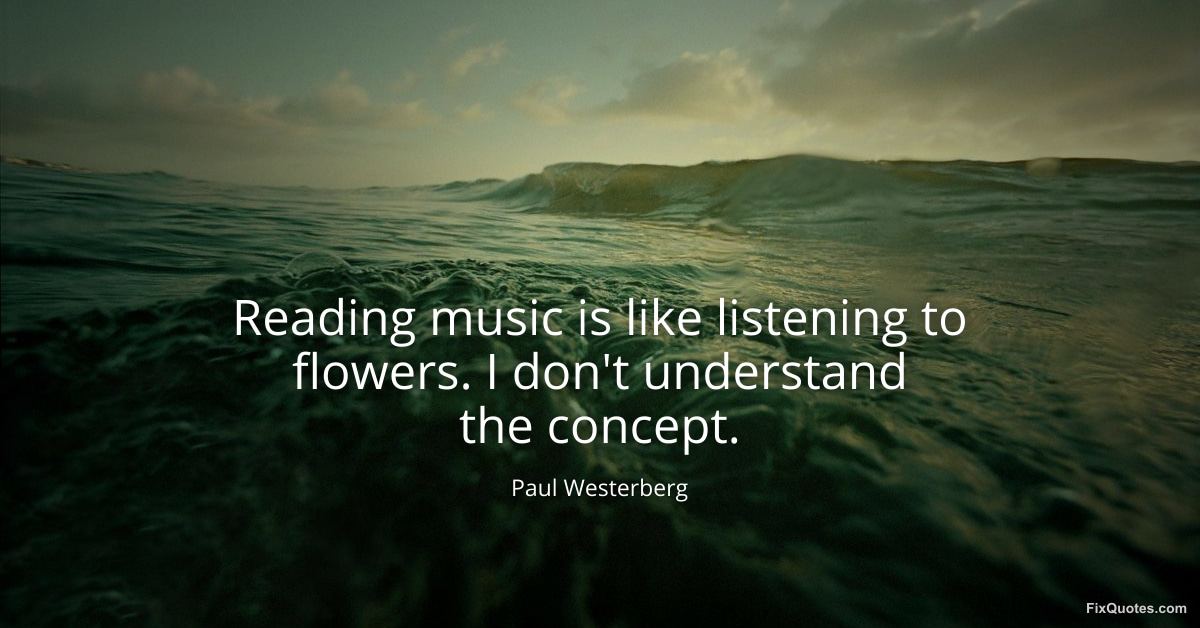
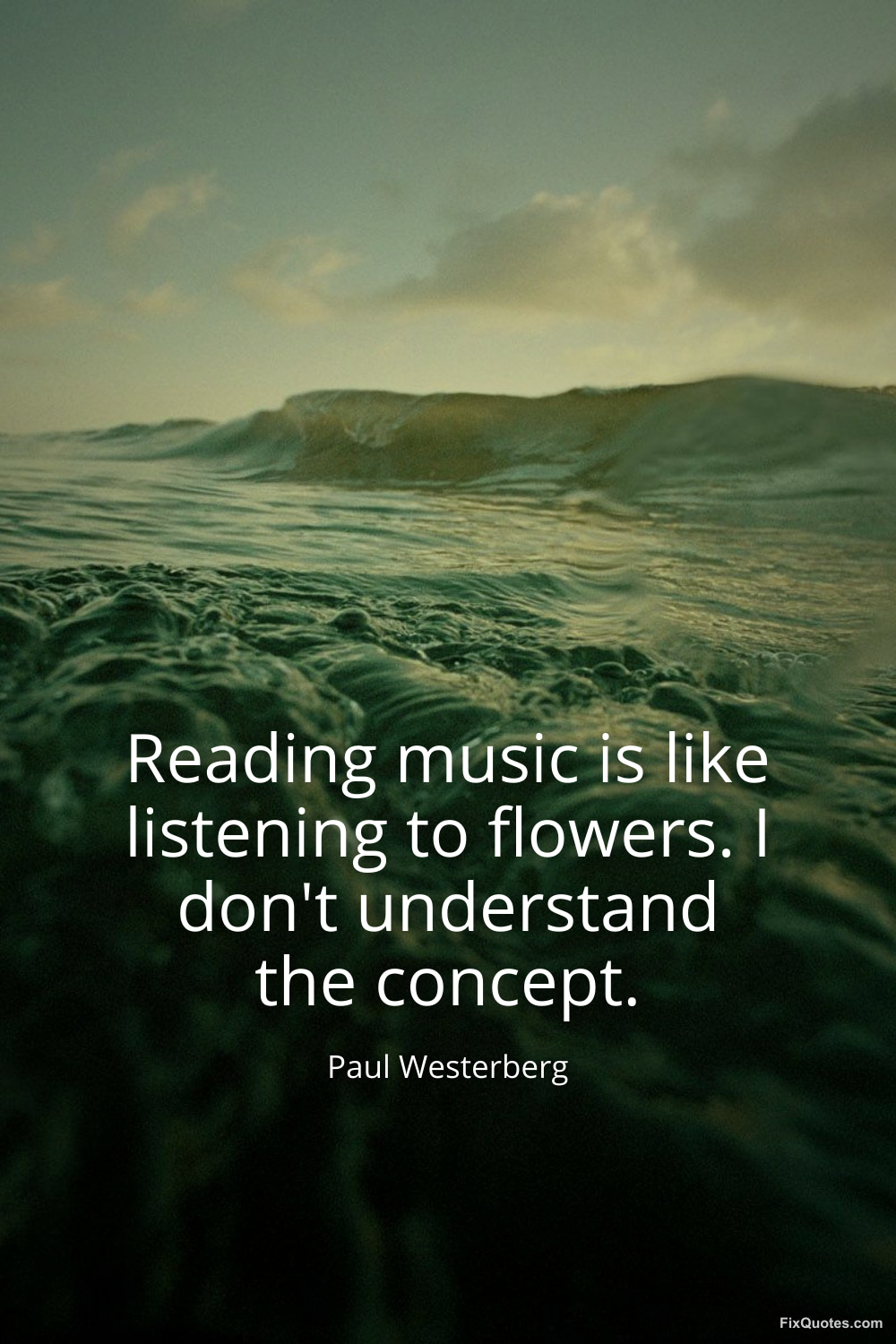
"Reading music is like listening to flowers. I don't understand the concept"
About this Quote
As a musician who came up in rock rather than conservatory corridors, Westerberg is also defending a lineage where feel outranks fluency, and where not knowing the official language is sometimes worn as proof of authenticity. In punk and post-punk culture, ignorance is often a strategy: a refusal to let expertise become gatekeeping. The line carries that chip-on-the-shoulder pride, but it isn't just anti-intellectual posturing. It's a critique of how institutions flatten experience into notation, as if the soul of a performance were a set of instructions.
There's a sly self-awareness, too. Westerberg knows the provocation lands because it tweaks a real anxiety: that "real" musicians are supposed to read. By making the analogy absurd, he exposes the social fiction underneath the demand. Music, he implies, is not a text to decode; it's a sensation to risk, screw up, and mean.
Quote Details
| Topic | Music |
|---|---|
| Source | Help us find the source |
| Cite |
Citation Formats
APA Style (7th ed.)
Westerberg, Paul. (2026, January 15). Reading music is like listening to flowers. I don't understand the concept. FixQuotes. https://fixquotes.com/quotes/reading-music-is-like-listening-to-flowers-i-dont-163666/
Chicago Style
Westerberg, Paul. "Reading music is like listening to flowers. I don't understand the concept." FixQuotes. January 15, 2026. https://fixquotes.com/quotes/reading-music-is-like-listening-to-flowers-i-dont-163666/.
MLA Style (9th ed.)
"Reading music is like listening to flowers. I don't understand the concept." FixQuotes, 15 Jan. 2026, https://fixquotes.com/quotes/reading-music-is-like-listening-to-flowers-i-dont-163666/. Accessed 7 Apr. 2026.