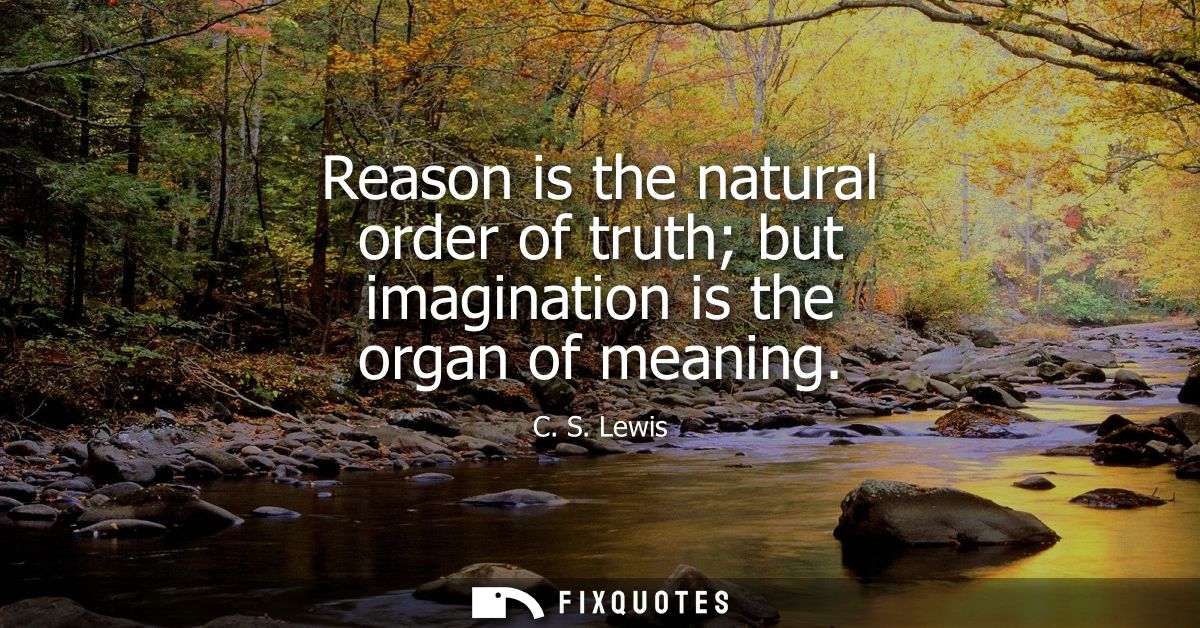
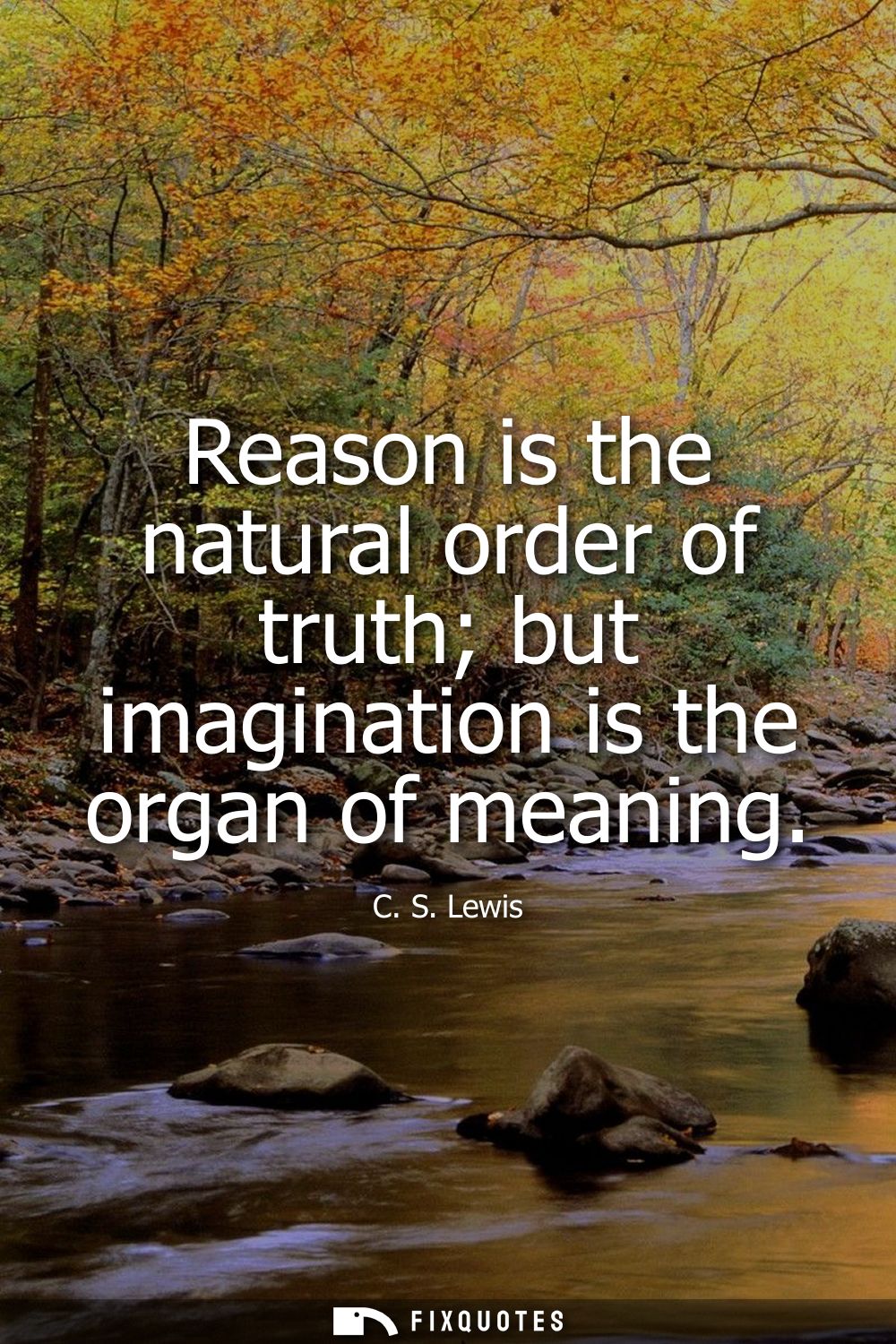
"Reason is the natural order of truth; but imagination is the organ of meaning"
About this Quote
The intent is quietly polemical. Lewis is pushing back against the modern habit of treating imagination as childish or suspect, as if it’s the enemy of clear thinking. For him, imagination isn’t a rival to rationality; it’s the translator that turns a proposition into a lived apprehension. You can assent to a doctrine, a statistic, a moral claim and still fail to grasp what it means for a human being. Imagination bridges that gap, giving truth texture, narrative weight, and emotional clarity without turning it into mere sentiment.
Context matters: Lewis comes out of early 20th-century Britain, shaped by the prestige of scientific rationalism, the disillusionment of war, and his own journey from atheism to Christian belief. In his essays and apologetics, he repeatedly argues that myth and story can carry realities that analysis alone can’t deliver. The subtext is a warning to the overeducated skeptic: if you only trust what can be diagrammed, you’ll end up with accurate conclusions that feel empty. Meaning, for Lewis, isn’t irrational; it’s pre-rational in the best sense - the human capacity to recognize why a truth should matter.
Quote Details
| Topic | Truth |
|---|---|
| Source | Help us find the source |
| Cite |
Citation Formats
APA Style (7th ed.)
Lewis, C. S. (2026, January 17). Reason is the natural order of truth; but imagination is the organ of meaning. FixQuotes. https://fixquotes.com/quotes/reason-is-the-natural-order-of-truth-but-33146/
Chicago Style
Lewis, C. S. "Reason is the natural order of truth; but imagination is the organ of meaning." FixQuotes. January 17, 2026. https://fixquotes.com/quotes/reason-is-the-natural-order-of-truth-but-33146/.
MLA Style (9th ed.)
"Reason is the natural order of truth; but imagination is the organ of meaning." FixQuotes, 17 Jan. 2026, https://fixquotes.com/quotes/reason-is-the-natural-order-of-truth-but-33146/. Accessed 5 Apr. 2026.