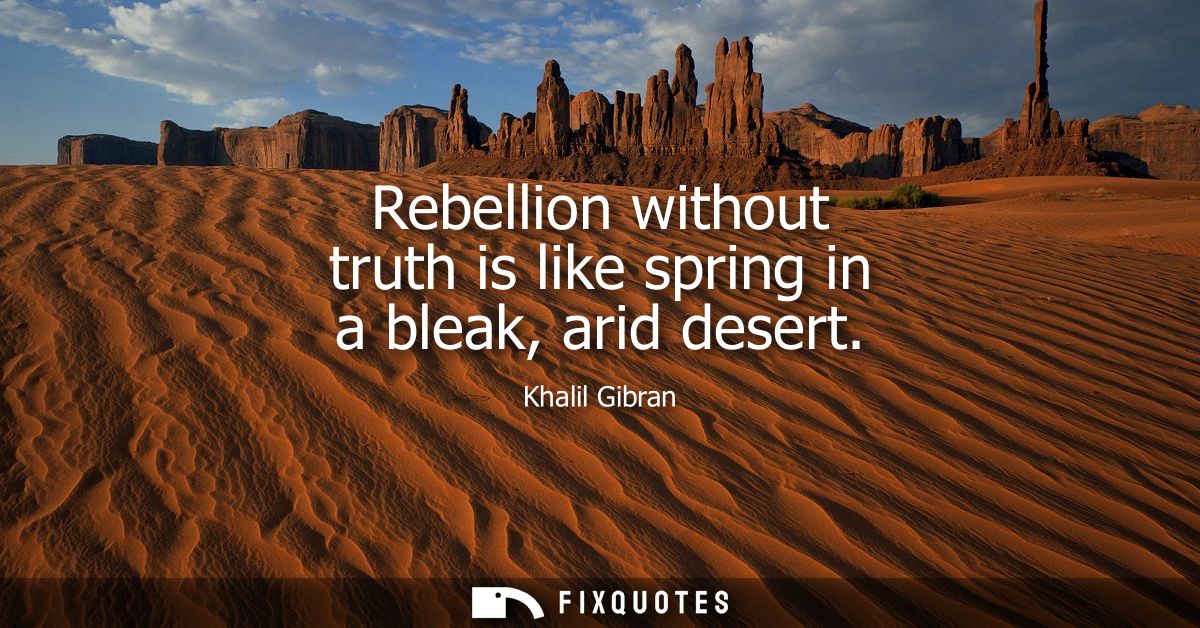
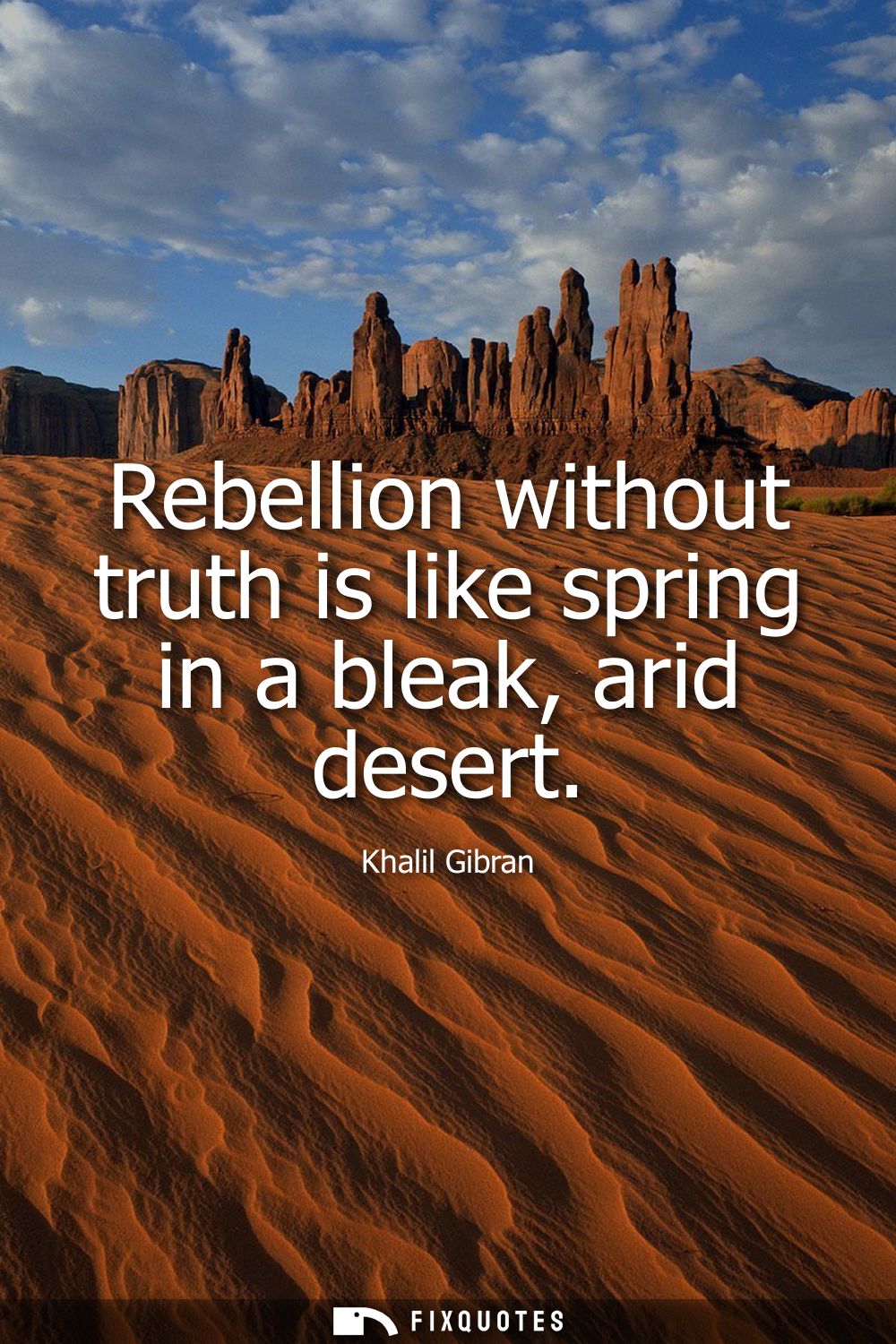
"Rebellion without truth is like spring in a bleak, arid desert"
About this Quote
Rebellion is being sold here as a season, not a slogan: bright, urgent, and doomed if it can’t take root. Gibran’s metaphor does two jobs at once. “Spring” carries the intoxicating aesthetics of revolt - color, motion, a sense of inevitability - while the “bleak, arid desert” names the social and spiritual conditions that turn uprising into a mirage. The line flatters the rebel’s appetite for change, then undercuts it with a warning: without truth, rebellion is only weather, a brief anomaly that evaporates before it becomes a climate.
Gibran’s “truth” isn’t courtroom evidence; it’s moral and interior alignment, the kind of authenticity his work keeps circling. The subtext is almost parental in its disappointment with performative defiance. You can rage against a regime, a church, a family, a tradition, and still be operating on borrowed scripts - vanity, resentment, fashion. In that case rebellion looks alive, even feels alive, but it can’t sustain life in others. It doesn’t irrigate.
Context matters. Writing in the wake of empire’s long shadow and amid early 20th-century nationalist awakenings, Gibran watched liberation movements wrestle with their own temptations: replacing one dogma with another, trading genuine renewal for the theater of rupture. The quote reads like advice to activists and artists alike: revolt is not automatically virtuous. It has to be tethered to something sturdier than anger - a truth capable of surviving the heat once the first green shoots are gone.
Gibran’s “truth” isn’t courtroom evidence; it’s moral and interior alignment, the kind of authenticity his work keeps circling. The subtext is almost parental in its disappointment with performative defiance. You can rage against a regime, a church, a family, a tradition, and still be operating on borrowed scripts - vanity, resentment, fashion. In that case rebellion looks alive, even feels alive, but it can’t sustain life in others. It doesn’t irrigate.
Context matters. Writing in the wake of empire’s long shadow and amid early 20th-century nationalist awakenings, Gibran watched liberation movements wrestle with their own temptations: replacing one dogma with another, trading genuine renewal for the theater of rupture. The quote reads like advice to activists and artists alike: revolt is not automatically virtuous. It has to be tethered to something sturdier than anger - a truth capable of surviving the heat once the first green shoots are gone.
Quote Details
| Topic | Truth |
|---|---|
| Source | Help us find the source |
| Cite |
Citation Formats
APA Style (7th ed.)
Gibran, Kahlil. (2026, January 15). Rebellion without truth is like spring in a bleak, arid desert. FixQuotes. https://fixquotes.com/quotes/rebellion-without-truth-is-like-spring-in-a-bleak-17086/
Chicago Style
Gibran, Kahlil. "Rebellion without truth is like spring in a bleak, arid desert." FixQuotes. January 15, 2026. https://fixquotes.com/quotes/rebellion-without-truth-is-like-spring-in-a-bleak-17086/.
MLA Style (9th ed.)
"Rebellion without truth is like spring in a bleak, arid desert." FixQuotes, 15 Jan. 2026, https://fixquotes.com/quotes/rebellion-without-truth-is-like-spring-in-a-bleak-17086/. Accessed 11 Mar. 2026.
More Quotes by Kahlil
Add to List