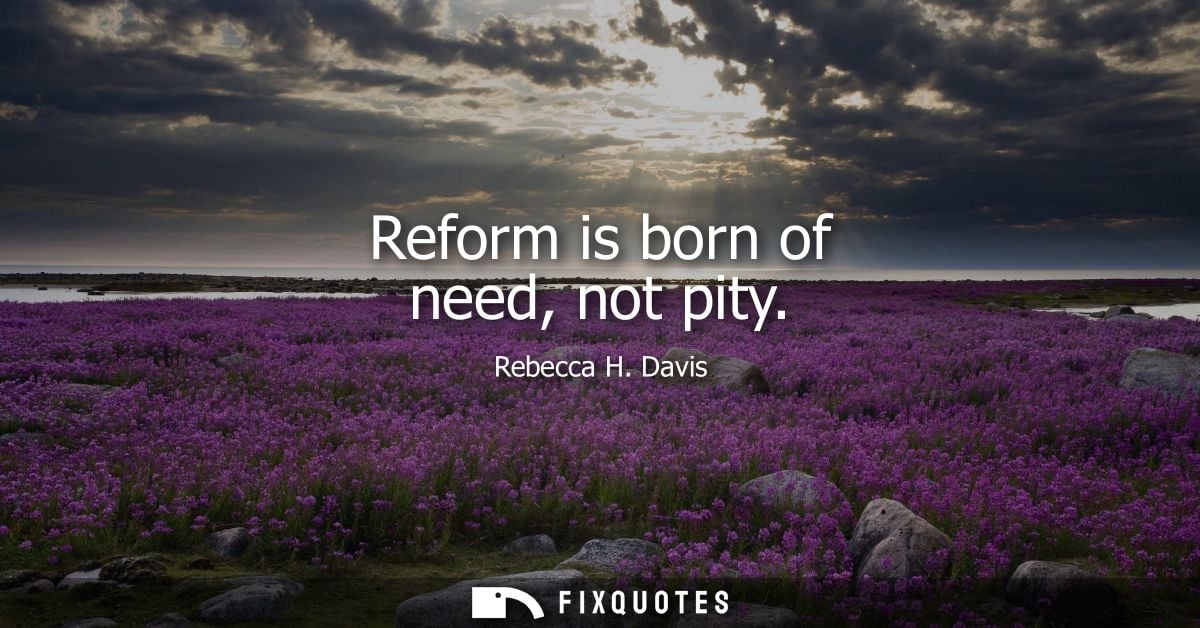
"Reform is born of need, not pity"
About this Quote
“Reform is born of need, not pity” refuses the comforting story we like to tell about social progress: that it comes from the generous hearts of the comfortable. Rebecca H. Davis, a writer attuned to how power narrates itself, flips the emotional script. Pity is a spectator’s feeling - safe, often performative, and ultimately optional. Need is structural. Need has deadlines. It organizes bodies, votes, strikes, mutual aid networks, and lawsuits. It is the pressure that makes institutions creak.
The line works because it’s both a moral critique and a strategy memo. Davis isn’t just dismissing pity as inadequate; she’s exposing it as a tool that can preserve hierarchy. Pity keeps the giver above the receiver, turning inequality into a scene of benevolence rather than a system with architects. Reform driven by pity tends to be charity-shaped: temporary relief, photo-ready gestures, reforms that can be withdrawn when sympathy shifts. Reform driven by need is harder to sentimentalize and harder to ignore. It’s about demands, not donations.
Contextually, this is the kind of sentence that belongs to periods when “awareness” is mistaken for action: industrial labor struggles, civil rights battles, contemporary debates over housing and healthcare. Davis implies that meaningful change rarely arrives because the powerful suddenly feel kinder; it arrives because the cost of maintaining the status quo becomes higher than the cost of altering it. The subtext is bracing: if you want reform, stop auditioning for compassion and start building leverage.
The line works because it’s both a moral critique and a strategy memo. Davis isn’t just dismissing pity as inadequate; she’s exposing it as a tool that can preserve hierarchy. Pity keeps the giver above the receiver, turning inequality into a scene of benevolence rather than a system with architects. Reform driven by pity tends to be charity-shaped: temporary relief, photo-ready gestures, reforms that can be withdrawn when sympathy shifts. Reform driven by need is harder to sentimentalize and harder to ignore. It’s about demands, not donations.
Contextually, this is the kind of sentence that belongs to periods when “awareness” is mistaken for action: industrial labor struggles, civil rights battles, contemporary debates over housing and healthcare. Davis implies that meaningful change rarely arrives because the powerful suddenly feel kinder; it arrives because the cost of maintaining the status quo becomes higher than the cost of altering it. The subtext is bracing: if you want reform, stop auditioning for compassion and start building leverage.
Quote Details
| Topic | Change |
|---|---|
| Source | Help us find the source |
| Cite |
Citation Formats
APA Style (7th ed.)
Davis, Rebecca H. (2026, January 16). Reform is born of need, not pity. FixQuotes. https://fixquotes.com/quotes/reform-is-born-of-need-not-pity-84715/
Chicago Style
Davis, Rebecca H. "Reform is born of need, not pity." FixQuotes. January 16, 2026. https://fixquotes.com/quotes/reform-is-born-of-need-not-pity-84715/.
MLA Style (9th ed.)
"Reform is born of need, not pity." FixQuotes, 16 Jan. 2026, https://fixquotes.com/quotes/reform-is-born-of-need-not-pity-84715/. Accessed 24 Mar. 2026.
More Quotes by Rebecca
Add to List