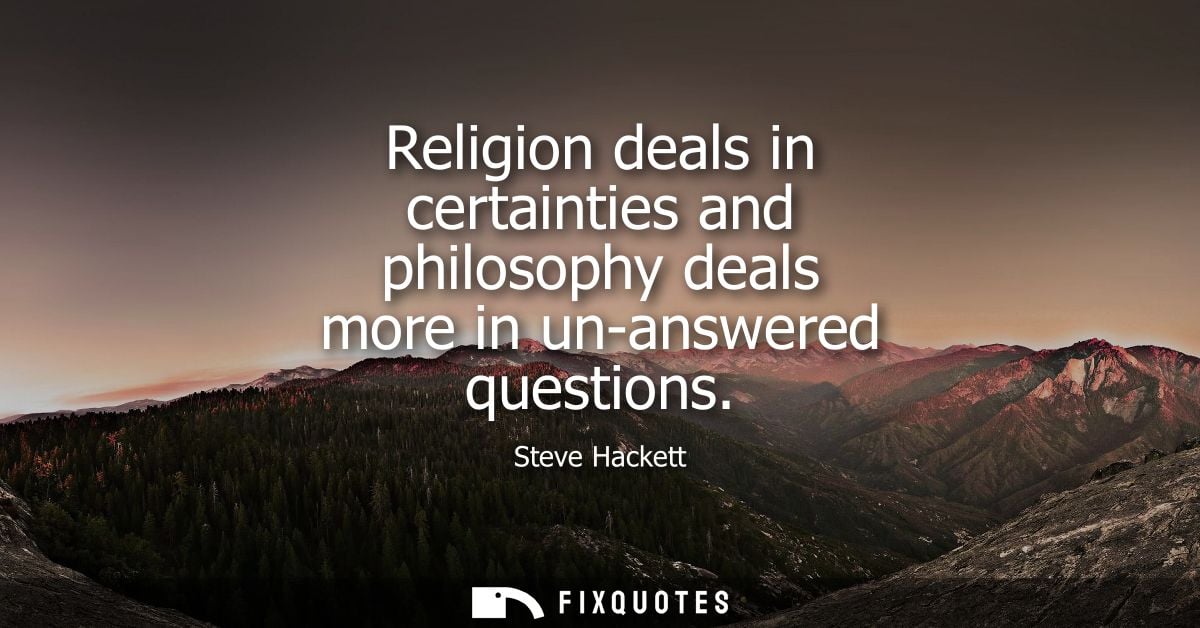
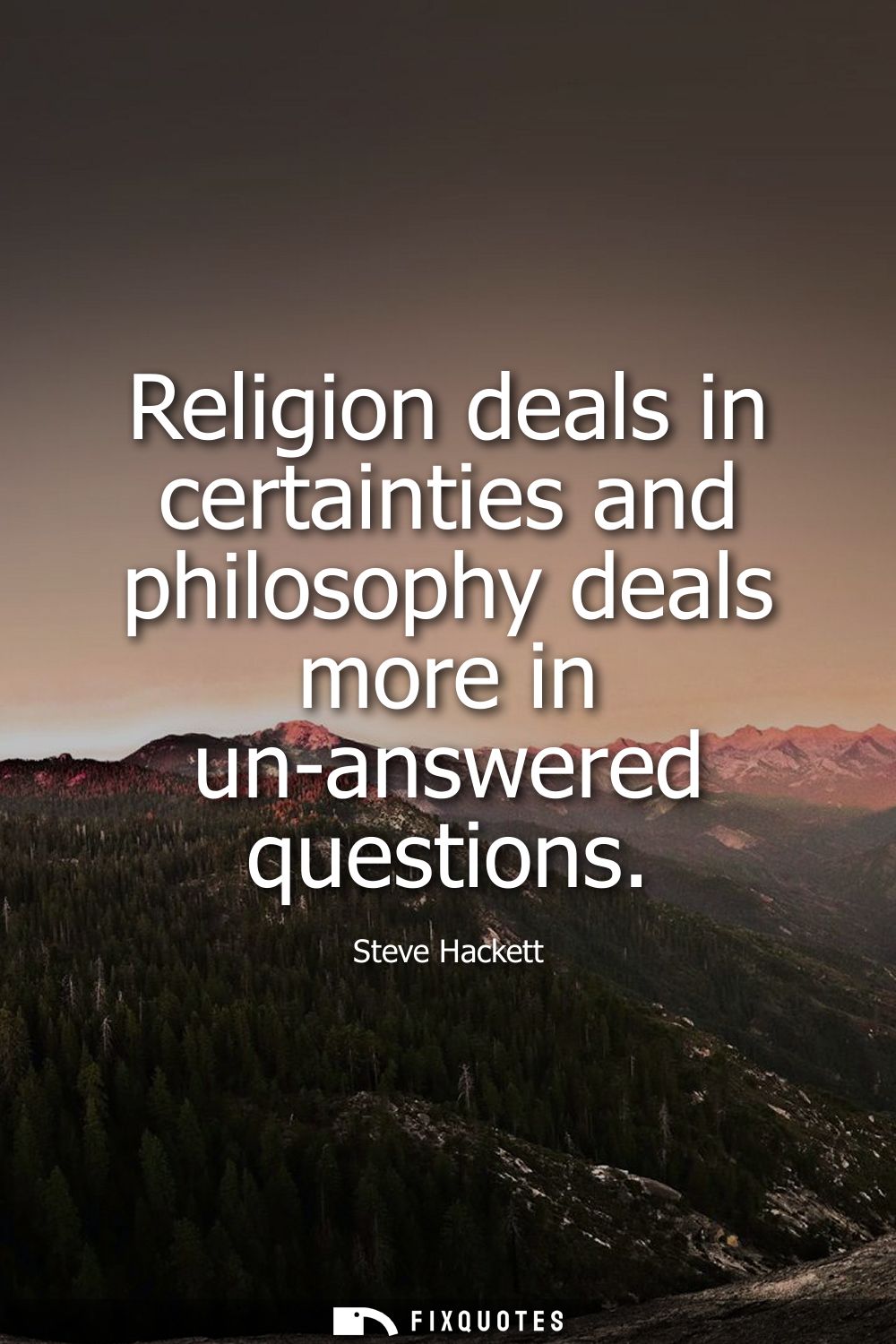
"Religion deals in certainties and philosophy deals more in unanswered questions"
About this Quote
Then he flips to philosophy, but not as an equal rival - more like an adjacent temperament. “Deals more in un-answered questions” frames philosophy as a practice that keeps the wound open on purpose. The hyphenated “un-answered” reads almost like a refusal: not just questions that haven’t been answered yet, but questions that resist being closed, because the closure is the point of contention. “More” also matters: he avoids the lazy binary. Religions ask questions; philosophers commit to positions. The difference is which impulse they privilege - settlement or exploration.
The subtext lands in a modern, post-certainty culture where institutions that promise absolutes can look comforting or coercive, depending on your experience. Hackett’s line gently valorizes intellectual humility without sermonizing about it. It’s a defense of curiosity as an ethical stance: not knowing, and staying honest about that, as a form of discipline rather than a failure.
Quote Details
| Topic | Truth |
|---|---|
| Source | Help us find the source |
| Cite |
Citation Formats
APA Style (7th ed.)
Hackett, Steve. (2026, February 16). Religion deals in certainties and philosophy deals more in unanswered questions. FixQuotes. https://fixquotes.com/quotes/religion-deals-in-certainties-and-philosophy-119075/
Chicago Style
Hackett, Steve. "Religion deals in certainties and philosophy deals more in unanswered questions." FixQuotes. February 16, 2026. https://fixquotes.com/quotes/religion-deals-in-certainties-and-philosophy-119075/.
MLA Style (9th ed.)
"Religion deals in certainties and philosophy deals more in unanswered questions." FixQuotes, 16 Feb. 2026, https://fixquotes.com/quotes/religion-deals-in-certainties-and-philosophy-119075/. Accessed 20 Mar. 2026.