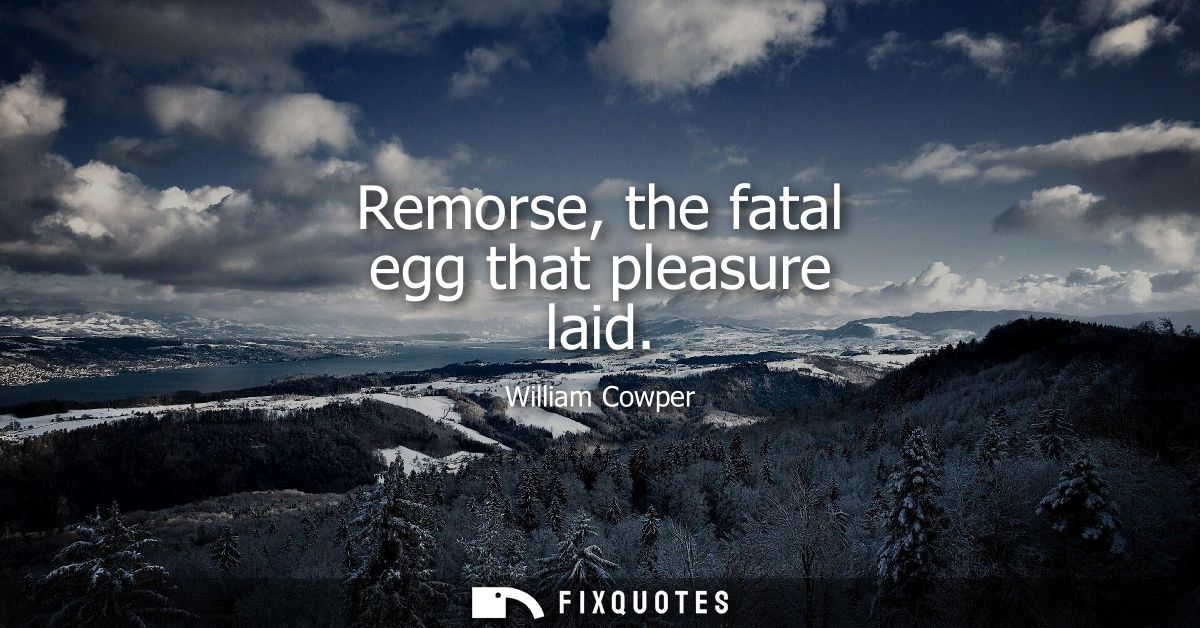
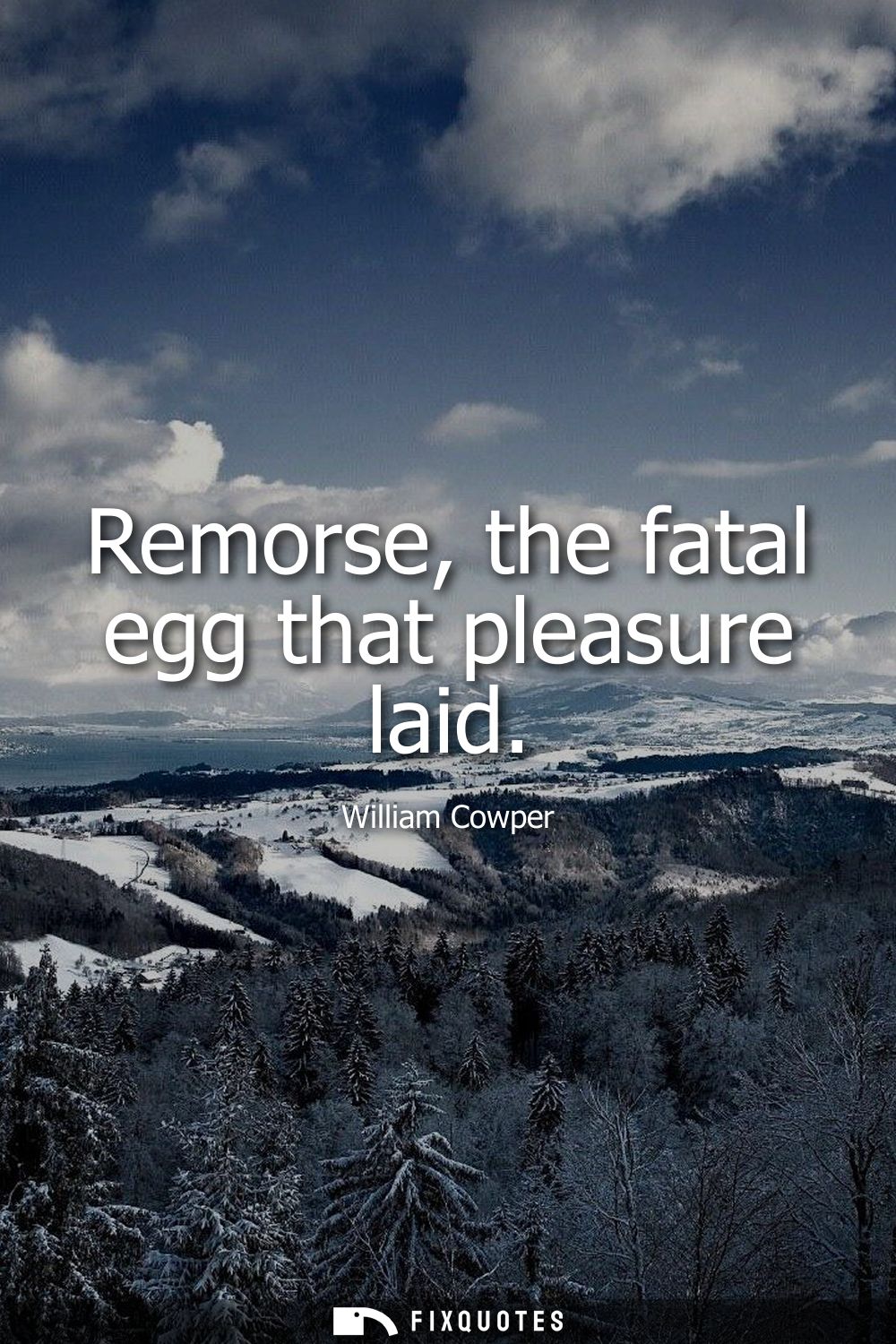
"Remorse, the fatal egg that pleasure laid"
About this Quote
“Remorse, the fatal egg that pleasure laid” is Cowper at his most scalpel-sharp: pleasure isn’t merely followed by regret, it incubates it. The metaphor does two things at once. First, it flips the usual moralizing sequence (sin -> punishment) into a biological inevitability. An “egg” suggests something small, almost cute, easy to ignore; “fatal” reveals what’s been silently growing inside it. Pleasure becomes not a liberated moment but a reproductive act with consequences baked in, as if delight carries its own ticking seed.
Cowper’s intent isn’t to sneer at happiness in general; it’s to indict a particular kind of pleasure - the kind pursued as appetite, as escape, as self-forgetting. Remorse here isn’t an external judge arriving later. It’s the offspring of the act itself, a private predator hatched in the mind. That psychological angle matters because Cowper, a deeply religious poet marked by recurring depression and spiritual terror, writes morality as interior weather, not public rulebook. The line captures a Protestant sensibility in which conscience is both courtroom and executioner, always operating after the music stops.
The subtext is almost modern: pleasure can be chemically convincing and emotionally false, and remorse is the invoice your body and memory eventually present. Cowper’s brilliance is compressing that whole cycle into one image you can’t unsee. It’s not thunder from the pulpit; it’s a quiet warning that the sweetest experiences can be the ones most expertly engineered to punish you later.
Cowper’s intent isn’t to sneer at happiness in general; it’s to indict a particular kind of pleasure - the kind pursued as appetite, as escape, as self-forgetting. Remorse here isn’t an external judge arriving later. It’s the offspring of the act itself, a private predator hatched in the mind. That psychological angle matters because Cowper, a deeply religious poet marked by recurring depression and spiritual terror, writes morality as interior weather, not public rulebook. The line captures a Protestant sensibility in which conscience is both courtroom and executioner, always operating after the music stops.
The subtext is almost modern: pleasure can be chemically convincing and emotionally false, and remorse is the invoice your body and memory eventually present. Cowper’s brilliance is compressing that whole cycle into one image you can’t unsee. It’s not thunder from the pulpit; it’s a quiet warning that the sweetest experiences can be the ones most expertly engineered to punish you later.
Quote Details
| Topic | Ethics & Morality |
|---|---|
| Source | Help us find the source |
| Cite |
Citation Formats
APA Style (7th ed.)
Cowper, William. (2026, January 18). Remorse, the fatal egg that pleasure laid. FixQuotes. https://fixquotes.com/quotes/remorse-the-fatal-egg-that-pleasure-laid-17925/
Chicago Style
Cowper, William. "Remorse, the fatal egg that pleasure laid." FixQuotes. January 18, 2026. https://fixquotes.com/quotes/remorse-the-fatal-egg-that-pleasure-laid-17925/.
MLA Style (9th ed.)
"Remorse, the fatal egg that pleasure laid." FixQuotes, 18 Jan. 2026, https://fixquotes.com/quotes/remorse-the-fatal-egg-that-pleasure-laid-17925/. Accessed 5 Apr. 2026.
More Quotes by William
Add to List