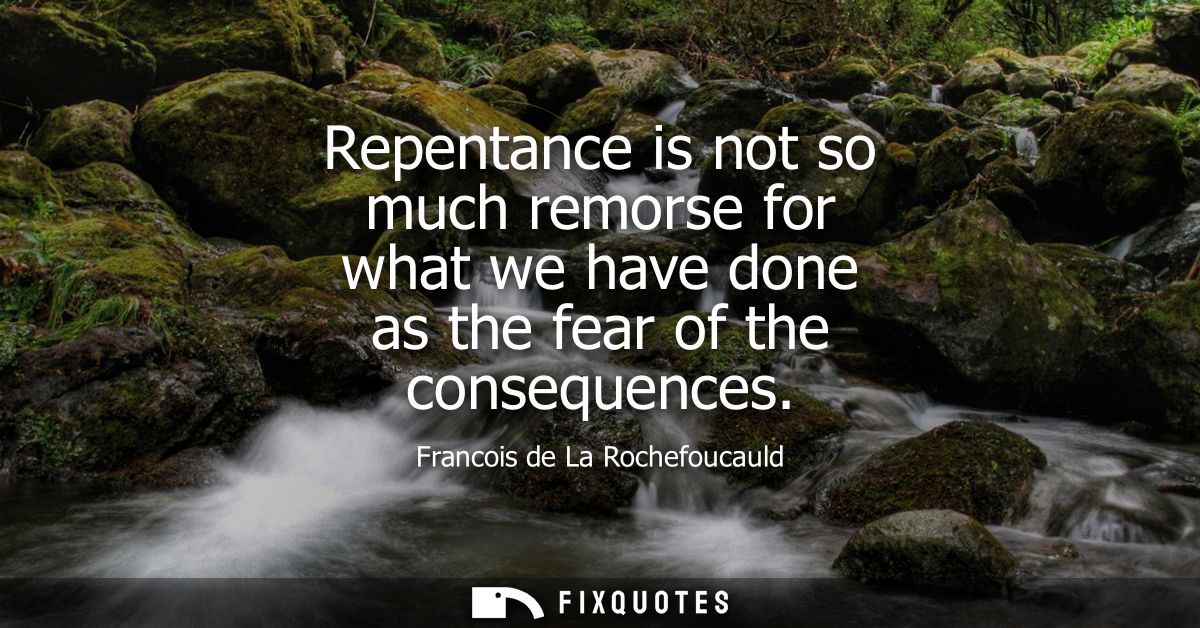
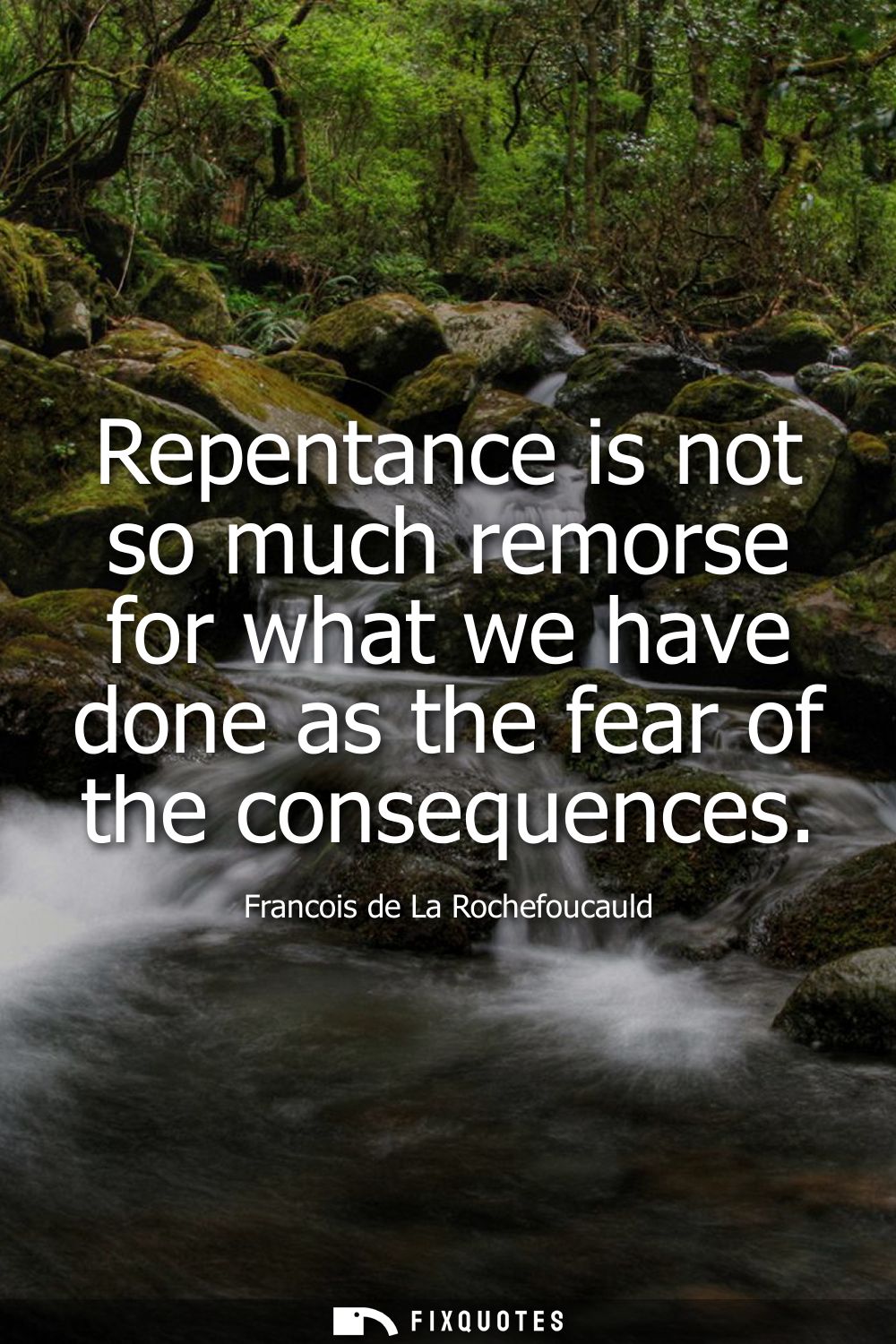
"Repentance is not so much remorse for what we have done as the fear of the consequences"
About this Quote
The subtext is almost theatrical. “Not so much” is a polite throttle, the courtly equivalent of a smirk. It concedes a sliver of genuine remorse only to imply it’s vastly overclaimed. Repentance becomes a performance calibrated to the audience that matters most: judges, God, society, the people who can punish us or withhold forgiveness. In that sense, the quote isn’t about religion alone; it’s about reputation management. Moral language is recast as social strategy.
Context sharpens the cynicism. Writing in 17th-century France, steeped in court politics and Catholic moral rhetoric, La Rochefoucauld watched virtue function as currency. At court, piety could be a mask, confession a negotiation, contrition a way to stay in the room. His point isn’t merely that people are hypocrites; it’s that institutions built on surveillance and consequence train us to mistake fear for ethics. The maxim endures because it catches us in the moment we want absolution without transformation.
Quote Details
| Topic | Ethics & Morality |
|---|---|
| Source | Help us find the source |
| Cite |
Citation Formats
APA Style (7th ed.)
Rochefoucauld, Francois de La. (2026, January 18). Repentance is not so much remorse for what we have done as the fear of the consequences. FixQuotes. https://fixquotes.com/quotes/repentance-is-not-so-much-remorse-for-what-we-13120/
Chicago Style
Rochefoucauld, Francois de La. "Repentance is not so much remorse for what we have done as the fear of the consequences." FixQuotes. January 18, 2026. https://fixquotes.com/quotes/repentance-is-not-so-much-remorse-for-what-we-13120/.
MLA Style (9th ed.)
"Repentance is not so much remorse for what we have done as the fear of the consequences." FixQuotes, 18 Jan. 2026, https://fixquotes.com/quotes/repentance-is-not-so-much-remorse-for-what-we-13120/. Accessed 28 Feb. 2026.