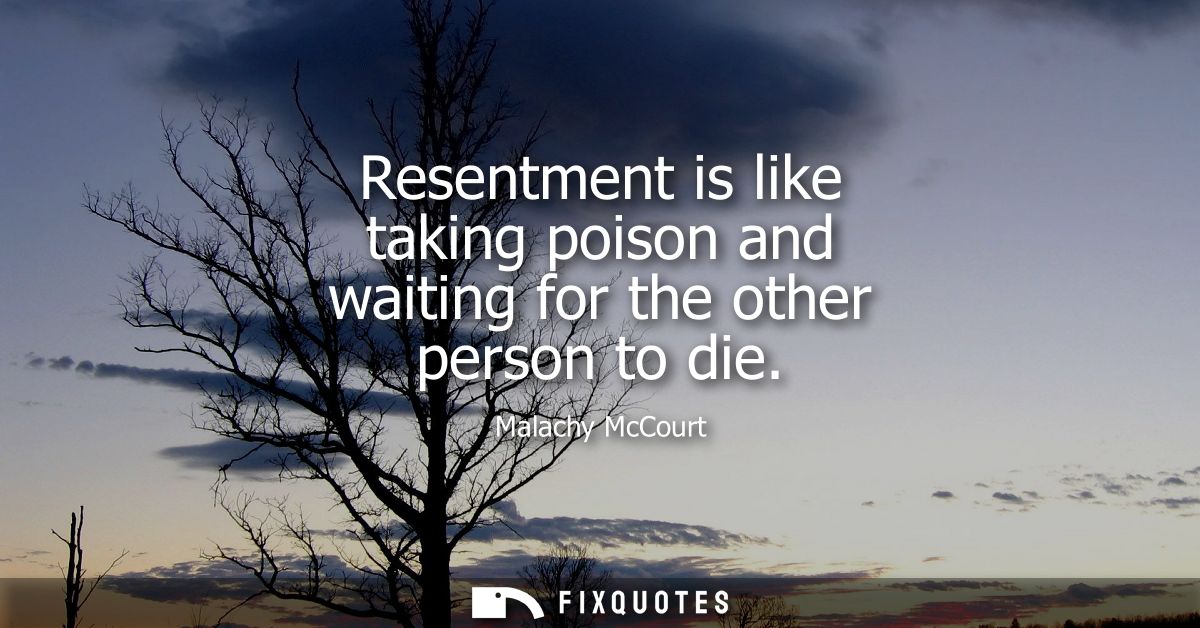
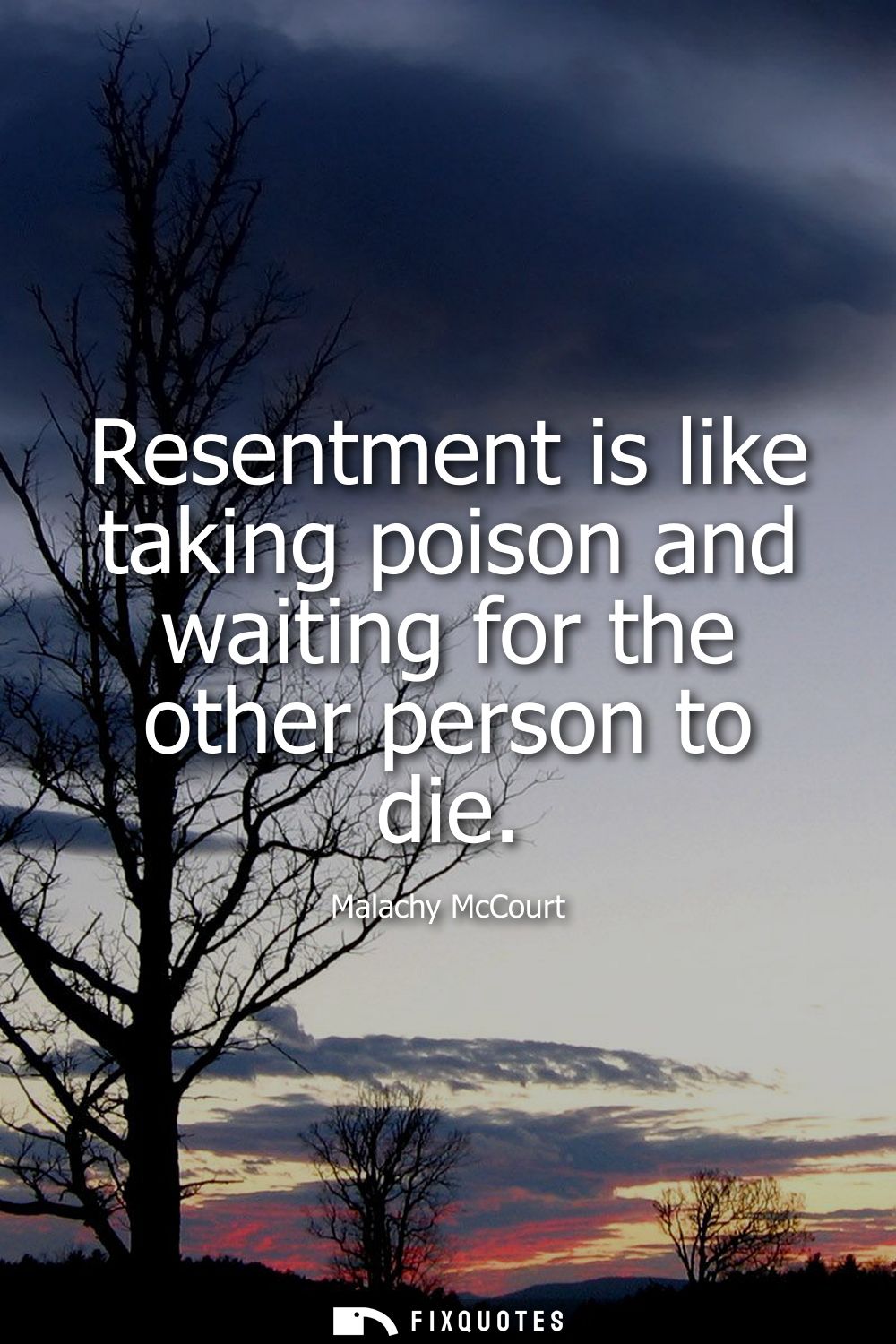
"Resentment is like taking poison and waiting for the other person to die"
About this Quote
The intent is bluntly corrective: stop treating emotional bitterness as a weapon. The subtext is harsher: resentment is a kind of narcissistic bargaining, an insistence that your pain should matter enough to reach across time and consequence and punish the person who caused it. It usually does not. The other person may be oblivious, gone, or thriving; your body keeps the score anyway.
Contextually, the quote fits a late-20th-century self-help vernacular, but McCourt's version avoids therapist-speak by choosing poison - not a vague "burden", not "energy". Poison is chemical, cumulative, and indifferent to your moral reasoning. It also implies dosage: resentment is not one dramatic gulp; it is daily, habitual sips.
What makes it work is its quiet accusation. If you keep resenting, you are not only wounded; you are complicit in extending the wound. The line offers no applause for suffering, just an exit ramp.
Quote Details
| Topic | Forgiveness |
|---|---|
| Source | Help us find the source |
| Cite |
Citation Formats
APA Style (7th ed.)
McCourt, Malachy. (2026, January 15). Resentment is like taking poison and waiting for the other person to die. FixQuotes. https://fixquotes.com/quotes/resentment-is-like-taking-poison-and-waiting-for-162642/
Chicago Style
McCourt, Malachy. "Resentment is like taking poison and waiting for the other person to die." FixQuotes. January 15, 2026. https://fixquotes.com/quotes/resentment-is-like-taking-poison-and-waiting-for-162642/.
MLA Style (9th ed.)
"Resentment is like taking poison and waiting for the other person to die." FixQuotes, 15 Jan. 2026, https://fixquotes.com/quotes/resentment-is-like-taking-poison-and-waiting-for-162642/. Accessed 12 Feb. 2026.