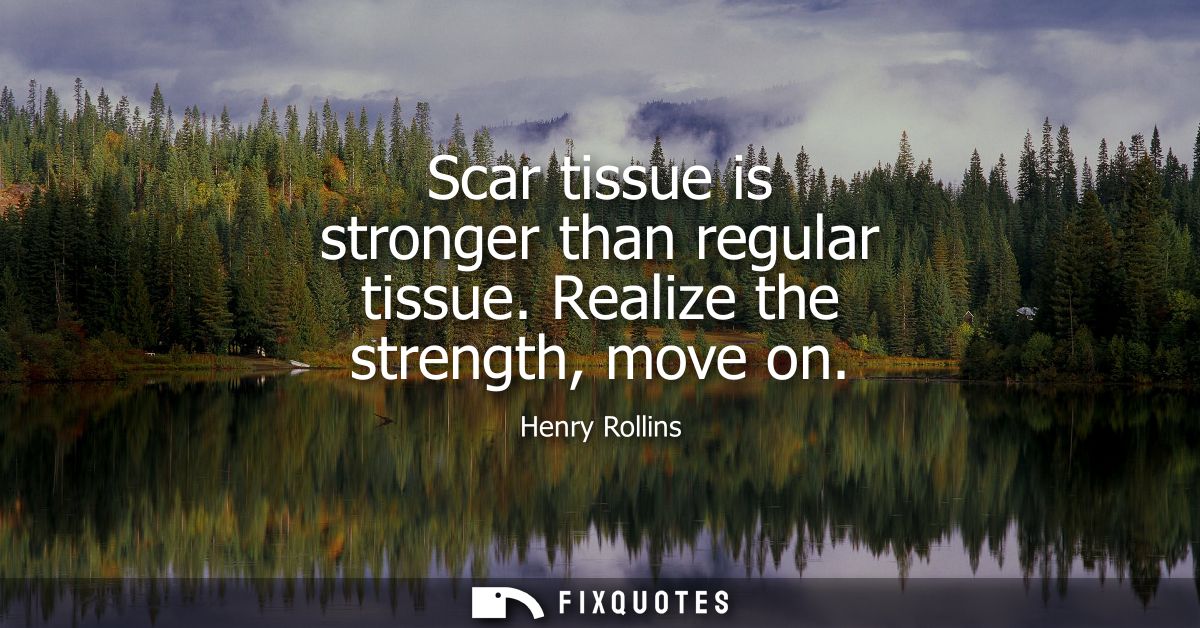
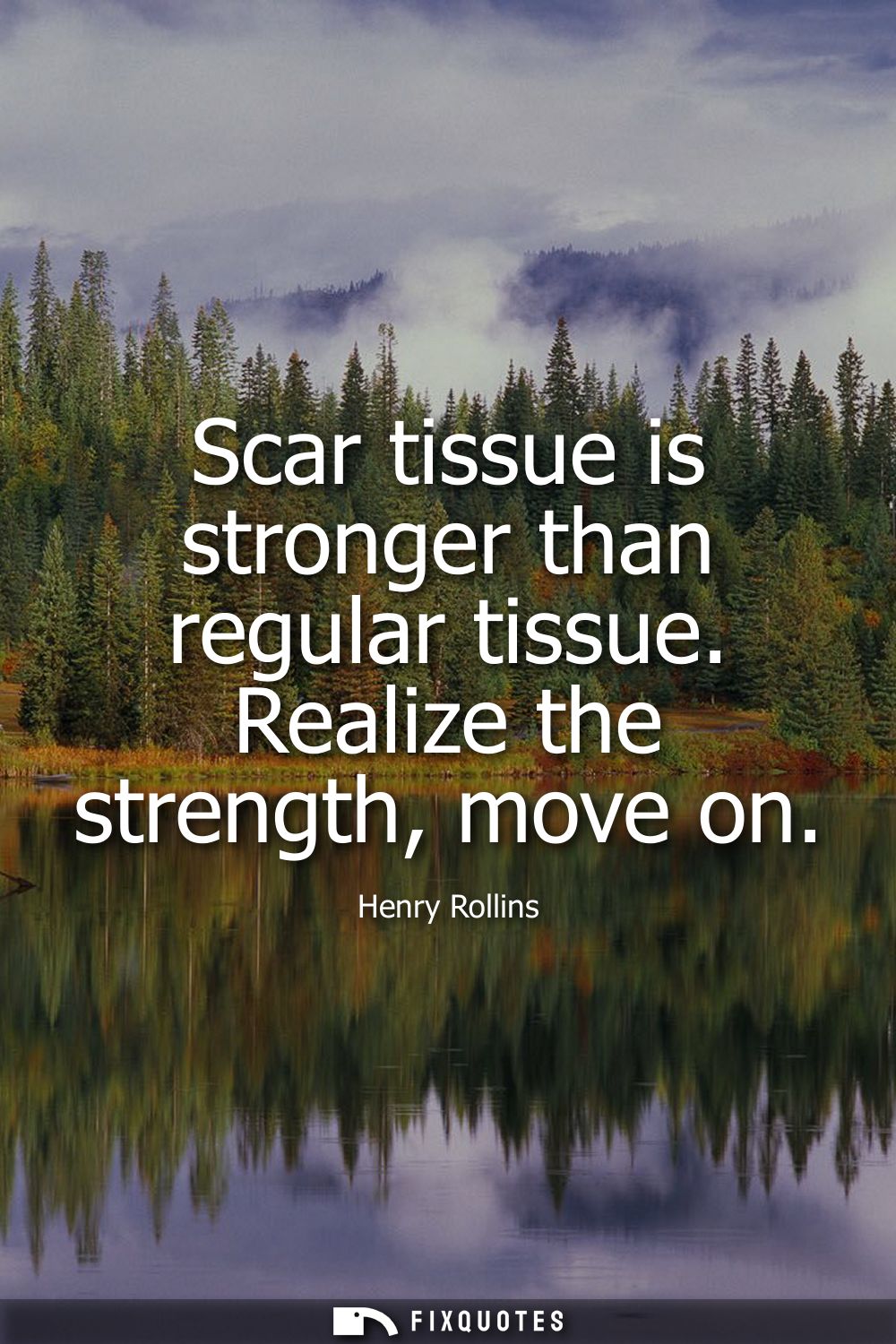
"Scar tissue is stronger than regular tissue. Realize the strength, move on"
About this Quote
The intent is less self-help than self-command. Scar tissue isn’t pretty, flexible, or identical to what it replaces, but it holds. That’s the subtext: recovery doesn’t mean returning to “before.” It means becoming a version of yourself that can withstand the same blow twice. By invoking something bodily and indisputable, he cuts through the endless storytelling we do around pain. Your trauma doesn’t need a perfect narrative arc to be legitimate; it needs to stop running your schedule.
“Realize the strength, move on” is the hard part, and Rollins knows it. The phrase smuggles in a critique of a culture that can get stuck performing its wounds for attention, identity, or moral leverage. He’s not denying injury; he’s denying injury the right to be your personality.
Context matters: Rollins came up in hardcore punk, a scene built on abrasion, discipline, and survival-as-aesthetic. His public persona has long prized endurance and self-mastery. Read in that light, the line isn’t about forgetting. It’s about refusing to let suffering be the final author of your life.
Quote Details
| Topic | Resilience |
|---|---|
| Source | Help us find the source |
| Cite |
Citation Formats
APA Style (7th ed.)
Rollins, Henry. (2026, January 17). Scar tissue is stronger than regular tissue. Realize the strength, move on. FixQuotes. https://fixquotes.com/quotes/scar-tissue-is-stronger-than-regular-tissue-35243/
Chicago Style
Rollins, Henry. "Scar tissue is stronger than regular tissue. Realize the strength, move on." FixQuotes. January 17, 2026. https://fixquotes.com/quotes/scar-tissue-is-stronger-than-regular-tissue-35243/.
MLA Style (9th ed.)
"Scar tissue is stronger than regular tissue. Realize the strength, move on." FixQuotes, 17 Jan. 2026, https://fixquotes.com/quotes/scar-tissue-is-stronger-than-regular-tissue-35243/. Accessed 12 Feb. 2026.