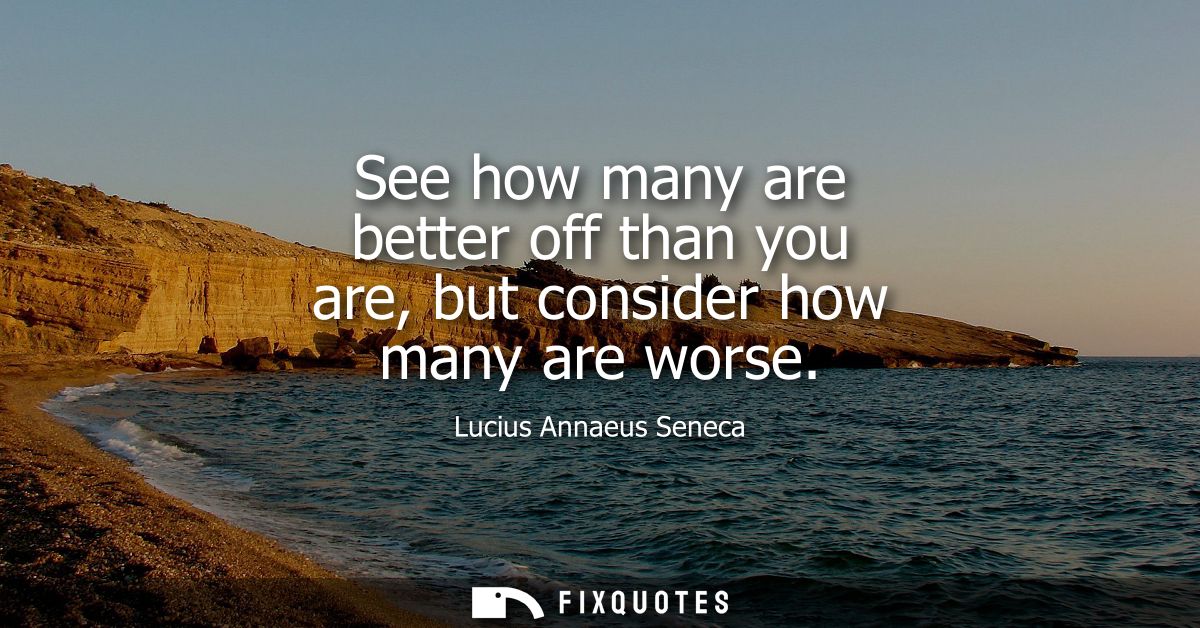
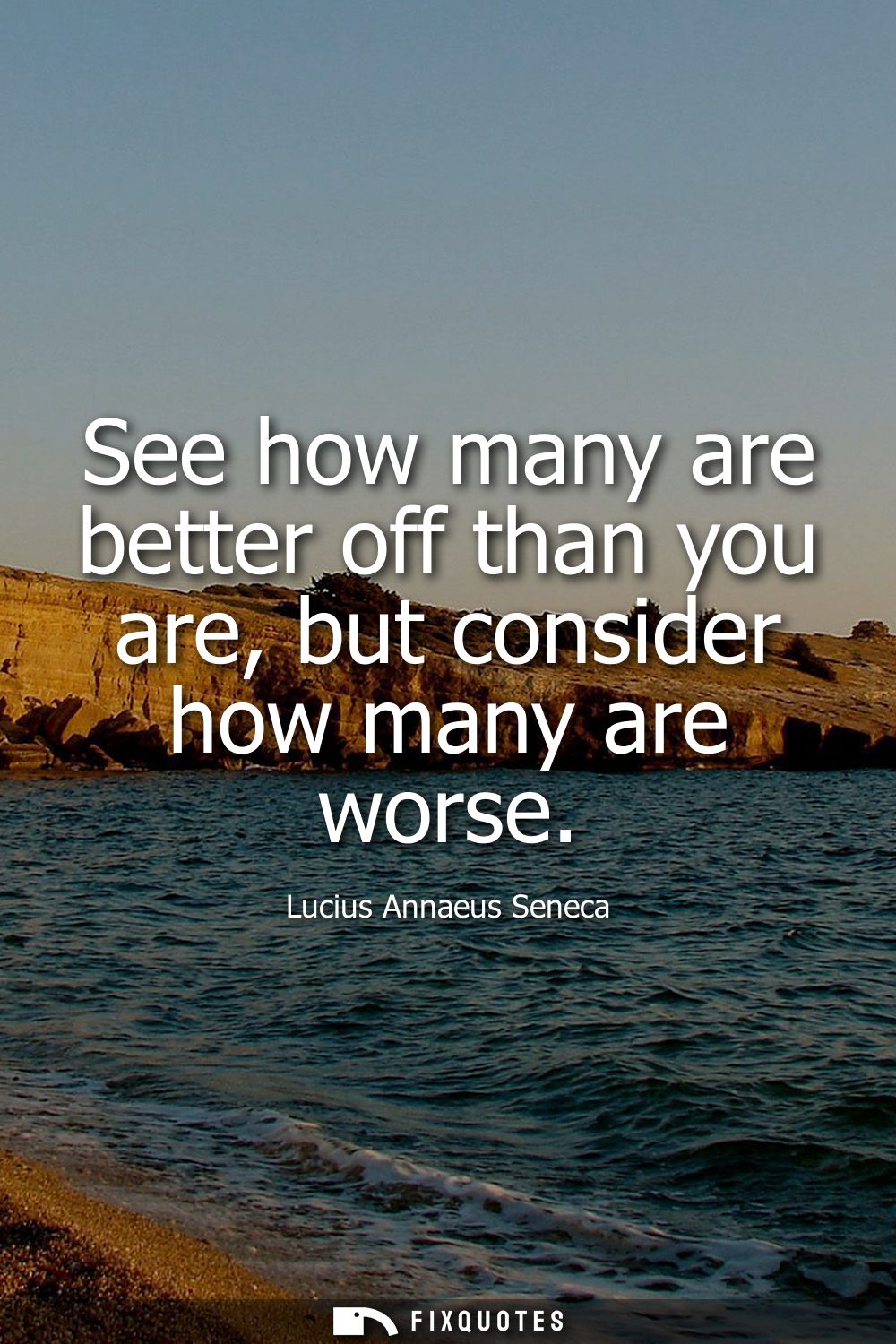
"See how many are better off than you are, but consider how many are worse"
About this Quote
The line’s balance is the trick. “See how many are better off” grants a socially sharp, even uncomfortable realism: comparison is inevitable, and pretending otherwise is sentimental. Seneca doesn’t shame the impulse; he redirects it. Then the pivot - “but consider how many are worse” - turns envy into a wider moral accounting. “See” versus “consider” matters: the first is almost reflexive, the second deliberate. Your eyes will snag on the people ahead of you; your ethics require effort to notice the people behind you.
Subtextually, it’s also a warning to elites, the class Seneca belonged to and advised. Roman power insulated you from necessity but not from anxiety. The reminder that many are worse off is a check on entitlement, a prod toward mercy, and a hedge against panic when fortune shifts. Stoicism isn’t passive resignation; it’s emotional self-regulation in a world where politics, wealth, and reputation can change overnight. Seneca offers a cognitive habit that keeps desire hungry but suffering on a leash.
Quote Details
| Topic | Gratitude |
|---|---|
| Source | Help us find the source |
| Cite |
Citation Formats
APA Style (7th ed.)
Younger, Seneca the. (2026, January 17). See how many are better off than you are, but consider how many are worse. FixQuotes. https://fixquotes.com/quotes/see-how-many-are-better-off-than-you-are-but-35474/
Chicago Style
Younger, Seneca the. "See how many are better off than you are, but consider how many are worse." FixQuotes. January 17, 2026. https://fixquotes.com/quotes/see-how-many-are-better-off-than-you-are-but-35474/.
MLA Style (9th ed.)
"See how many are better off than you are, but consider how many are worse." FixQuotes, 17 Jan. 2026, https://fixquotes.com/quotes/see-how-many-are-better-off-than-you-are-but-35474/. Accessed 2 Apr. 2026.