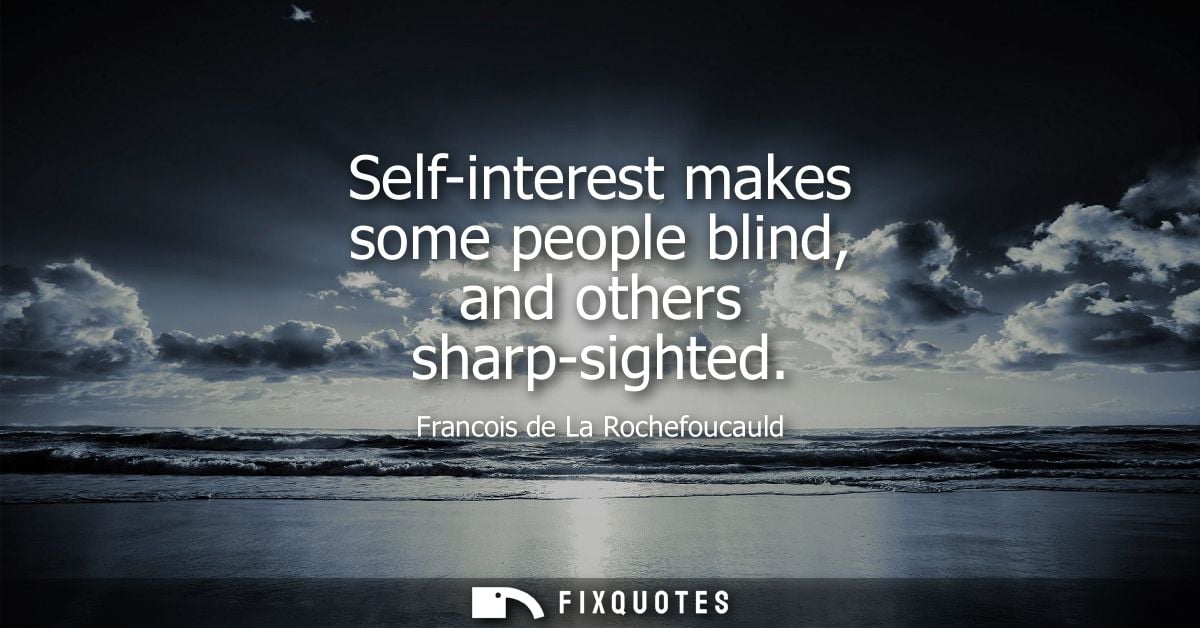
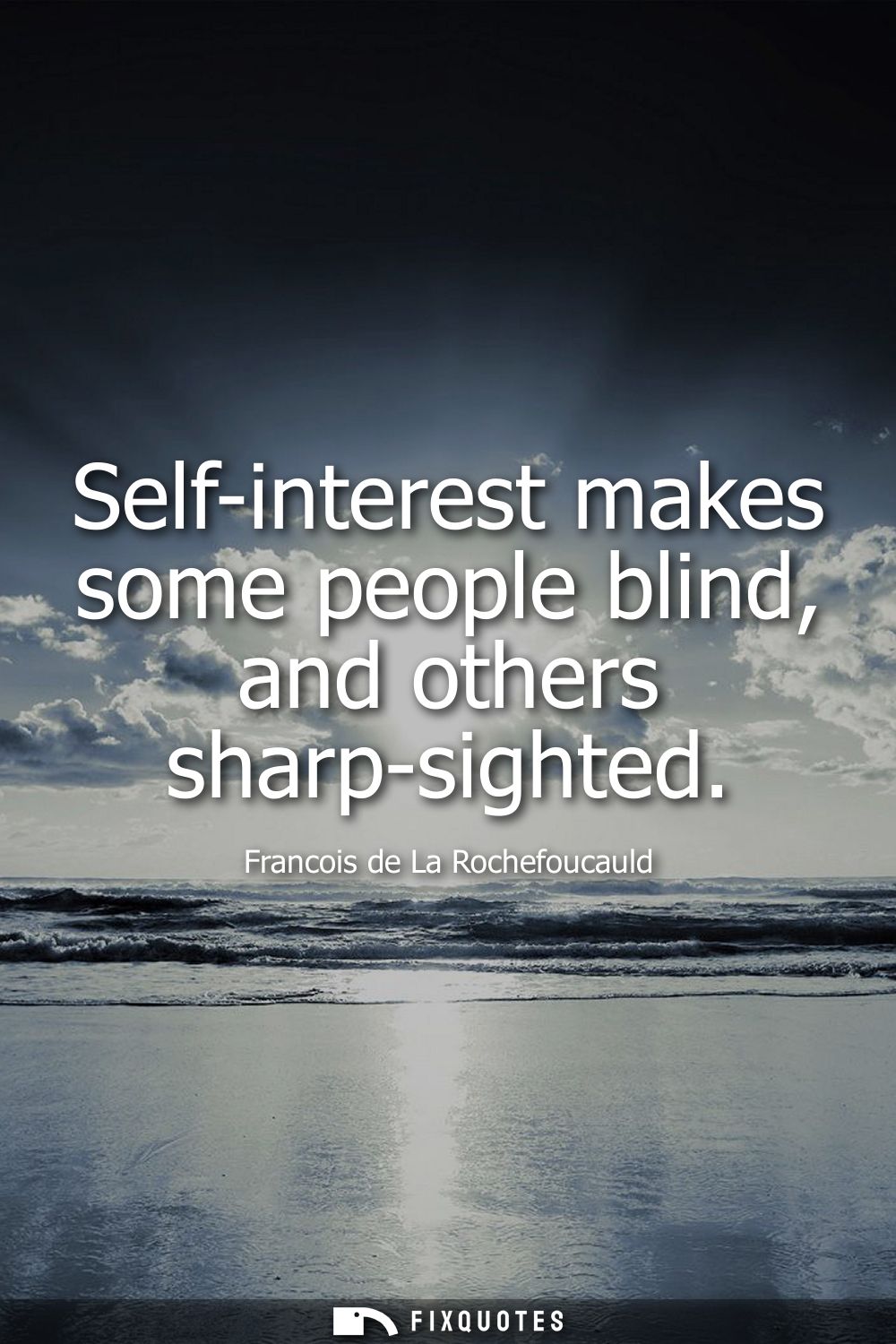
"Self-interest makes some people blind, and others sharp-sighted"
About this Quote
The intent is surgical, almost diagnostic. In the salons and courtly ecosystems of 17th-century France, reputation was currency and survival depended on reading people quickly. Self-interest didn’t just motivate behavior; it structured attention. Some people go blind because desire becomes a story they can’t stop narrating: they edit out inconvenient facts, excuse obvious betrayals, mistake flattery for truth. Their ego builds a protective mythology, and the world obliges by punishing them for it.
Others become sharp-sighted for the same reason. When the stakes are status, money, or power, self-interest can heighten pattern recognition: detecting shifts in allegiance, sensing weakness, anticipating the next move. The cynicism is deliberate. La Rochefoucauld isn’t praising insight as virtue; he’s implying that “clarity” often arrives not from wisdom but from appetite. You see better when you have something to gain and worse when seeing would cost you.
Subtext: moral language is a mask people wear over incentives. If you want to understand a person, follow what benefits them, and you’ll learn whether their self-interest is anesthetic or stimulant.
Quote Details
| Topic | Wisdom |
|---|---|
| Source | Help us find the source |
| Cite |
Citation Formats
APA Style (7th ed.)
Rochefoucauld, Francois de La. (2026, January 15). Self-interest makes some people blind, and others sharp-sighted. FixQuotes. https://fixquotes.com/quotes/self-interest-makes-some-people-blind-and-others-13122/
Chicago Style
Rochefoucauld, Francois de La. "Self-interest makes some people blind, and others sharp-sighted." FixQuotes. January 15, 2026. https://fixquotes.com/quotes/self-interest-makes-some-people-blind-and-others-13122/.
MLA Style (9th ed.)
"Self-interest makes some people blind, and others sharp-sighted." FixQuotes, 15 Jan. 2026, https://fixquotes.com/quotes/self-interest-makes-some-people-blind-and-others-13122/. Accessed 12 Mar. 2026.