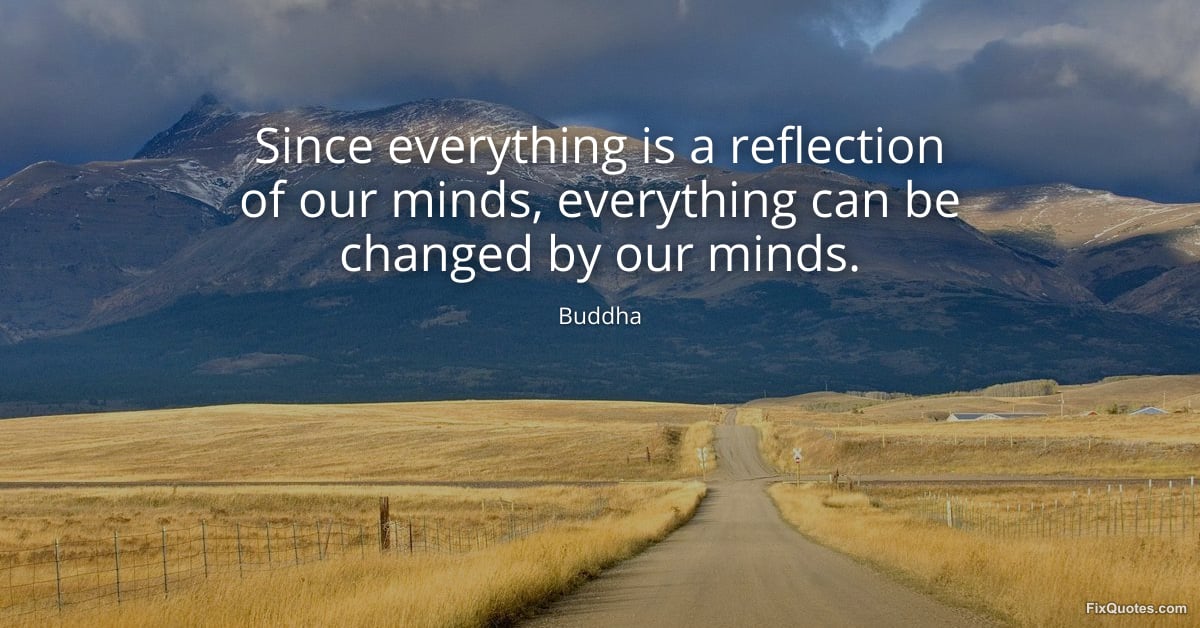
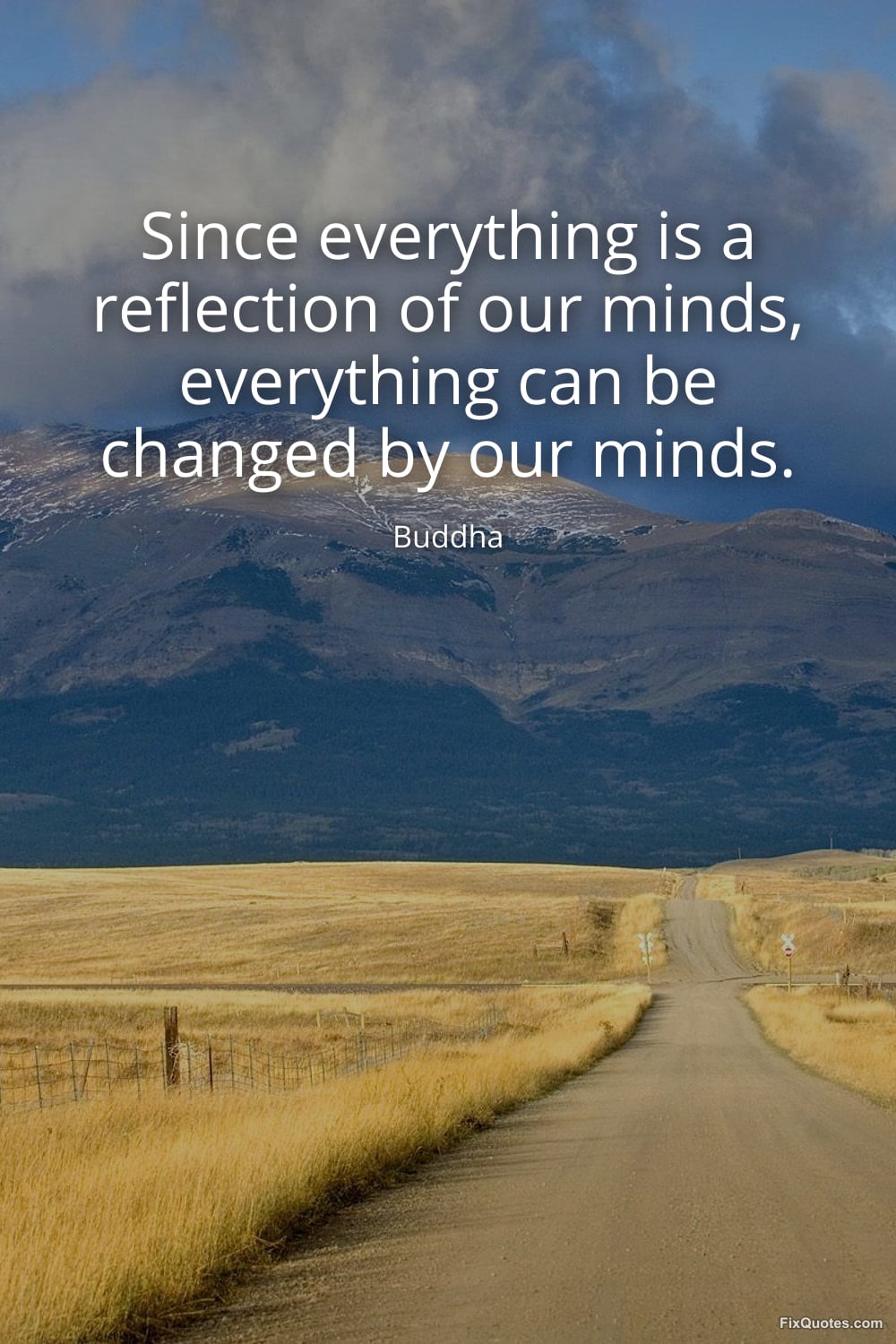
"Since everything is a reflection of our minds, everything can be changed by our minds"
About this Quote
That is why the sentence lands with such force. It compresses a core Buddhist insight into a political-sounding declaration of agency. "Everything" appears twice, and that repetition matters. It gives the line an almost absolute sweep, as if no corner of experience is exempt from mental formation. The subtext is not that material reality is unreal, but that human reality, grief, anger, status, humiliation, desire, is filtered through habits of mind. If those habits can be retrained, then suffering itself becomes less fixed than it seems.
Coming from a religious leader rather than a modern therapist, the statement carries moral weight. Buddha spoke in a world marked by hierarchy, impermanence, and pain; his teaching did not deny those conditions. It asked what freedom remains possible inside them. That is the context that keeps the quote from sounding naive. Its intent is liberating, but also austere. You are not promised control over fate. You are told that the mind is the first battleground, and perhaps the only one over which mastery is truly possible.
Quote Details
| Topic | Wisdom |
|---|---|
| Source | Help us find the source |
| Cite |
Citation Formats
APA Style (7th ed.)
Buddha. (2026, March 10). Since everything is a reflection of our minds, everything can be changed by our minds. FixQuotes. https://fixquotes.com/quotes/since-everything-is-a-reflection-of-our-minds-185835/
Chicago Style
Buddha. "Since everything is a reflection of our minds, everything can be changed by our minds." FixQuotes. March 10, 2026. https://fixquotes.com/quotes/since-everything-is-a-reflection-of-our-minds-185835/.
MLA Style (9th ed.)
"Since everything is a reflection of our minds, everything can be changed by our minds." FixQuotes, 10 Mar. 2026, https://fixquotes.com/quotes/since-everything-is-a-reflection-of-our-minds-185835/. Accessed 3 Apr. 2026.